Tag Archive | House Church

One Size Does Not Fit All: Why We Have Different Sizes of Meetings

CRH-2

Our spiritual family has been meeting as house churches for the last seven years. When we started our first house church here in Iowa, we had one size of meeting: the kind that would fit into my living room.  Now, this was more out of reaction than health.  We were scared of any meeting larger than that and didn’t value anything smaller than that. Along the way we learned that one size of meeting doesn’t meet every need and we began meeting in different ways to accomplish different things. 

 
What can happen in a group of two or three people that cannot happen in a group of fifteen? A lot, actually. And as we began to understand this, we started meeting in ways that better allowed life to flow in our churches.  These different types of meetings helped us to grow in depth as disciples, in numbers, and in the number of house churches that are part of our network.  Because there weren’t many resources* like this when I started, I thought it might be helpful to remind our network of why we meet in the sizes we do and pass along what we’ve learned to others just getting started in organic churches.
 
Two or Three
 
The Bible talks regularly about the power of two or three people gathered around a common purpose.  In fact Jesus is so explicit about His intent to meet people when two or three people gather that many have assumed that two or three people is all that is needed for a church to exist. Two or three people have greater authority for dealing with sin, can discern the voice of God, and more easily hold people accountable (Matthew 18:15-17, 2 Corinthians 13:1, 1 Timothy 5:19).  
 
As a result, we’ve taken to meeting in groups of two and three for bible reading, accountability, and mission.  We’ve largely copied our ideas about meeting together in this size from Neil Cole’s book Ordinary Hero.  Two or three people meet each week to discuss large portions of the Bible that they’ve read, ask each other accountability questions, and pray for lost friends they are hoping to reach.  When our two and three groups are healthy, the house church that the two and three is part of is always stronger. 
 
Ten to Fifteen
 
Ten to fifteen people is the top size of our house churches. We had always been meeting in this size of group, largely based out of our conviction that churches in the New Testament met in homes and were extensions of a believer’s relational network (1 Corinthians 16:19, Romans 16:3-5).  This allowed the churches to be simple and reproducible.  It also allowed us to practice many of the “one another” passages in scripture that meeting in a larger church setting made impractical. Oddly enough, modern psychology insists 15 is the highest number of people you can know intimately and we believe this has profound implications for discipleship and church.
 
Because we believe these things, we meet weekly as a church for what we call our “house church meeting.” Those who follow Jesus and come regularly we identify as our spiritual family.  This is where broader sharing, teaching, singing, functioning of the spiritual gifts, and working together towards mission happens.  Our goal is for a gathering that resembles what Paul describes in 1 Corinthians 14:26-33.  This is important to mention because portions of the house church movement here in the United States do not see value in intentional meetings.  But Scripture calls us to regularly gather for the building up of other Christians in our relational network (Hebrews 10:23-25) in a way that (I believe) reflects 1 Corinthians 14:26-33.  
 
Twenty or More
 
When we talk about twenty or more people gathering together, we are typically talking about more than one house church gathering in a place. I see meetings of this size several times throughout the book of Acts: (Acts 14:26-28, Acts 20:7-12, Acts 21:4-6). Paul and the resurrected Christ would often ask letters to be read to churches the encompassed entire cities that obviously would not fit in individual homes (Colossians 4:16, Revelation 2:1, 2:8, 2:12, 2:18, etc.).
 
Because we see this principle in the Bible, we regularly meet as a family of house churches. When we were smaller, this could still happen in one of the larger houses of those that met with us.  But as our house churches have grown, we’ve had to move out of homes and rent a dedicated space to contain the activity.  We call this meeting our All House Church Meeting and invite the house churches that are part of our extended family to join us. From my understanding of scripture, this type of meeting was less focused on teaching and intimacy, but more focused on imparting vision and revelation that the Lord had given apostolic and prophetic individuals for the benefit of the larger body.  This “big picture vision” informs, strengthens, and supports the more day to day work that is ongoing in the lives of the individual house churches.  
 
One specific thing I want to note about this meeting is that we have it once a month or less.  The reason I’m so specific about that is I want to protect us from our natural American tendency to value bigger things over smaller.  Because church as we knew it met regularly, there is a natural temptation to want these big meetings to be the center of our Christian experience where our teaching, community, intimacy, and even identity can be found.  The way we regularly fight this is by keeping these meetings out of our weekly routine.
 
Spontaneity
 
You could be tempted to take away from all of this that our house church network is artificially crafted and not organic at all.  Quite the contrary.  At the basis of all of this is a life lived among dedicated brothers and sisters whose lives intersect in a multitude of ways day in and day out. We call each other, the wives watch each others’ kids during the week, the men gather to talk about Jesus and mission or volunteer for projects outside of the church.  The kids get together and play.  Sometimes our kids’ birthday parties become unofficial all house church meetings. The point is, the life of Jesus that flows through us isn’t limited to our meetings.  If all of the meetings where shut down, much of this life and the encouragement and brotherhood would continue.
 
I remember meeting with a group of folks from an outlying area once who were interested in house churches.  We briefly gave them a description of life similar to what you’ve read, but as we began to talk our conversation shifted from meetings to Jesus, life on life discipleship, and living on mission.  We pointed out to our new friends that these things were the essence of what God was calling us to an I would say the same thing to you.  These meetings I’ve described above facilitate that life and help it grow and mature.  
 
Conclusion
 
As you’ve read, our house church network meets in different sizes for different purposes.  The end goal is that Jesus is glorified through committed relationships that lift up the name of Jesus to others.  I’d love to know if the group sizes I’ve discussed here resonate with you.  Have you seen the effectiveness of these size of groups to conduct the life of Jesus? I’d love to hear your thoughts in the comments. 


Photo Credit: IMG_8917 by openg
 
*Much of this was in large part thanks to some information and training we received from CMA Resources and Neil Cole. If you’re looking for some more thoughts on this subject, I highly recommend Church 3.0 by Neil Cole.


Five Thoughts on the Five-Fold Ministry
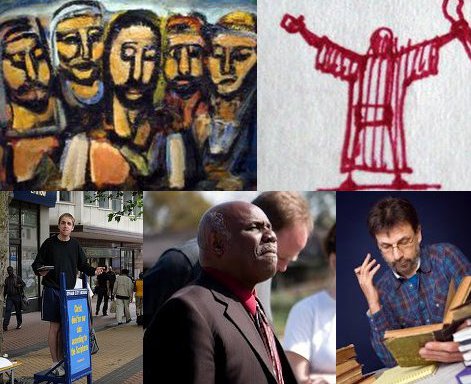
One of the most misunderstood aspects of the church as God designed it is the place of the five-fold ministry.  God has designed the body of Christ so that it builds itself up in love.  An important part of that process is mature five-fold gifts functioning in and amongst the body of Christ in a mature way.  But many have misunderstood the purpose and functions of different aspects of these gifts.

Because of the importance of these ministries, I’ve assembled some of the best posts on the five-fold ministry that I’ve found on various blogs.  These are written by men and women with experience with people who have functioned in these gifts.  These are my top five posts.  Feel free to leave a link to your favorite post on this topic in the comment section.

What Is the Purpose of the 5-Fold Ministry? by Felicity Dale

Felicity gives us a great post to introduce us to the idea of the five-fold ministry and right off the bat she combats the major misconceptions about these gifts God gives the church. This is a short post but many people miss the profound implications that are found within it.

The Reign of God by Len at Next Reformation

Len’s thoughts on a quote from An Ethic for Christians and Other Aliens in a Strange Land don’t directly mention the five-fold ministry.  But he does touch on an interesting idea: The Kingdom of God is extended by Jesus as He gives these gifts to the church for the world.  Read on to see more.

Apostolic Leaders, Churches, and Five-Fold Ministries by Bob Robers Jr.

I love this post by Bob Roberts.  Bob really brings a very balanced perspective to the whole issue of the five-fold ministry.  I love that his insights are born out of his work in the non-Western world and I’m greatly encouraged on his emphasis on the whole church becoming apostolic, and not just one man.

Missional Communities Led by Five-Fold Ministries by Mike Breen

Mike does a great job in this post of describing what a missional community will look like if it is lead by each of the five-fold ministries.  While not entirely the same as a house church, I’ve noticed similar group dynamics in house churches led by each of these different ministry gifts.  You may learn a few things about why you lead your house church the way you do from this post.

Signs of Immature Five-Fold Ministries  by Mike Breen

Last but not least, this post is extremely helpful because it identifies characteristics of immature people with five-fold giftings.  Many times we reject five-fold minstries because of our negative experiences with the immature versions of five-fold ministries.  This frank discussion about the downside of immature five-fold ministries will help those who have had negative experiences.  It’s also really helpful to those maturing in these gifts because it highlights weaknesses they will need to address.

Photo Credit: This image is a product of five pictures representing each of the five-fold ministries.

Thanks to Ben Sutherland for Rouault’s Christ and the Apostles, Phantom Leap for Seer, Boliston for Birmingham Street Preacher, Jake Liefer for Pastor Garrison, and Stock.XCHNG for Professor at Work.

Guest Posting: Spirit-led Gatherings

Dave over at Searching God’s Heart asked me to guest post about the topic of Spirit-led Meetings.  Have you been part of a Spirit-Led Gathering?  How do you know? So many people have different ideas about what a Spirit-led gathering is that it’s hard to know.  Here’s a paragraph from the post:

Joy floods the room as everyone begins to glorify God.  Several brothers surround the man and begin to pray for him.  Plans are made for a baptism the next day, which interferes very little with everyone’s plans because most had planned to assemble together the next day anyways.  The gathering goes late into the night as others share about the greatness of Christ, the worth of following Him despite the cost, and the imminence of His return. You leave late into the evening encouraged by the supernatural work that has obviously taken place.

I’d like to encourage you to jump over to Searching God’s Heart and read the rest of the post.  This is the first in a series of three posts.  Join Dave, his readers, and myself as we discuss the importance of churches being corporately led by the Holy Spirit.

UPDATE: You can see all three parts of this series.  I will update the links as they come out:

Part One: Have You Met With Christians Like This? Part Two: What is a Spirit-Led Gathering? Part Three: A Case Study

Photo Credit: Holy Spirit Dove by John Kroll