Church as Family

This morning as I was scrolling through social media, I saw one of the people that I follow talk about how modern church is like a school and it should be more like a support group (think AA). Both of these are true statements. While I agree with both parts of this statement1, I believe the pattern for church was built on something much more ancient: family.
This shouldn’t surprise us. God is a Father and a Son in relationship with each other. Jesus emphasized the brotherhood of all believers (Matthew 23:8). This wasn’t just a term of affection, but a call to really act as brothers of a family. New Testament churches were often started in the homes of men or women of peace (see Luke 10:6) who would give a church planter an audience to his or her extended family. The spirit of family within each church would be greatly aided by the fact that most of the early members were part of the same family. Paul himself saw his apostolic ministry in the context of being a parent to the churches he planted (see 1 Corinthians 4:15, 1 Thessalonians 2:7). The church functioned first and foremost as a family.
I don’t think it’s surprising to most of us that the early church acted like a family. I think what surprises many is when churches today act as family towards each other. Often we pick other organizing principles, particularly those of business and education and structure our time around production and education instead of what builds us up as family.
So how does the church act as a family together?
They love each other. This starts with spending time together in a way the builds and facilitates relationship. There is plenty of time and space for relationships to develop, trust to form, and support to be given. Many times this love is expressed through serving each other in ways that reflect how Jesus has loved us and laid His life down for us.
Commitment is seen. Often church is seen as something that can be walked away from when it becomes inconvenient. If the teaching becomes stale, I’ll look for something better. If the worship becomes out-dated, there’s a more contemporary worship gathering down the street. But when churches act like families, the members don’t bail at the first sign of conflict or the opportunity to get a better experience. They commit to the bonds of love that the Lord has called us to.
There is mutual give and take. In every family, each member fulfills a roll of some kind. Rare is the family gathering where one member of the family does all of the talking. There is a back and forth kind of conversation that happens. Not everything everyone says in a family is of equal value. There are various levels of maturity, but conversation is the main method of learning and interaction and it produces well-rounded disciples.
There is growth and reproduction. Every family that doesn’t grow and reproduce will die off. I’m part of a large extended family in the natural, helping raise the fourth generation of Kolders that have come from the line of my Grandpa and Grandma Kolder. But each generation has had to grow up, move out of mom and dad’s house, and have little Kolders of their own. The same is true for the church. Family can seem safe, but there is a responsibility in family to step out, grow up, and pass on what you’ve received as part of your family to the next generation. Churches do this when they reach the lost, make disciples, and pass on the dynamic of Christianity as family to those they are discipling.
There is a lost generation of men and women all across our country. Not only are they far away from God, but they have a hunger in their heart for something they’ve never had: family. The answer starts when a person enters into a life-transforming relationship with God as their Father. It’s fully recognized, though, when a flesh and blood spiritual family adopt this new believer as one of their own. This is the reality that drives out the orphan spirit in us once and for all. To do that, the church may need to stop acting like a school or a business and devote themselves to becoming a family once more.
Photo Credit: Family by Randen Pedersen
1Church as we know it has largely adopted a meeting style from the educational system (one person teaching, rows of students, listening-based). Support groups such as AA have much to offer the church as a means for growing their body (high accountability, high intimacy, intentional mentoring, etc.).
More Than A Small Group…
Often when we meet other believers and they find out we meet in homes, they begin to tell us about their experiences in small groups that are part of their church experience. Often, I’m actually thankful for this, because I recognize that this is their way of trying to relate to what we do. It’s a bit of verbal and social hospitality that is an attempt to bridge the gap between what we do and what they do.
While I appreciate all of the kindness and I totally see some of the similarities (especially as they relate to size and group dynamics) I think it’s really important to point out that house churches are a bit more than small groups. Yes, they meet in homes like small groups. Yes, they are small groups of people, just like small groups. But that’s where the similarities start to end1.
House churches are a different animal because….
….they are responsible for extending the church in their relational networks and their region. They grow through evangelism and witness, not through attracting new believers from the larger church.
….they are spiritual families. They live life together and support each other, like families do. They are more than just a meeting once a week.
…they are responsible for each other. There’s no other immediate group of believers that will encourage, support, rebuke, love, or edify the members of a house church. It’s up to each house church to take care of the members of its body.
…the curriculum is the Bible. There’s no Bible study manual or teaching series spread around to the other house churches. The content that is produced results from each member’s time in the Word and relationship with the Holy Spirit.
…they don’t have a program. They are the program. Gathering together and following the Holy Spirit wherever he leads as He builds the church is the program.
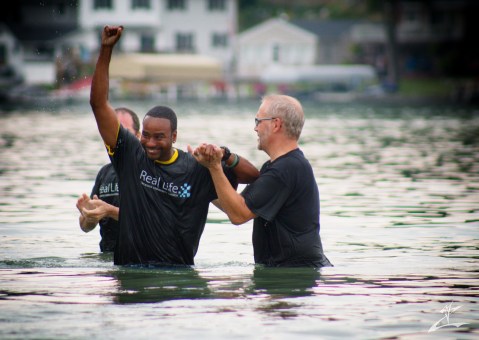
…they do what a church does. They devote themselves to the gospel, they fellowship together, they eat together, they pray together, they baptize new believers, they practice communion. Whatever a church does, they do.
Why is this important? Why the need for distinction? Clarity helps us pursue the right things. I want you to plant a house church, but you’ll take different steps to get to a house church than you would to start a small group. How you build up the church, make disciples, teach each other, and take communion will change depending on whether you believe your group is a church or just a short term collection of Christians who may be committed to other things.
So, are you part of a small group or part of something more?
Photo Credit: IMG_1205-Edit.jpg by MjZ Photography
Encountering Jesus, Organic Church, and Corporate Prayer
At the heart of Christianity is a personal encounter with Jesus Christ. This doesn’t mean that everyone who becomes a Christian has to have an experience like Paul did on the road to Damascus, but it means that everyone who is truly born again will encounter Jesus by His Spirit. Often that begins by faith, accepting the truth of the Gospel and the work of Jesus on the cross and then as we grow in faith we learn to interact with Jesus as a living being as we grow up in Him. But make no mistake, every believer (whether they feel it or not) encounters Jesus.
When I first became part of the organic church movement, there was a lot of talk about encountering Jesus. Many of those I learned from had taught us how to encounter Jesus by waiting on the Lord in silence and prayer. As I’ve been exposed to more and more parts of the house church movement, however, I’ve noticed varying degrees of emphasis on encountering Jesus in prayer, usually less. To some degree I’m sure this has to do with some who have tried to call the church away from religious prayer routines.
While I applaud leaving behind dead religious traditions, I’m often saddened by the hardness towards people who try to encounter Jesus within the organic church/house church movement. Our lives were never designed to be lived outside of a regular encounter with Jesus, so while we need to leave behind the trappings of religion that really were more like hiding than meeting Jesus, we also must position our hearts to regularly encounter Christ. Jesus tells us to do this individually in secret prayer routines where we meet the Father (see Mathew 6:5-6).
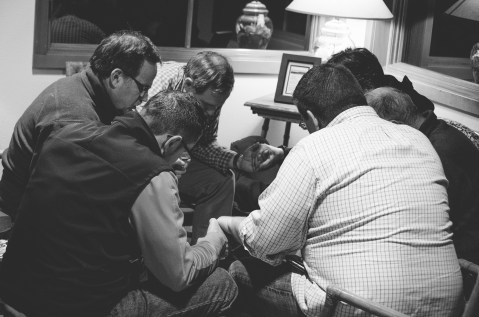
The life of the body, however, is not just the coming together of the individual lives of the believers that make it up. Christians have always believed that because of the blood of Christ they have had direct access to God themselves, personally (Hebrews 4:15-16), but they’ve also always believed that something different happens when believers come together and pray. Jesus said that He would show up in a different, more significant way when two or three believers gather together and pray. Part of the promise of Him showing up when those two or three gathering and agreeing in prayer is that He will answer their request (Matthew 18:19-20).
So this encountering of Jesus through prayer, this agreeing together, this listening and obeying Christ, must be done both individually and corporately. If we try and obey the commands of Jesus without it, we will find ourselves continually wearied and unequipped both individually and corporately, because we were never designed to live the life of Christ outside of being fueled by encounter with Him. While this must happen individually, it must certainly happen corporately. If we don’t teach our churches how to pray, we stop successive generations of disciples from learning how to pray together (we don’t pass it on) and we lose the promise Jesus gives us when we agree together on anything.
Friends, our brothers and sisters from the house church planting movements around the world almost unanimously agree that movements do not start without a groundswell of prayer. This may begin with one person, but it culminates with many, many people praying for God’s Kingdom to come to their neighborhood, city, and region. When they gather and pray in a significant way, God answers. These are the people that have put their dependency on God answering their prayers and because of that they see people healed, raised from the dead, and most importantly lives transformed by the Gospel. I believe we have much to learn from these brothers and sisters, not the least of which is their dependence on God answering their prayers.
Friends, we serve a God who desires to encounter us. He will do this both individually and corporately, but He will encounter us differently with a group than He does when we are all alone. So let’s not stop gathering together with other brothers and sisters to pray, as some are in the habit of doing, but let’s begin to gather to ask Jesus for the harvest that He desires to bring in.
He will respond.
Photo Credit: Small Group Prayer by Portland Seminary H
Cluster Map

 Pursuing Glory