New Testament Church Planting

The conversation happens so often you can almost predict how it’s going to go. Someone who the Lord has just started speaking to about organic church or house churches logs onto a house church discussion group and they ask this question: “What’s the best book out there on organic church?” People will begin to suggest the staples: Books by Neil Cole, Frank Viola, Jon Zens, etc. I’ll throw my two cents in and suggest my top five books on house churches. But inevitably someone will suggest the book of Acts.
Now, I’m never sure if someone is serious when they suggest the book of Acts or whether they are being a bit tongue in cheek to highlight peoples’ tendencies to rely on current authors over God’s word. Sometimes I think they’re doing both. Inevitably, though, someone will recommend the book of Acts as the book to read if you’re wanting to plant house churches.
This conversation happened again today on Facebook and it got me thinking about how we treat the New Testament in regards to church planting. Obviously we have a lot to learn from the book of Acts, but I found myself a little sad today because no one recommended the books of First and Second Timothy or Titus or the Gospels or the Minor Epistles. There is so much to learn from the New Testament that aids us in our pursuit of the church God wants, that to only learn from the book of Acts would be a travesty.
How do the books of the New Testament apply to house church planting? In so many ways. Here are a few:
Matthew, Mark, Luke, and John
It should go without saying, but the Gospels are critical to the success of any house church. Without the story of Jesus’ perfect life, atoning death, powerful resurrection and ascension into Heaven, none of what we do as house churches makes any sense. Not only are we redeemed by the good news we find in the Gospels but we are matured by the good news we find there. We are designed to grow up into the image of Christ (Ephesians 4:15), so we must constantly hold in front of us the image of Christ, not the New Testament church, so we can grow up into His likeness.
Acts
So based on my previous statements this should be a no-brainer. The book of Acts shows us how the small, struggling group Jesus left behind became a nearly unstoppable missionary force. We’d do well to learn from the apostles and others we see in the book of Acts and adopt many of their principles. If anyone tells you the book of Acts is descriptive but not something we should base our churches or strategy on, remind them that all Scripture is inspired by God and useful for teaching, reproof, for correction, and for training in righteousness (2 Timothy 3:16), including the book of Acts.
Paul’s Epistles
Paul wrote the books of Romans through the book of Philemon. There is so much good in all of these books that I could go on for a long time, but I’ll focus on two aspects.
Some of Paul’s books feature rich and deep theology. Romans, Galatians, Ephesians, Philippians and Colossians fit into that category. While each of these books have some stunning pictures of body life, they come after an unveiling of who Christ is in His resurrected glory. Understanding Jesus as the exalted Son of God is critical to house churches functioning as Kingdom outposts.
The other books Paul wrote–1 Corinthians, 2 Corinthians, 1 Thessalonians, 2 Thessalonians, 1 Timothy, 2 Timothy, Titus and Philemon are much more practical books. If the earlier books paint you a picture of the resurrected Jesus, these books paint a picture of what the practical early church movement looked like. Many of these books are Paul trouble-shooting church problems that crept in in his absence because of the highly mobile ministry we see him operating in in the book of Acts.
One final note on Paul’s contributions. Everyone who believes that Acts is a blueprint for what the Lord wants to do through house churches needs to spend serious time in 1 Timothy, 2 Timothy, and Titus. These books describe Paul trying to finish what he started in his missionary journeys but didn’t have time to fully complete. I know many people who pit Acts style church planting vs. “Pastoral Epistle” style churches. In reality, Paul planted churches like he did in Acts and served them from a distance by writing books like 1 Timothy and Titus. The churches planted in Acts wouldn’t have survived without the wisdom we find in those books.
General Epistles
These books were written by other early church leaders besides Paul. They include the books of Hebrews, James, 1 Peter, 2 Peter, 1 John, 2 John, 3 John, and Jude. I love these books and think they are incredibly relevant to house churches and here’s why: Most of these books were letters written to house churches struggling with false teachers who have entered into their midst. You may have not struggled with false teachers, false prophets, or false apostles having come to your house church yet, but if you meet organically for any length of time you will. Often our response to false teachers is to elevate good teachers, but the apostles wrote these letters to encourage the church to contend with false teachers without becoming institutional. This is such a critical reality that we all need to learn from on our journey to becoming the church God wants.
Revelation
Finally, we come to the book of Revelation. Many of you will disagree with me and that’s okay, but I’m still firmly of the opinion that the book of Revelation should be read literally. I still believe that the second coming of Jesus is our hope in this age and the events described within the book are to prepare us for the hour before the Lord’s return. This movement of finding God’s heart for His church, for reaching lost people and discipling them, and for multiplying disciples and churches is going somewhere and I believe that somewhere is the literal return of Jesus to reclaim the Earth. This book serves us by teaching us not to give our hearts to world and its systems and that message will be more and more critical as the day draws nearer.
Conclusion
Imagine a church that is rooted in the Gospel, planted and established like the churches in the book of Acts, guided by Paul’s fascination with the risen Christ and the wisdom he had acquired through planting tens of churches. Picture this same church knowing how to deal with false teachers that show up in their midst and who are prepared, not just for the end times, but for the Kingdom Jesus is bringing on the other side of those end times.
This is the church Jesus is building. It will take the whole counsel of Scripture in order to produce it. It will require us to ask Jesus to give us a spirit of wisdom and revelation in the knowledge of Him. But if we read our Bibles with our hearts open before the word, we will be stronger house churches for it.
So what’s my favorite book on organic house churches?
Let’s start with the New Testament.
Photo by Jonathan Simcoe on Unsplash
His Disciples
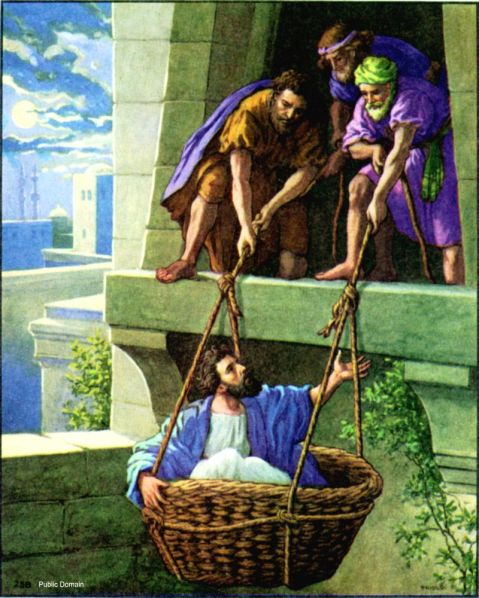
Buried in the account of Paul becoming a Christian and a leader in the church there is a small phrase that I think has some fairly significant implications for how we understand discipleship:
Now for several days he was with the disciples who were at Damascus, and immediately he began to proclaim Jesus in the synagogues, saying, “He is the Son of God.” All those hearing him continued to be amazed, and were saying, “Is this not he who in Jerusalem destroyed those who called on this name, and who had come here for the purpose of bringing them bound before the chief priests?” But Saul kept increasing in strength and confounding the Jews who lived at Damascus by proving that this Jesus is the Christ.
When many days had elapsed, the Jews plotted together to do away with him, but their plot became known to Saul. They were also watching the gates day and night so that they might put him to death; but his disciples took him by night and let him down through an opening in the wall, lowering him in a large basket.
-Acts 9:19-25 (emphasis mine)
This story is about the tremendous transformation that happened in Paul’s (then Saul’s) life. Just prior to this, Saul had just been killing Christians and was finally stopped when the Lord knocked him to the ground, blinded him, and subsequently healed him. But one of the indicators of Saul’s total transformation was that within a few days (and possibly a few weeks) of his conversion, Saul had his own disciples.
Don’t miss this. These weren’t just random disciples. These weren’t disciples that already existed in Damascus. These weren’t disciples that were made by Paul after he had known the Lord for a decade or better. These were *his disciples*. Saul’s. They were disciples of a man who had come to know the Lord only days or weeks before.
Why is that significant? Well, when was the last time you expected a new believer to have disciples? When was the last time you saw someone who had just come to Jesus preach Christ in a way that caused others to gather around them? When was the last time you expected your new convert to begin pointing others to the Christ they had just received?
What this story tells me is that discipleship is not for the oldest believers or the most experienced believers in our midst. Discipleship is the responsibility and the inheritance of even the youngest believers among us. When we teach them to wait until they know more about Jesus, the church, and everything, we teach them discipleship is about knowing stuff. But discipleship isn’t about knowing stuff, it’s about obeying Jesus. Even relatively new believers can teach newer converts how to obey, if they’ve learned how to themselves.
My point isn’t that this is the story for every believer or we should expect this out of everyone who has come to Christ yesterday. Instead, I want us to be open to the possibility that the Holy Spirit can do this. The Holy Spirit can so transform a person’s life in an instant that they can make disciples quickly. There will be those that the Lord powerfully moves on and can start making disciples from day one or day two following their conversion. It’s not impossible.
More specifically, what if instead of doubting this possibility, we encouraged those who came to Christ to do this? What if we stopped believing that God only works through those with seminary degrees started believing that Christ within someone is enough to point others to Jesus and help grow them into maturity? What if we encouraged people in this direction instead of encouraged them into immaturity and dependency on us?
Saul had disciples within days or possibly weeks. Not everyone you lead to Jesus will be like this, but I think we sell our disciples short when we don’t believe that it’s even possible.
Maybe it’s time we started encouraging our disciples to make disciples, even right out of the gate. Who knows? Maybe we might find a few more Paul’s that way.
Photo Credit: NT309.Paul Escapes in a Basket by pcstratman
Minding the Gap

Sometimes doing the thing God called you to do will require you to get more uncomfortable than you’d like. It means stepping out beyond where you feel comfortable, safe, or even assured everything will work out okay.
It probably won’t.
Think about it. The Holy Spirit can meet you in an Acts 2 moment. You still have to step outside of your upper room and address the people who are making fun of you for being drunk.
You may be called to pray for the sick and see healings. But you still have to lay your hands on people and pray for them to recover. You still have to confront the awkward moment between when you finish praying and you have to turn and ask the sick person if they feel any difference in their body.
See, it’s all about the gap.
No matter what God has called you to, there is always a gap between what is and what we’re called to accomplish. You can hear God clearly, but you’ll still have to face the gap. The gap can hurt people. The gap can be costly. The gap is scary. You can believe what God said, but you still have to stare the gap down.
It’s those people, the people who see the gap and run with all of their might towards it, trying to jump the ravine, those people who know the odds but fling themselves at the obstacle anyways that we call people of faith.
This is the thing that separates those who are afraid from those who breakthrough–those who break through face the gap and still make the leap. They aren’t less scared. They just still jump. What has God called you to? What is the gap? What’s the scary, crazy unknown that is keeping you from doing what God is saying?
Perhaps it’s time, instead of ignoring the gap, that we face it head on.
Photo Credit: MIND THE GAP by Christopher_brown
Cluster Map

 Pursuing Glory