House Churches, Coffee Beans, and Learning From The Global Church

Often I have conversations with brothers and sisters in the West about house churches. After enough conversations about house churches with people, you start to recognize the books people have read already by the way they talk. And I inevitably have the same advice for people: Learn from the church around the globe.
Why do I tell this to those interested in house church? I find that in the United States, the house church movement1 is a movement of choice. We don’t have to be a part of a house church in order to survive as believers. It’s voluntary. There are very few economic realities that force meeting in homes. And I think because of this, those who chose to be part of a house church come in for a few different reasons: pain or purpose.
Pain is a regular reason people I know choose house churches. They express it different ways. Sometimes they express it through tears with stories of how more traditional churches have hurt them2. Others express it through stories of burnout that begin in a traditional church and end with them swearing never to do what caused them to burn out again. Often those I talk to have a sense of being cheated when they find out church can exist without the traditional trappings. Sometimes, not always but sometimes, I’m concerned about the level of bitterness in these discussions.
Purpose is the other reason people find their way into house churches in the US. This is usually expressed in the fact that people began studying the nature of the church and realized that many of the churches they see don’t match what the Bible describes as church. These purists attempt to build a church that is faithful to what they see in the New Testament, with differening results.
Regardless of which of these two doors3 people choose, the result is often pride. Whether that pride is expressed in “I’m not going to be the same kind of church that hurt me” or “I’m more biblical than the church I used to be a part of” or “We have the true angle on what church is,” the result is an attitude that Jesus says leaves us unjustified before God.
Which is why it’s so important for the house church movement in America to learn from the church around the world. There are precious, precious saints in China, Iran, India, Africa, and South America that have practiced church that meets in homes because they love Jesus and this is the only type of church they have known. They are stunned by the love of God that they have found. They know what it means to live in true community. They aren’t ashamed of the Gospel and are willing to give their lives for their fellow brothers and sisters to hear it. Being part of a house church and coming to Christ are the same experience, without any pride.
I remember being in a coffee shop with an Ethiopian before I ever traveled to Ethiopia. He told me of the glories of Ethiopian coffee, explaining how the use of coffee beans to make coffee started in Ethiopia and then was exported around the world. In each place around the world, the beans began to take on the flavor of the particular new soil in which it was planted. For example, one of the places it went was to an Indonesian island called Java and since that time the island has faded into obscurity, but it’s impact on coffee continues. Today you can buy Brazilian Coffee, Kenyan Coffee, Columbian Coffee, etc., each tasting a bit like the soil it came from. But the truest coffee, my friend argued, –coffee the way God intended it–was grown and prepared in Ethiopia.
This is a fun story. Whenever I think about it, I’m reminded that churches, like coffee beans, take on the flavor of the culture around them. Often, we’re not aware of it because we’ve only “tasted” our flavor of church. Now, we don’t have a church we can go back to in order to see the original, unlike my Ethiopian friends and their coffee. But if we were wise to learn from our friends in the underground house churches around the world, I think we would perhaps get a little bit closer to the church that God designed, untainted by our American experience.
Tomorrow, I’ll share a little about how the church around the Earth has informed what we do. For now, I’d love to hear your thoughts. If you’ve been part of a house church (or even a traditional church) how has your experience been informed by the soil of American culture?
Photo Credit: Underground Church by Surfing the Nations
1 I’m going to speak in broad generalities here. Please understand there is no way I could ever speak about all house churches as a single, similar unit. That would be like saying all of my kids are the same.
2 Note, by saying this, I’m not saying every traditional church hurts people. Though, I’m sure if we’re humble enough to admit it, every church hurts people, whether it’s their intent or not.
3Again, I’m speaking in generalities. Not everyone comes in through these two doors.
Jesus Went to the Cross

This is a simple thought. Most of you who are reading it will accept what I’m about to say simply as a statement and think, “No big deal, we all knew that.”
But slow down and think about that statement. Jesus willingly chose the cross. Sure, He was betrayed. Sure He was falsely accused and drug there by the Romans.
But the real question is this: Could He have stopped it? In the Garden, though he wrestles with God the Father over going to the cross, He says this: “My Father! If it is possible, let this cup of suffering be taken away from me. Yet I want your will to be done, not mine,” (Matthew 26:39). He could have said “No,” but He didn’t.
And later, after wrestling the issue out in prayer with the Father, when He’s captured by the Romans, the disciples attempt to defend Him. But what does He say? “ Don’t you realize that I could ask my Father for thousands of angels to protect us, and he would send them instantly?” (Matthew 26:53).
But He doesn’t. Why?
I believe Jesus went to the cross.
I know He was taken to the cross.
I knew He was crucified.
But I believe at any point along the way He could have put on the breaks. He could have chosen His own will. He could have called on the legion of angels. Instead, He chose to follow through with what He knew would happen. He would die.
Jesus went to the cross because He loved you. The broken, often sinful, very undeserving version of you that you hide from others. He looked on you with love and knew that the only solution to your broken state was through the cross.
So He went to the cross.
This tells us something about the nature of God. He pays debts He doesn’t owe. He wrestles down demons for people are too weak to do it themselves. God sacrifices for those He loves. He takes on our pain because we couldn’t bear it. He went to the cross for us.
Hebrews 12:2– “Jesus…because of the joy awaiting Him, He endured the cross, disregarding its shame.”
When You Can’t Afford to Travel but Want to Learn from the Church

Over the last ten years, God has had me on a journey learning from the Church in the global South and East. Many of these lessons I’ve been able to learn directly from those from other parts of the world. But while I have had the privilege of spending time in other countries with believers I would never meet here, not everyone will have that opportunity. Thankfully, in order to learn from the church in other parts of the world, you don’t need ot be able to afford a plane ticket, you just need to be able to read.
Even earlier than my trips overseas, God was beginning to teach me about His Kingdom through books that were written by saints from other nations. For those of you who haven’t experienced or read much beyond your own borders, the following books can be helpful:
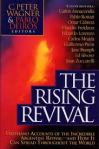 For those of you who remember that my story started in the midst of revival, it shouldn’t be a surprise to you that the topic of revival was near and dear to my heart. Early on I started reading books on revivals in the West, but I quickly discovered there were books that talked about revivals going on in other nations of the Earth. This book documents the story of the revival that took place in Argentina over the 80’s and the early 90’s. This revival had ties to what was currently happening in the United States in the mid-90’s and talks about how Argentina was affected by this move of the Spirit. C Peter Wagner’s book not only talked about revival, but it sowed a vision for apostolic church planting in the midst of a move of the Spirit that I had never conisdered before.
 I picked up this copy shortly after I read “The Rising Revival.” Carlos Annacondia was featured in that book in a short way. This book is his story of becoming the Pentecostal Billy Graham of Argentina. I think the draw of this book is Annacondia’s reliance on the Holy Spirit to direct him and draw in a harvest, not just hold revival meetings. His meetings were marked by demons being cast out, the sick being healed, and the Holy Spirit filling new converts. I loved seeing how the movement of the Spirit was playing out in a fairly modern nation like Argentina. I should note, while many of the things mentioned in “The Rising Revival” and “Listen to Me, Satan” were pivotal to my spiritual growth, I probably no longer hold to some of their views on how the church is structured like I did back then.
 Technically this breaks with my theme of learning from the church of the global South and East, since this book was written by a German. However, much of the insight that Wolfgang shares comes from studying house church planting movements all over the Earth. Most notably, Wolf spent a number of years in India trying to understand what the Lord was doing through the house church movement there with a goal of applying the lessons learned to the church in the West. This book changed my understanding of the nature of the church and I would recommend it to anyone who wanted a good book on house churches.
 I read this book a year after I read “Houses That Change the World” and these two books helped change the direction of my life. While Houses was more of a “how to” manual for meeting as a church like in the New Testament, the Heavenly Man read like the book of Acts. This book tells the story of one of the leaders of the underground house church movement in China. Through persecution, Brother Yun spreads the gospel, raises up leaders, and mobilizes the Chinese church to take the gospel back to Jerusalem, the very place that it came from. You will not walk away from this book without being personally inspired and challenged. And, as a bonus, for the first time in reading, I saw a house church movement and the power of the Holy Spirit tied together in a way I hadn’t read about outside of Acts. In many ways it’s why I’m still able to contend for the fullness of the Holy Spirit in the midst of a church planting movement. Many of us hear about how God is moving powerfully in the Chinese Church. This book give you a front row seat.
 This may be cheating to have two books by the same author. This follow up is not really a sequel, as much as it is Brother Yun’s attempt to teach after having told his story. If you finished reading “The Heavenly Man” and were left wondering “How, then, should we live?” Living Water is the answer. It’s full of solid teaching on the Kingdom of God in the life of a Christian, from a Chinese perspective. Reading this book is like asking Brother Yun to disciple you a little bit each day for a month. It’s well worth your time.
 It’s hard to put into words how refreshing this book was. I picked this up last year at the recommendation of some friends. It follows missionary Nik Ripken as he tries to grapple with horrible darkness and incredible fruitlessness that he encounters in Somalia. When he leaves the mission field for a season, he and his wife use the time to meet and research how the church survives and thrives under persecution. The stories he encounters and the people that he writes about are some of the most inspiring stories I’ve heard recently. They pages are also filled with a challenge to endure for Jesus under long-term sustained pressure. This is truly a global book, starting in Africa, moving to Russia, China, and the Middle East. Reading this book will convince you that God can work on your behalf anywhere you go. Because of all of this, this book was my number one book recommendation for last year.
Misreading Scripture Through Western Eyes
 This one deserves a mention though its a book I’m currently working through right now. The book is written by a church historian and a missionary to Thailand. Both of them use their background and education to reveal how we in the West read the Bible through lenses that the original audiences of the Bible never wore. When we do this, according to the authors, we come up with a different message than the one the Bible was intending us to hear. This book has been a fascinating look at concepts like honor/shame and individual/corporate interpretations that I think most Western believers never get exposed to. There is a lot of eye-opening thoughts here. Reading it with an open mind will change (for the good) how you interpret Scripture.
Well, that’s enough for today. I could go on. But my point in listing these books was that you see you can learn from the church around the world without buying a plane ticket.
Many of you have already written me some of the books you’ve read about similar things. If you’ve read a book from an author from a dramatically different part of the world that has strengthened your walk with Christ, leave a comment for us and tell us the name of the book and how it impacted you.
Cluster Map

 Pursuing Glory