This Year in Reading: Evangelism

I did a lot of reading this year.
A lot.
I read so much I surprised myself. Over the course of the next few days, we’ll talk about the how’s, why’s, and what’s of my reading this year. For now, lets just say I read more books this year than in any single year of my life.
While that level of reading by necessity must be broad, I did have one goal in my reading this year—read as many books as I could about evangelism. Now, why, you may ask would I read as many books as I could on evangelism? Well, the simple answers is I want to get better at it. The more complex answer is that I find that the more I think about a topic, the more central it becomes in my life. One easy way for me to think about evangelism more was to read more about it.
There were a lot of books. I didn’t get through all of them. I plan to continue the emphasis going forward in the New Year. Because evangelism is not just something I need to get better at, but I believe the whole body of Christ in America needs to get better at, I created a list of the ten best books on evangelism I’ve read this year. There’s a short blurb below each link that tells a bit of my journey with the book and why it might interest you.
This was the second or third book about evangelism I read this year and it was easily the best. Jean is a prophetic minister who regularly hears from Jesus and shares His heart with lost people around her. This may seem really scary and difficult, but Jean makes the process seem so simple and friendly that by the end of the book you’ll be wanting to put it into practice. Not only did I learn about hearing from Jesus and sharing what I’m hearing with the lost by reading this book, but I encountered the love of Jesus as I read the author’s testimony. I highly recommend picking up the audio book where you’ll get to hear a very personal evangelism testiomony told in the author’s own voice toward the end of the book. It’s well worth it.
Spirit Led Evangelism was such an encouraging read. The book is by Che Ahn, a stalwart in the charismatic renewal movement who has been moving in Holy Spirit-inspired evangelism since his days in the Jesus People movement. Che covered the whole spectrum of evangelism, from sharing the Gospel and partnering with the Holy Spirit in signs and wonders to church planting and its impact in the harvest. Ahn encourages believers to follow the Holy Spirit and be persistent and faithful in evangelism, which is a rare combination. I think you’ll be helped by this book.
The Master Plan of Evangelism and Discipleship
This book is a classic. You can’t go anywhere in American Evangelicalism without encountering someone whose thoughts have been impacted by this book. What I found interesting is that so much of the house church movement’s thinking finds its origin and support in the discipleship principles laid out here. The key to effective evangelism is found in sharing the Gospel and training up converts in a way of life that leads them to do the same. Without this plan in place, both our evangelism and our churches will suffer. If you haven’t read this book, I highly recommend it.
Gospel Boldness: Mission, Prayer, and Evangelism
This book has one clear focus—convincing you that you need to be more bold for Jesus. The author believes in the West, we don’t share the Gospel because we are afraid, and I agree with him. His answer is to regularly ask Jesus for boldness to share the Gospel. It’s a simple formula and a long book. I hesitated putting this book so high on this list, because the book repeats the premise so much, but I believe that the premise is so true and accurate that I think you should read it and put some of his recommendations into practice.
Evangelism in a Skeptical World
Many of the books I read on evangelism were written from a perspective that would have worked in 1990, but no longer work in 2019. This book was the first book that acknowledged that we are no longer culturally in the same place that we were in 1990 and that the tactics that worked in 1990 might not be as helpful as they used to be. My big takeaway from this book is that people need to be exposed to Christians in normal, everyday life in order to see that Christians aren’t the odd cultural phenomenon that the media makes them out to be. If you struggle with the culture being less receptive to Christianity than it used to be, I would highly recommend this book.
This book is written by Peyton Jones, a missionary to Wales who spent time planting a church in a Starbucks there. Peyton writes from the perspective of someone who has been to Western countries who have rejected Christianity at a far higher level than the United States and he plants churches and trains church planters to reach those same types of people here. I came to this book looking for strategies, I left with the conviction that God loves lost people and if we spend time with people who are far away from God and have the Gospel at the ready, we will see people come to Jesus.
Sharing Jesus Without Freaking Out
This is a good book written by Alvin Reid, a professor of evangelism at a Southern Baptist university who wrote this book to help people who don’t see themselves as evangelists get better at sharing the good news. There is a lot of good, practical advice about sharing the Gospel as part of your everyday life. If you struggle with fear in evangelism or need a good, practical starting point, this is a good book for you.
I don’t remember who, but some semi-famous preacher who has led a lot of people to Christ said this was the book that has informed all of his evangelism. After reading this book, I can understand why this book would be a solid introduction to evangelism. It’s mostly about creating a system that enables evangelism and discipleship and that works extremely well in a college environment. The trick is making it work in a post-college environment.
Out of the Salt Shaker and Into the World
This is an older book, but one that is full of stories of the author learning how to share Jesus with people. The premise of the book is that Christians need to get out in the world and bring the Gospel to where people are. There are a lot of encouraging stories that will benefit Christians trying to learn how to share Jesus with others.
Evangelism: How the Whole Church Speaks of Jesus
I didn’t intend to learn much about evangelism from this book but I couldn’t ignore the forward by David Platt that commended the author as a model for evangelism. I think the core thought that was helpful in this book was an emphasis on teaching in aiding people to come to Christ. Especially if you identify as a teacher, this book may give you insights into how you can lead people to Jesus.
So, there you have it. The top ten books on evangelism that I’ve read this year. If you haven’t read a good book on evangelism this year, pick a book from this list and start reading.
You won’t regret it.
Photo Credit: Person Holding Unfolding Book by Jazmin Quaynor on Unsplash
A Quick and Dirty Review of The Consolation of Philosophy
What It’s About:
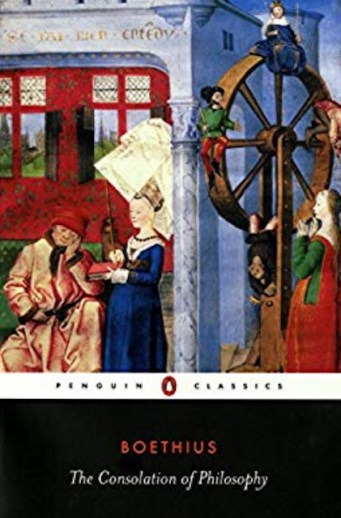
This is an old book written in the six century by a political prisoner, Boethius, who formerly was a high ranking official in the Roman Empire. The book presents Boethius in jail being visited by Philosophy personified as a glorious woman that councils him about the meaning of life and the pursuit of virtue in his darkest hour.
What I Liked:
The book was a dialogue about the nature of life, the pursuit of virtue, and why it’s worth pursuing virtue even in the face of tremendous difficulty. In a way, this book reminded me of the book of Ecclesiastes or reading one of the well known stoic philosophers. In particular, there were a few chapters that focused on the futility of honor and titles that are conferred on you by higher authorities that is worth reading the entire book.
What I Didn’t Like:
This book was recommended to me by another believer on Twitter. I had asked my followers for their favorite Christian books that were written over 100 years ago. Having never heard of this book, I picked it up and gave it a read.
My problem with this book was that it was recommended as a Christian book when, after finishing it, I don’t believe it was. Philosophy talks to Boethisu about God regularly, but she refers to God as the highest or ultimate good. She never quotes or mentions Jesus or the Scriptures, but at length quotes Plato, Aristotle, and others.
All of this is fine if you planned on reading a book on philosophy and life. Again, there was at least one really helpful section that I felt contained a measure of earthly wisdom. But let’s not buy into the fact that just because an author uses the name “God” in a monotheistic way, that somehow baptizes the book and makes it Christian. In many ways this book follows in the footsteps of Plato, Aristotle, and the Stoic philosophers, which doesn’t make it bad, but also doesn’t make Boethius a follower of Christ.
Should You Get It:
You should pick this book up for two reasons:
- You love philosophical works from over 1500 years ago.
- If you struggle with pursuing honor from others. Again, there is a section in the first half of the book about that topic that makes the whole book worth the read for just that section.
Otherwise, I would not really recommend this book.
Rating:

Photo by Sharon McCutcheon on Unsplash
A Quick and Dirty Review of “Giving Up Control” by A.J. Dejonge

What It’s About: A.J. Dejonge tells the autobiographical story of their time as Campus Crusade for Christ (CCC) University missionaries when he and his team made a transition from a staff-led campus ministry to a student-led campus ministry. This allowed CCC staff to start and oversee multiple campus ministries at different colleges. Based on this experience, he argues that student-led (or lay-led) ministries can reach more people than any revival through the means of disciple multiplication. Dejonge contends that only catalytic ministry styles will allow CCC, other college ministries, and even the church itself achieve the multiplication disciples it is called to.
What I Liked: There was so much to like here!
First, Dejonge is clearly interested in starting movements where people need to hear the Gospel of Jesus Christ. This is something people who have fallen in love with Jesus should be pursuing and his passion to reach the lost is contagious. Everything that is found within the pages of this book is focused on getting more people involved in reaching those who haven’t come to love Jesus.
While the book tells the story of their campus ministry expansion, it’s organized around different proverbs that their ministry has discovered. These proverbs help tease out the wisdom of their approach of putting every day students in charge of the ministry of reaching the campus. A few of the proverbs include: “Lead only to train,” “Value transferability over personal genius,” and “The empowered masses will always outperform the professionalism of a few.” Many of these proverbs are designed to help navigate the tricky balance between being a too-heavily centralized ministry or a healthy decentralized movement.
I love how the principles found in this book don’t just apply to CCC. While everything he learned during his time is taught through the lens of a college ministry, many of the concepts of multiplication have been borrowed from experienced church multiplication experts and can be easily implemented in multiplying ministry in the church. Dejonge essentially said part of this process was designed to help his college students start churches if they graduate and move to towns where no churches exist. At the very end of the book he acknowledges he is now in the process of planting a church outside of CCC using the very principles he is writing about.
What I Didn’t Like: There’s really only one chapter of the book I didn’t like. Chapter 10 is called “Ownership and Control” and Dejonge wrestles with the question of who really owns the ministry in this chapter. By the end of the chapter, it’s clear that while Dejonge is clearly in favor of giving much of the ministry happening on each campus to the college students on each campus, at the end of the day it’s still the staff who are ultimately in charge. This seemed odd from a book called “Giving Up Control.” He talks about a nearby college ministry that wanted support, but ultimately did not want to become a CCC affiliate and then goes on to speak about the wisdom of franchises. I think here, he misses the point of humility, being teachable, and healthy response to mentors in favor a business model that is man-centered. He makes some understandable points about why CCC staff is still ultimately in control of each ministry and yet there is a sense in reading this chapter that the name and brand of the ministry may still occupy a little too high of place in the author’s mind.
Should You Get It: Probably! If you’ve never been in ministry or never thought about multiplying disciples and churches, I would likely point you to an easier entry point like “The Master Plan of Evangelism” by Robert Coleman, because it’s more accessible for every Christian. However, if you are in any kind of leadership capacity, if you have a heart for making disciples that make disciples, if you have apostolic leanings, or you’re part of a house church or church plant, I would seriously encourage you to pick up a copy of this book. It has a lot of practical wisdom about instilling skills and competencies in people so that you can entrust the work of the Gospel to them with minimal oversight and this is critical to raising up movements of the Gospel.
Rating:

Cluster Map

 Pursuing Glory