Elders
How we build the church is based on how we view the New Testament. Nowhere is this clearer than the realm of elders. Some emphasize Paul’s epistles and get a seasoned, often stationary church. Others emphasize the book of Acts and it’s emphasis on minimalist structure and get a church that disappears quickly under pressure. The truth is neither of these views is correct apart from the other. But often we chose one perspective over the other, instead of seeing how both work together to accomplish what God wants.
Let’s look at some thoughts about elders from the book of Acts:
- Paul would plant churches and leave without appointing elders, but would often times do that later (see Acts 14:23). This is interesting to me, because many today stress the fact that a church without a pastor or elders is not a church at all. But Paul started a number of churches where he either didn’t appoint them on purpose or he got chased out of town before he could. My personal opinion is Paul often wanted to let new believers mature before appointing them as examples for the church to follow. But make no mistake–churches existed where elders didn’t.
- Elders were shepherds (Acts 20:28). Whoever eventually became an elder had the task of feeding and caring for the church the way a shepherd feeds and cares for a flock of sheep. This verse and another like it in 1 Peter 5 are the primary reasons I believe the gifting of shepherds and the role of elders overlap considerably. Often these are the people ingrained in the believing community and caring for those in their relational sphere.
- Elders were given the task of overseeing (Acts 20:28). Paul tells the Ephesian elders that the Holy Spirit has appointed them as “overseers.” An overseer is not a leader, a public speaker, or a visionary person. An overseer literally watches over what is going on in any given circumstance. Note that the overseer is never told to give orders, tell everyone what to do, or to monopolize the teaching or instruction of the church. Their task is to watch over what is being done. One of the great needs of the church in this hour is more overseers who can provide a safe place for new believers to grow and test out their spiritual muscles that are beginning to develop.
Now, let’s look at some thoughts from Paul to Timothy and Titus:
- It’s a noble thing to aspire to be an overseer (1 Timothy 3:1).
Part of the reason for this is that these were the believers first threatened with death when persecution came. This wasn’t a position of privilege that you needed to die to yourself before you decided to take. It could be a death sentence. And while some (especially in the house church movement) believe that it’s not good to be a leader, Paul encourages believers who desire to be godly overseers. - There is a list of character requirements for elders (1 Timothy 3:2-7, Titus 1:6-9).
Character was the primary qualifying factor for elders of the New Testament. They couldn’t be a new believer and they had to be able to teach, but the overwhelming majority of qualifications were centered on how much Christ had transformed their character. Central to the idea of elders was that they were a mature follower of Jesus that new believers could look to and pattern their lives after.* ** - Elders were appointed (Titus 1:6). Paul makes it clear these guys were appointed and we saw that both in Acts and in these apostolic instruction manuals for Timothy and Titus. It was an apostolic function to appoint elders. Often they weren’t appointed until after an apostle left, but the church knew who they were because of this appointment. This is different, however, than a hierarchy where believers lord position over other believers.
When we look at the New Testament, there is a distinct pattern that emerges. Churches were spreading rapidly in the book of Acts through the ministry of men like Paul. Young churches would spring up and these churches wouldn’t have mature elders in place initially. Elders weren’t crucial to a church being established, you could have churches without elders.
But elders were necessary for the long term good of the churches that were established. These individuals were examples to the flock through their godly lifestyles but did not control every aspect of church life. They simply oversaw the life of the church and were helpful in the discerning of complicated issues that would arise. As overseers, they were to warn and admonish the body when particularly dangerous individuals were troubling the church.
I see elders as essential to the movement of the Gospel. I consider them localized replicators of the DNA God inserts into his church. Our failure to have them will eventually impair the movement of the Gospel God is raising up. But the elevation of elders to the supreme place of importance, over and above the rest of the saints as the only leaders impairs the movement of the Gospel as well. But when elders can be raised up that function as spiritual parents, allowing their children to grow and mature beyond them, beautiful movments of the Gospel can take place.
And that, my friends, is what we’re hungering for….
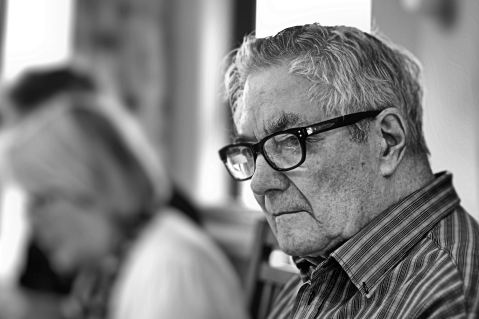
Photo Credit: Lost in Thoughts by Kate Russell
* 1 Peter 5:3 emphasizes the role of elders being a godly example. We haven’t looked at 1 Peter 5, but more and more, it is becoming my central text when understanding eldership in organic churches. More on that soon.
** The New Testament has a distinct pattern of calling believers to pattern their lives after other believers who live godly lives, not just Jesus. More on this in another post.
Cluster Map

 Pursuing Glory