On Making Disciples

The church in the West is facing a crisis of discipleship. Every Christian should understand how to lead someone to Christ and help that person become a disciple of Jesus, but many don’t. Our over-reliance on sermons and books to transfer information has created believers that can consume information but not train others in following Christ.
As a house church planter with hopes of encouraging many others to plant house churches, I found out fairly early that this was a massive problem. After a period of time struggling with this issue, I had a number of brothers reach out to me and encourage me to read Ordinary Hero by Neil Cole. We adopted the methods found in this book over the next couple of years and we’ve seen some fantastic changes.
Before I get into the methods, though, I think it’s important to talk briefly about why we adopted a set of methods. I wholeheartedly believe that the best way to disciple another believer is life on life discipleship. Jesus invited twelve men to follow Him and be with Him, thus producing some of the most powerful disciples that we know of. This process is never meant to replace that powerful form of discipleship. But Jesus encouraged us to make disciples and every time I read the word “make” I’m reminded that there is some kind of intentionality to it. Disciples aren’t made on accident. This process is how we give intentional time and space on the calendar for what should be happening throughout the rest of the week.
Our goal was not just to make disciples,though, but to make disciples who could make other disciples. Many times a strong personality can disciple someone through solely their lifestyle, but successive generations waned after the pattern of that lifestyle was lost. We didn’t just want to pass our knowledge of following Jesus to the next generation, but set up the next generation to pass it onto several generations after us.
This required a method that was simple and reproducible. It was simple in that anyone with a Bible who could read would be able to participate and lead a group with very little training. Because of the simplicity, someone who had participated in a group for a very short time could easily take the methods and start their own group. It was reporducible. In fact, a lot of conversations I have with house church planters involves me talking through this process and emailing them the accountability questions. It’s easy to start with just a little guidance.
The process looks like this: a number of us meet in in groups of 2 or 3 of the same gender across our house church network weekly. Each of these people are reading the same 20-30 chapters of the Bible each week. They also ask each other accountability questions and pray for their lost friends and family each week. When a new believer is added to the body, they are added to the “2&3” of whomever led them to Christ. When groups grow to four people, we create two new groups of two people who continue doing the same process. It’s how we practice mutual discipleship.
We’ll look more into each of the elements of the “2&3” in the coming days. Obviously there is no silver bullet for discipleship. No process will take an unwilling saint and make him or her the next apostle to the nations. But what we’ve found is when we get believers reading their Bibles together, confessing sin to and praying for one another, and praying for those they know to come to Jesus, growth in the Lord happens naturally. This growth strengthens the churches and creates disciples who can make disciples.
Photo Credit: CoffeeShopDiscipleship-8 by 23 Images Photography
Why You Should Know How to Share the Gospel and Disciple Others

Several years ago I had a friend who I started talking to about discipleship. I looked him in the eye and asked him, “If you lead someone to Jesus today, would you know how to help that person grow in the Lord?” A kind of glazed look came over my friend’s face as he realized that he really didn’t know what would come next if he lead someone to Christ.
My friend isn’t alone. In fact, my experience in Christianity in the West tells me that very few people know how to share Christ and fewer know how to disciple those they lead to Christ. This hinders the spread of the Gospel.
Before we go too far, I feel like it’s important to say that I understand not every Christian is going to be an evangelist. I don’t primarily consider myself an evangelist and many of the people I know who share the gospel regularly aren’t evangelists either. But every believer should have a basic understanding of how to share the gospel and disciple new believers. This is part of what Paul means when he says that “we are to grow up in every way into him who is the head, into Christ,” (Ephesians 4:15). Every believer is called to be a witness and a disciple (and therefore a disciple maker), but not every believer is called to be an evangelist.
You are called not just to be a Christian and pursue your calling, but regardless of your calling to lead people to Christ along the way. And as you lead them to Christ, you will need to baptize them and instruct them in following Jesus. Don’t settle for anything less than that.
If you are an elder or teacher in the body of Christ, make sure that those around you can articulate the gospel and know how to respond when someone says yes to it. This can make the difference between leading one person to Christ and many more people coming to Christ through the testimony of a new brother or sister.
For those of you who don’t know how to share the Gospel with those around you, here is a clear, simple, reproducible way to share it that we’ve used many times with those we know:
Many times, though, leading people to Christ is the easy part. Teaching them to obey the Risen Christ and helping them to lay aside their old lifestyle is much harder. So next week, we’ll look at a process we’ve used here to raise up disciples.
Until then, what do you think is the main difficulty you have in sharing the gospel and discipling new believers? Let me know in the comment section.
Photo Credit: The Bible by Chris Yarzab
Saint Patrick, Shamrock Shakes, and Missional Living
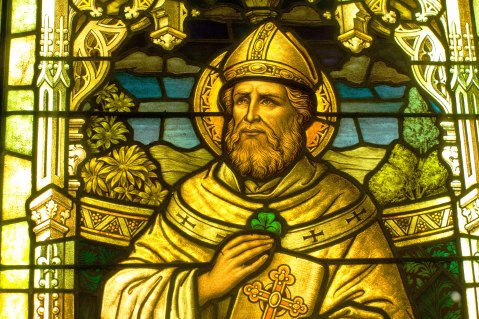
I’m not quite sure what got into me a couple of years ago. But sometime in early March three or four years ago I became frustrated with our culture’s celebration of St. Patrick’s Day.
If you think about it, it doesn’t make much sense. We take the date that perhaps one of the greatest apostolic missionaries since Paul died as a day to pinch people who don’t wear green and drink green beer. Even in Christian circles, we talk a good game about Patrick on his famous day, but we don’t do what he did.
So in my typical rebellious approach, I thought I would do something different. Instead of celebrating all things Irish on March 17th, I would spend some time getting acquainted with Saint Patrick’s life. Pretty quickly I found out that Patrick himself actually wrote two letters that we still possess and one of them is him telling the story of how God lead him to plant churches among the Irish.
But I couldn’t just read the Confessions of St. Patrick on St. Patrick’s day. No, no, no…that would be too easy. So instead, I went down to the McDonald’s in my neighborhood and read St. Patrick’s confession there…all while enjoying one of McDonald’s Shamrock shakes. Why would I do this? Because I became convinced after reading Patrick’s letters that if he lived today in my city, he would reach the people who hang out in the roughest McDonald’s in town. Something about reading the letter there stirs me to follow in Patrick’s example.
Now here’s the million dollar question: Why am I telling you this story?
The answer is this: I’d like you to join me on March 17th in reading the Confessions of St. Patrick. It’s the story of a young boy who is sold into slavery and while a slave learns how to pray to God and hear His voice. God then leads him out of slavery and back to his home, only to be stirred by God with love for his previous captors. He returns and lives like them in order to reach them and proclaim the Gospel to them. When I think of the nature of a missional lifestyle, it’s hard to get better than that. You can get a copy of his “Confessions” for free here.
But I don’t just want you to read the Confessions of St. Patrick in your home. I want you to go and read it in a place that St. Patrick would go as a missionary if he lived in your city. If you’re in my city, you can message me on Facebook and we can stage a sit-in and read it together. But ask the Lord to do in you what he has done in generation after generation and raise up missionaries for the Gospel who will love God, learn to pray, and become vessels of redemption to those living in the darkest places. You won’t regret it.
And check back here on March 17th for some thoughts from my reading of St. Patrick.
Photo Credit: Saint Patrick by Thad Zajdowicz
Cluster Map

 Pursuing Glory