What I’ve Learned from the Church Around the Globe

Over the last ten years the Lord has taken me on a journey of learning from the church in other parts of the world. Part of this process has involved me realizing that while there are many good churches here in the United States, there are places in the Earth where the gospel is exploding unlike anything we see here. China, India, and the Middle East are the easiest examples of this. I don’t want to just cheer on the church in other countries, though, I want to learn from their example and take the lessons that are universal and apply them here.
So, in no particular order, here are a few things I’ve learned from the church scattered across the Earth:
- They take the Gospel seriously. Maybe it’s because many of my friends live in a world where the people around them don’t know Jesus, or maybe it’s just that my friends believe the Great Commission more seriously than we do. Whatever the case, I’ve been inspired by friends in Africa who travel many miles into remote villages to share the Gospel with unbelievers.
- Their lives are not their own. Needless to say there is plenty of risk in sharing the Gospel in hostile environments. Some of our friends have taken the Gospel to the least reached places at the risk of losing their lives. These are people with wives and families and yet they trusted God to be with them, and if things go badly, to be with their wives and children.
- Prayer is the foundation of all they do. I’ve never met a fruitful servant of the Lord in Africa who hadn’t given themselves significantly to prayer. The apostolic men that I’ve met in Africa spend time praying for the churches they serve as they travel to those churches. Others have regular times of prayer from midnight to five in the morning. And it’s encouraging to hear the insights they have gained and the fruit they have seen as they continue to persevere in prayer.
- Faithfulness under persecution and in the harvest has formed them. Those who I’ve had the privilege to work with came to Christ in the context of either terrible persecution or incredible awakening. Many had to learn how to follow Jesus when others resisted them. Others learned how to follow the Holy Spirit during seasons where He was moving mightily across their country. But these believers’ consistency in following Jesus during tumultuous times has lead them to be fruitful servants of Jesus.
- They do not see America as the Kingdom of God. This may sound elementary, but I think sometimes Christian Americans still believe that America is a gift to the Earth second only to Jesus Himself. While my African friends and I are thankful for the good America has accomplished, they (and I, because of their example) understand that America has a fair share of weakness. One friend I have regularly reminds us that many of his co-workers who served alongside of him in persecution and revival are now living dull lives chasing the American dream here in the US. Others have clearly warned us about the dangers of the American church condoning sexual immorality. Because they aren’t in the boiling kettle of America or American Christianity, they have helped me to see where our culture doesn’t reflect God’s Kingdom.
The list could continue, but the reality is I’ve been greatly impacted by the church around the Earth. My hope is that by sharing a few of the larger areas where the church in other countries has challenged me, it will encourage you to learn from the church somewhere else. Read a book, listen to a testimony, or better yet, go on a trip to another nation and learn how much bigger God’s Kingdom is than the church in your country.
I guarantee you will not be disappointed!
On Discipleship: Apostolic Mission

Jesus asked us to go and make disciples of all the nations. For this to truly happen like it was intended, we need a simple and reproducible model of discipleship that empowers every believer to make disciples. We struggled for awhile in how to do this before we adopted a model of meeting in groups of two and three people. These groups read lots of Scripture and build relationships around accountability and confession, but they also spend time developing and strengthening apostolic mission in each other.
What is apostolic mission? Apostolic refers to someone who is sent as a representative of another. Jesus sends us to share His love with the same power and authority that He gave the apostles and that He Himself walked in. The mission refers to the unfinished task of sharing Christ’s love with those who don’t know Him. Part of us learning to follow Christ is learning to follow Him on the mission He embarked on of preaching the Good News of the Kingdom of God.
Why is this so essential? A mature disciple shouldn’t be able to just know all the details but reproduce him or herself. Just like in nature, a mature fruit or flower or human or animal has the biological capability of reproduction, so it is with disciples. Disciples reproduce disciples. As Alan Hirsch and others have said, we don’t have an evangelism problem in the West, we have a discipleship problem that comes to light in our inability to evangelize and disciple others.
When we gather in groups of two or three people, it could be tempting for it to become a bible study or an accountability group. Focusing on apostolic mission keeps our eyes turned to those who have still not encountered the Lord and off of ourselves. To do this, every time we get together, we bring a list of two or three people we have been praying for individually throughout the week and we pray for them as a group. This can take anywhere from 5 minutes to 20, but it’s important.
It’s so important, in fact, that I recommend making this the first thing you do when you gather. This keeps our purpose–reaching the lost–in front of us. Everything we do within these groups of 2&3 is not just for ourselves, but is for these others who we are praying for to be a part of once they turn their hearts to Jesus. Praying for these folks early in the meeting also keeps it from being the last thing on the list that there is no time for.
As with all the other disciplines, apostolic mission will need to be walked out in greater detail in the life of the church and the life of the individual. This is just the expression of it within our 2&3 meeting. Again, make this real. Pray real prayers that move God’s heart. It’s important.
When you add all these disciplines together, it looks like the following:
Divine Truth
Nurturing Relationships
Apostolic Mission
And when we get the DNA right, we are on the cusp of multiplying cells of an organic organism called the church. We can achieve the multiplication of disciples, leaders, churches, and movements that we’ve all seeking.
My hope, whether you follow the format or not, is that you find what it takes to multiply.
Saint Patrick, Shamrock Shakes, and Missional Living
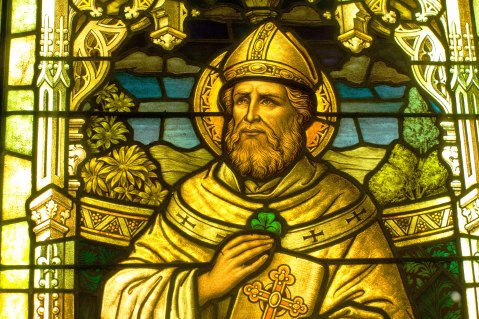
I’m not quite sure what got into me a couple of years ago. But sometime in early March three or four years ago I became frustrated with our culture’s celebration of St. Patrick’s Day.
If you think about it, it doesn’t make much sense. We take the date that perhaps one of the greatest apostolic missionaries since Paul died as a day to pinch people who don’t wear green and drink green beer. Even in Christian circles, we talk a good game about Patrick on his famous day, but we don’t do what he did.
So in my typical rebellious approach, I thought I would do something different. Instead of celebrating all things Irish on March 17th, I would spend some time getting acquainted with Saint Patrick’s life. Pretty quickly I found out that Patrick himself actually wrote two letters that we still possess and one of them is him telling the story of how God lead him to plant churches among the Irish.
But I couldn’t just read the Confessions of St. Patrick on St. Patrick’s day. No, no, no…that would be too easy. So instead, I went down to the McDonald’s in my neighborhood and read St. Patrick’s confession there…all while enjoying one of McDonald’s Shamrock shakes. Why would I do this? Because I became convinced after reading Patrick’s letters that if he lived today in my city, he would reach the people who hang out in the roughest McDonald’s in town. Something about reading the letter there stirs me to follow in Patrick’s example.
Now here’s the million dollar question: Why am I telling you this story?
The answer is this: I’d like you to join me on March 17th in reading the Confessions of St. Patrick. It’s the story of a young boy who is sold into slavery and while a slave learns how to pray to God and hear His voice. God then leads him out of slavery and back to his home, only to be stirred by God with love for his previous captors. He returns and lives like them in order to reach them and proclaim the Gospel to them. When I think of the nature of a missional lifestyle, it’s hard to get better than that. You can get a copy of his “Confessions” for free here.
But I don’t just want you to read the Confessions of St. Patrick in your home. I want you to go and read it in a place that St. Patrick would go as a missionary if he lived in your city. If you’re in my city, you can message me on Facebook and we can stage a sit-in and read it together. But ask the Lord to do in you what he has done in generation after generation and raise up missionaries for the Gospel who will love God, learn to pray, and become vessels of redemption to those living in the darkest places. You won’t regret it.
And check back here on March 17th for some thoughts from my reading of St. Patrick.
Photo Credit: Saint Patrick by Thad Zajdowicz
Cluster Map

 Pursuing Glory