On Discipleship: Divine Truth

Making disciples who make disciples is part of the commission Jesus gave us as believers (Matthew 28:18-20, 2 Timothy 2:2). Jesus Himself told us to teach them to obey everything He commanded, so it shouldn’t come as a surprise to us that a large part of making disciples involves all of us getting into the Bible and studying it together.
As I mentioned yesterday, our corporate discipline involves 2 or 3 people gathering together and reading large amounts of Scripture, somewhere between 20 & 30 chapters a week. Why are we so determined to study the Bible? Jesus said that His very words are Spirit and life (John 6:63). The message of the Kingdom contained within the Bible is like a seed in our hearts (Mark 4:13-14, 26-27). The more we can get that message of the Kingdom into our hearts and spirits, the more of the Kingdom we see take root in our life.
So, every time our groups of 2&3 gather, we pick a section of Scripture, usually 20 or 30 chapters in a row. This section is what everyone is reading this week. This week my 2&3 is reading the book of Mark, last week was the book of Revelation. Sometimes it’s multiple books like 1st and 2nd Corinthians. The point isn’t to finish the section every single week. Many weeks someone in my 2&3 doesn’t finish. When this happens, we start over, and read it again the following week. When everyone finishes the 20 or 30 chapters in the same week, that’s when it’s time to pick a new section of Scripture.
Why do we read the Bible together like this? The main reason is it’s good to be in the Bible hearing Jesus for ourselves. As Christians we believe the Bible is the only inspired message from God and because of that, it is fuel for us to grow up into the likeness of Jesus. But in addition to that, reading large portions of the Bible together keeps us from heresy. Mutual discipleship means there’s no authorized leader of a 2&3. If we read significant portions of the Bible together in context, each believer is able to say “Can you show me where you found that in the reading?” whenever a controversial statement is expressed. One final thought about reading together like this: It eats away at our carnal independence. Many people are content to read what they want, when they want. This process asks us to be formed as disciples together.
We want to be careful of a few things. The intent of this time is not turn our 2&3’s into a Bible study. Bible studies are good and have their place. But our goal instead is to figure out how Jesus encountered us in the Scriptures and is asking us to obey Him. This isn’t the chance for those gifted as teachers to break down whole chapters of the Bible for everyone else.
Also, we need to be careful of dead religion. Jesus rebuked the Pharisees for reading the Bible but resisting the very One that the Scriptures pointed to (John 5:39). The goal is not to become an expert, the goal is meet the One who Scripture points to! But reading and immersing ourselves in truths within the Bible is the surest way to do that.
I think in the West, because the Bible is so available to us, it can become easy to grow cold to its ability to transform us. The words sound familiar and if we fail to take the words back to the Holy Spirit and ask Him to encounter us around those words, our hearts can grow dull to the Word. I believe the word of God has the power to change human hearts. Have you ever seen Chinese believers receive a Bible for the first time? It should humble us. We need to hunger for God’s word like these fiery believers who are being transformed by the Gospel.
What I’ve described here is a corporate discipline that we embrace to make disciples. But friends, the heart here is that we are soft towards God’s word and being transformed by it. We need not only to read it ourselves, but join with others and help each other find the divine truth God has hidden in its pages.
On Making Disciples
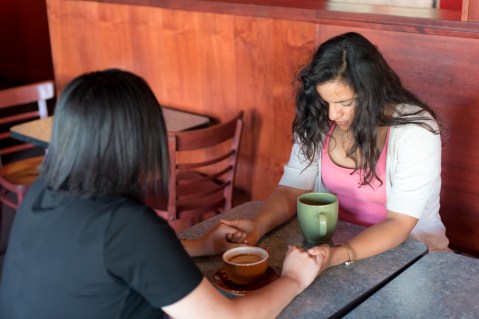
The church in the West is facing a crisis of discipleship. Every Christian should understand how to lead someone to Christ and help that person become a disciple of Jesus, but many don’t. Our over-reliance on sermons and books to transfer information has created believers that can consume information but not train others in following Christ.
As a house church planter with hopes of encouraging many others to plant house churches, I found out fairly early that this was a massive problem. After a period of time struggling with this issue, I had a number of brothers reach out to me and encourage me to read Ordinary Hero by Neil Cole. We adopted the methods found in this book over the next couple of years and we’ve seen some fantastic changes.
Before I get into the methods, though, I think it’s important to talk briefly about why we adopted a set of methods. I wholeheartedly believe that the best way to disciple another believer is life on life discipleship. Jesus invited twelve men to follow Him and be with Him, thus producing some of the most powerful disciples that we know of. This process is never meant to replace that powerful form of discipleship. But Jesus encouraged us to make disciples and every time I read the word “make” I’m reminded that there is some kind of intentionality to it. Disciples aren’t made on accident. This process is how we give intentional time and space on the calendar for what should be happening throughout the rest of the week.
Our goal was not just to make disciples,though, but to make disciples who could make other disciples. Many times a strong personality can disciple someone through solely their lifestyle, but successive generations waned after the pattern of that lifestyle was lost. We didn’t just want to pass our knowledge of following Jesus to the next generation, but set up the next generation to pass it onto several generations after us.
This required a method that was simple and reproducible. It was simple in that anyone with a Bible who could read would be able to participate and lead a group with very little training. Because of the simplicity, someone who had participated in a group for a very short time could easily take the methods and start their own group. It was reporducible. In fact, a lot of conversations I have with house church planters involves me talking through this process and emailing them the accountability questions. It’s easy to start with just a little guidance.
The process looks like this: a number of us meet in in groups of 2 or 3 of the same gender across our house church network weekly. Each of these people are reading the same 20-30 chapters of the Bible each week. They also ask each other accountability questions and pray for their lost friends and family each week. When a new believer is added to the body, they are added to the “2&3” of whomever led them to Christ. When groups grow to four people, we create two new groups of two people who continue doing the same process. It’s how we practice mutual discipleship.
We’ll look more into each of the elements of the “2&3” in the coming days. Obviously there is no silver bullet for discipleship. No process will take an unwilling saint and make him or her the next apostle to the nations. But what we’ve found is when we get believers reading their Bibles together, confessing sin to and praying for one another, and praying for those they know to come to Jesus, growth in the Lord happens naturally. This growth strengthens the churches and creates disciples who can make disciples.
Photo Credit: CoffeeShopDiscipleship-8 by 23 Images Photography
We Can Do Better…

Americans spend $700 billion on all Christian causes.
Of that number, $45 billion goes to any kind of work overseas.
That amounts to 6% of money that the church gives. Of that 6%, only a fraction of that money ($450 million) is sent to ministries working among those who are considered unreached. This is roughly the same amount Americans spent in 2015 on diet programs. It’s just over what we spend on Halloween costumes for our pets.
What these numbers reveal is that a staggering amount of the money we give to God ends up being spent on us. It stays within the church for the benefit of the church. It pays for pastors and buildings and programs for people who largely know and hear the Gospel. And very, very little goes towards people who have never heard of Jesus.
In fact, for every $100,000 that Christians give to the church, $1 goes to the unreached.*
Statistics, especially good ones, are our friends. They show us where our priorities are. They are like a mirror being held up to our faces so we can see what we look like. My point in sharing these statistics is not to be critical. It’s not to say that even some of the things we’ve spent money on aren’t good.
But friends, we can do better.
If we’re going to do better, it will require all of us to say no to some of the “good” things in order to say yes to better things. It will require we take a hard look at family budgets and church budgets and say “What does this line item in the budget say about our priorities?”
What good things are you committed to? Your building? Your pastoral staff? Your worship experience? Or are you committed bringing the good news of Jesus to the ends of the Earth? As it is written “How beautiful are the feet of messengers who bring good news.”
When Jesus came to the Earth, He didn’t ask for a tenth of what we had. He came and asked that we give our all to Him. This is not just a reality for individuals, but churches as well. And we have to decide if we are going to give everything to Him and let Him decide what we keep.
What would it take for giving to the unreached to move up higher in our spending priorities? What if instead of the money to the unreached being a fraction of 1% of our budget, it was 20%? What would that require you and your church to sacrifice? And would the rest of your church tolerate it? And what would everyone’s reactions say about their priorities?
We can do better. But we must change. Will you change with me?
Photo Credit: Macro Dollar by Chris Dlugosz
*Most of these statistics can be found on http://www.thetravelingteam.org/stats
Cluster Map

 Pursuing Glory