A Quick and Dirty Review of “Rising Tides” by Neil Cole

What It’s About:
Rising Tides is Neil Cole’s most recent published book that looks at four “rising tides” or trends in the Earth that are changing society and are changing the narrative for how and why we “do” church. Those four trends are rapid population growth, extreme technological innovation, growing economic disparity, and increasing political polarization. After discussing these four trends he spends the rest of the book talking about changes the church as a people must make to remain relevant in a society that is increasingly different than the one the church was so successful in reaching a generation or two ago.
What I Liked:
I’m a fan of Cole’s thought process and writing. Cole was one of my early influences in my process of starting house churches. Many of the societal factors Cole describes in his book and their impact on the church are reasons why I have chosen to meet and help give birth to house churches, so I found myself nodding, agreeing, and being encouraged about how he connected daily new stories and trends in the earth to the need for a church to be simple, reproducible, and real. Towards the end of the book, the themes come together in a very prophetic way that will present a picture of how the church must change.
Of all the books of Cole’s that I have read, this book is the most “end-time-like.” While Cole dances around the idea of end-times a bit, it’s clear he sees some of these factors pointing to a definitive point in humanity’s future. While he doesn’t exactly say we are living in the last days, he makes a solid case that history is heading towards a climax of some kind and we need to make an adjustment to endure the days ahead.
In many ways this book was much like a tract for those who might not be convinced by biblical reasoning to start an organic church but may be convinced by the need and the shifting atmosphere to adjust how the church is oriented. I love books that are more like tracts and as a “convert” it was a fun read.
What I Didn’t Like:
For those of us who have read “Organic Church,” “Organic Leadership,” “Church 3.0,” and some of Neil’s other books, there’s not as many new ideas here. If you’re like me, you’ve enjoyed all these reads and came for something maybe a little fresher. There is some of that, but most of the fresh material relates to the trends affecting us currently. It’s not that these sections were bad, but they weren’t really a surprise. There was maybe a new idea every chapter or two, but much of what was found here was repackaged from some of Cole’s other works. This isn’t a problem if you’re new to Cole’s work, but for someone familiar it served mostly as a good refresher.
The other thing I struggled with was the book seemed to raise the four “rising tides” as shifts the church needed to address, but the solutions seemed to still be forming in Cole’s mind. It wasn’t that they were bad ideas–most of the problems presented by the rising tides Cole addressed with the answer of a more organic, reproducing church. Again, here I agree, but in some ways these ideas didn’t seem robust or well connected to the problems. The one Cole most thoroughly covered was how a multiplying church could keep up with population growth, but with the tides of technological innovation or economic disparity the connections to his solution were less clear. Cole himself admitted this book was written quickly in order to not become out of date and it may be that some of the ideas needed a little more time to develop.
Should You Get It:
If you’ve never read a book by Cole, I would strongly suggest it. Cole loves the church and he writes a love letter to the church begging her to recognize the times she’s living in. Once you’ve read this book, I would strongly suggest you pick up a copy of Church 3.0 or Organic Church to further explore the ideas he suggests within this book.
If you love Neil, have heard him speak a lot, or kept up with his other books, I would be a little more wary. Unless you have a need to read every book of his or haven’t thought much about how house churches keep up with an ever-changing society, this might be a redundant book.
Rating:

Photo by Sharon McCutcheon on Unsplash
Zoo Christianity
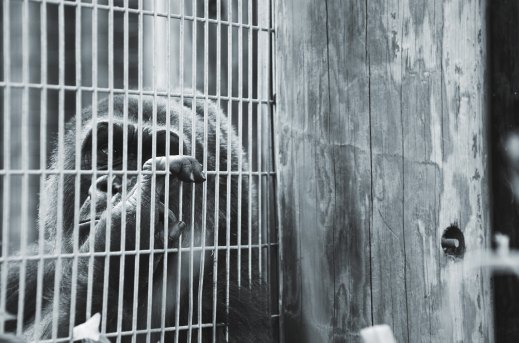
One of the things I think we all love about zoos it the ability to see animals many of us would never be able to afford to see in the wild. Most of us would never seen a tiger, hippo, or a monkey in real life. Zoos bring the animals to us and allow us to capture the exotic nature of a wild safari without the danger or the cost.
One of the things I think we would all acknowledge about zoos, though, is that the animals we love to see in them are rarely as full of life as they are in wild. On a recent trip to a zoo with my family, we stopped to look at the lions. There were three of them laying on the ground, sunning themselves. My wife leaned over to me and whispered, “I don’t know how many times I’ve been to a zoo and every time they look exactly like this.” Animals that are fed, caged, and have their every need cared for rarely have the spark of life that we think of when we picture an animal in the wild.
My wife’s comment reminded me of a trip to Africa several years ago. In the midst of different wings of our ministry trip, we had a down day for rest and recuperation. Our contact asked what we wanted to do that day. I told him I wanted to see a giraffe or a hippo. He got a delighted look on his face and said, “We can go to the zoo!” I quickly shot back, “Paul, this is Africa. I don’t want to go to the zoo!” I wanted to see what the animals operating like God designed them.
Often, Christians live in cages, too. These are cages of their own making. They are regularly “fed.” They have all their needs met. In these cages, they are safe to do everything Christians do. People from the outside can even come in and look at what Christians are and what they do.
The question is, like the monkey or the lion that has lost his spark in the zoo, have you lost your spark? Have you settled for less than what God has intended for you? Maybe it’s time for Christians to venture out into the wild and learn what it means to feed themselves and function without the cage. You might be surprised what a Christian released into their natural habitat is capable of.
#dailygospel

My project is mostly over. Mostly.
So, slowly, ever so slowly, I’ve started to come out of my work coma.
That may mean you see me a little more in this space. We’ll see.
In the meantime, I had something small I wanted to share with you all. It’s called #dailygospel. A few months ago I became convicted that I’m not good at applying the Gospel to every area in my life.
Think of it like this: We like to think of the Gospel as the diving board into God’s Kingdom. You get into Heaven and become a Christian by the Gospel. The problem is that the Gospel is not just a diving board, it’s also the pool we jump into. We don’t graduate from the Gospel. We just continue to live in the light of it.
So while I can tell someone how to receive Christ, I’m less than stellar at applying the Gospel to every area of my life and the life of others. That needs to change.
So I launched #dailygospel. It’s a daily post on my main social media outlets (Facebook and Twitter) where I post a daily thought about how the gospel applies to everyday life. I’m not sure how long I’ll keep doing it. Maybe a couple more weeks or months. Maybe I’ll just never stop. Regardless, I’d love it if you’d join me. Maybe together, we can get better at applying the gospel not just to salvation, but to everything we do.
Cluster Map

 Pursuing Glory