Distractions and Peace (Thirty Days To Greater Fruitfulness, Day 1)
 This blog has been temporarily overtaken by my Thirty Days To Greater Fruitfulness Challenge. You can find out more by checking out the Introduction.
So I’m checking in to report on the Day 1 of Thirty Days to Greater Fruitfulness. The time that I was able to sit in front of the Lord and actually wait on Him has been difficult. Any of you who have tried to pray for longer than you normally would can probably indentify with this situation. You want to take time aside and listen to Jesus but as soon as you set down, your mind starts thinking about the latest show you watched or something left unfinished at work. That was my day.
If you’re taking the challenge and went through what I went through today, do not loose heart. This is extremely normal. And while we recognize that trying to wait on the Lord and listening to Him can be difficult at first, the harder thing to do is to really believe that what we’re doing at this stage counts. The dry, mundane, distracted times of prayer actually are building something inside of us. God sees what we’re doing and counts it whether we feel super connected or not.
On the fruitfulness side, I haven’t seen a whole lot of what I call obvious fruit. No one came to know Jesus today, no one repented of their sin, I didn’t heal any sick people. But just like the distractions, I kind of expected this to be how this thirty days started.
However, I did notice today that my heart was full of more peace than it normally would be. I had a crazy day at work. It was the sort of day that makes postal workers go…well…you get the idea. But through it all, I had this peace that kept my heart at rest. I was more attentive to the Lord’s presence and that was extremely helpful.
The other thing that I noticed today that was different than other days is that the motives of my heart are becoming more clear. This is a good thing, because it’s giving me a chance to repent and clean out some junk that should have never been there. I’m also beginning to see a few situations the way I believe the Lord sees them and I think that will bear fruit later, even if it’s not bearing fruit right now.
Part of this journey is learning that fruitfulness doesn’t come over night. So if you’re in the same place I am, don’t give up and don’t be discouraged. The Lord is working internally, and some times that takes time.
If you’re taking the challenge, leave a comment in the post below and let us know how it’s going. Or, if you’re blogging on your own site, drop us a link so we can check it out. Thanks for going with me on the journey.
Join us on the “Thirty Days to Greater Fruitfulness” experiment. For the rest of September we are spending 30 minutes in silent prayer listening to Jesus and then acting on what He asks us to do. Then we blog about the changes that are occurring in our lives through the marriage of listening and obedience. It’s not too late. If you’re just checking out that experiment feel free to jump in. And if you want more information, you can check it out here.
Photo Credit: Calendar by Adreanna Moyer Photography
Thirty Days To Greater Fruitfulness: Introduction
I’m increasingly becoming convinced that great fruitfulness only comes from being intimately connected to Jesus.
This really shouldn’t surprise me, because Jesus told me it would be this way (John 15:4).
But if you think about the world you live in, so many times we act like this is not the case. We believe that our good ideas and biblical thoughts will cause us to be fruitful. We believe that if we just get the biblical model right, God will make us fruitful. And so we spend all of our time getting our model of church or ministry right….or we try to become more holy…or more likable so we can be fruitful. When all Jesus is asking is that we stay connected.
What does being connected mean? It means that we have a relationship with Jesus. This relationship begins with communication and communication usually starts with listening. But it doesn’t end there. We listen so we can understand and interact. And when we interact, we behave differently. We have new information. We have a different perspective. Maybe we even have a new agenda.
All of this is to say that Jesus desires for us to hear Him. He wants a people that are listening. He also wants a people who obey after they have finished listening.
I’ve been thinking tonight about Acts 13 and the ministry meeting that happened in Antioch before Paul and Barnabas became apostolic missionaries. Notice how ministry does not mean they were helping people. They were ministering by worshiping and prayer. They were abiding. The result was that Paul and Barnabas were released into an apostolic church planting ministry the likes of which is nearly unheard of in the Western world right now.
When was the last time your evangelism and church planting happened because Jesus gave you the idea in prayer? When was the last time you waited for God to give you something to do, rather than just doing something that needed to be done? When was the last time you obeyed those subtle promptings in prayer and saw what could happen? Make no mistake, fruitfulness comes from abiding and obeying.
Thus, the “Thirty Days To Greater Fruitfulness.” I’m going to begin spending 30 minutes every day for the next thirty days waiting on Jesus and listening. My goal is to actually hear what He wants me to do and then do it. Nothing more, nothing less. And then, to make the exercise real and accountable, I’m going to post a quick update about it here on the blog. I will begin here tomorrow, September 1st, and write up until September 30th. At the end of the month, I will sum up my findings.
But I want you to join me. You can do that one of two ways. You can practice abiding on your own and write about it on your blog or you can take the abiding challenge and write about it on the comment section below. But remember, it’s not just about listening prayer, but about listening prayer that turns into tangible action and fruitfulness. I believe the results will be well worth the effort.
Photo Credit: Calendar by Adreanna Moyer Photography
Basic Introductions: The Song of Solomon
[In an ongoing effort to provide a jumping-on point for new readers, over the next few weeks on Fridays I’m going to write a series of posts entitled “Basic Introductions.” Each post will focus on a seldom explored realm of Christianity that we will focus on regularly here at Pursuing Glory.]
This post also builds off a previous “Basic Introductions” post called “Basic Introductions: The Bridal Paradigm.” I would encourage new readers who are unfamiliar with the Bridal Paradigm to read that post, and then return to this post.
In my experience, the Song of Solomon is probably one of the most neglected books in the entire Bible. The reason why is different for different groups of people. For some the book is overflowing with symbolism, which makes interpretation and application difficult. For others who can see through the symbolism, the book seems so erotic that the idea that God could have ever inspired it is difficult. Between these two reasons are a host of smaller reasons but the bottom line is that the Song of Solomon is a neglected book.
This is tragic because as Paul wrote, “all scripture is breathed out by God and profitable for teaching” the church (2 Timothy 3:16). That includes this poetic, romantic, passionate book. The question that we have to deal with is how does God use the truths in this book to build up other believers. I would like to suggest two ways that this book has been used historically and argue that both of them are appropriate as long as we don’t ignore the other.
First, this book is a love song that describes a literal, holy relationship between Solomon and the Shulamite (see Song of Solomon 6:13). Though the book is filled with symbols that are difficult to interpret, it’s easy to see a very passionate but holy romance blossom between Solomon and the object of his affection. Because this book is part of the Bible we can use it as an endorsement for pure romance that occurs in the confines of courtship and marriage. God is not an enemy of either and He demonstrates that by giving us this Song. This view of the Song is called the natural interpretation. Insight from reading the song this way has helped many pursue romance in purity and has helped cultivate deeper intimacy in marriage.
The second view of the book, called the spiritual interpretation, looks at the book from the perspective of the Bridal Paradigm. More people have held this view through church history than any other view. In this approach, the Song is an allegory of Christ’s pursuit of the Church. This approach makes sense when you understand that Paul would look back at the relationship of Adam and Eve and see Christ and His Church (Ephesians 5:28-32). The benefit of this approach is we gain an understanding of God’s deep heart of love for us. If we believe the truths that can be mined here, we begin to see God and ourselves in a totally different light. We are changed when we see how much God loves us and begin to love Him back in a new way.
It’s only as we read this book both ways that we gain insight into what God intended the book for. He intended it as a natural love story. And God uses natural love stories to speak volumes about the nature of Christ’s love for His Church. To only read it one way or the other weakens the whole book. Now, the book is in your court. What will you do with this book of the Bible God has given you for the building up of the church?
Help Other Readers Out (Leave a comment about the following questions below):
- How do you read the Song of Solomon?
- How does reading the Song of Solomon promote holy romance couples?
- Has reading the Song of Solomon ever changed your view of intimacy with God? Describe it.
Some Helpful Books on the Topic

The Song of Songs-Watchman Nee provides an excellent resource that examines the Song of Solomon verse by verse. I don’t always agree with everything Nee sees in the book as symbolic, but he goes into more depth than just about anyone else. If you’re looking for a deep resource on understanding the book as a revelation of Christ’s love for His Bride, this is a good start.
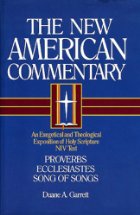 The NAC: Proverbs, Ecclesiastes, and Song of Songs-This commentary provides an excellent look at the Song of Solomon from the perspective of a love song. It’s written by one of themore outstanding Old Testament Scholars of our day. If you want to develop some depth in understanding the natural interpretation of the Song, this is a good place to start.
 The Song of Solomon-While this isn’t a book, this CD/MP3 series is well worth any time or money spent on it. Mike is the foremost expert on the Song of Solomon as an allegory for Christ’s love in our generation. I’ve been incredibly helped by Mike in many areas, but this is the place where he really shines. His 24 session teaching on the book can be found here.
Other Posts In the “Basic Introduction” Series:
Cluster Map

 Pursuing Glory