Redefining Spirituality: Seven Benchmarks for a Discipling Culture
Christianity in the West has settled for something significantly lower than a culture of discipleship. Our “spiritual” members are typically those who have consistently read their Bible and maintained a devotional private life. The most honored among us are those who have brought their spiritual life to bare on one area of their public life, be it their job or their friends. The point is, much of this falls significantly short of what Jesus intended for His church.
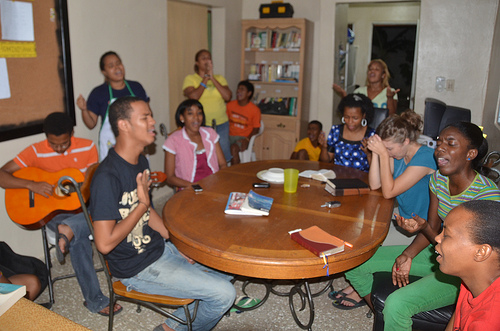 One of the sayings of CMA, an organic church planting fellowship I’ve learned a lot from is “we need to lower the bar on what it means to be a church and raise the bar of what it means to be a disciple.” They believe that if church is simple enough for anyone to participate in it and everyone is a committed disciple, churches will begin to be established quickly and repeatedly. My question then is, how high should we raise the bar? The following is my list of seven benchmarks for discipleship:
- Intimacy with Jesus- Every spiritual reality in the Kingdom of God is born out of a deep and abiding relationship with Jesus. When a person is truly born into the Kingdom, they are immediately grafted in to a real relationship with a resurrected Lord. But we never graduate beyond that relationship. There is no level of spiritual maturity where listening, loving, and abiding becomes something you did when you were young in the Lord. Cultivating this ongoing relationship with Jesus becomes the basis for every other Kingdom activity we do. (Matthew 22:34-40, John 14:15, John 15:1-10)
- Ability to Follow the Holy Spirit- Jesus expected the ministry of His Son to be carried on through those who followed Him. Jesus-style ministry did not stop when He ascended to Heaven. It continued on in the lives of those who had followed Him and in the lives of those who would come to believe in their testimony. The Holy Spirit led the expansion of the church, the direction of its mission, and fueled the internal growth of holiness in His people. It’s not necessary to take a class on following the Holy Spirit, but we all need to grow in understanding how He leads individually and practice obeying His leadership. This will include knowing His voice, following His promptings, and manifesting His gifts. (John 20:21-22, Acts 2:33, Acts 2:38, Acts 9:31, Acts 13:52, Acts 16:6-10)
- Growing Character- We all come to Christ as enemies of God and it’s the work of God to cause us to surrender to Christ. This change from a captive of Satan to a citizen of the Kingdom of God will have ramifications on our lifestyle. As we develop intimacy with Jesus and follow the Holy Spirit there will be continual change of character reflected in our lifestyle. This is fueled not out of religious pressure but the work of God in the soul of man. Jesus called us to be perfect even as our Heavenly Father is perfect, Paul told us he pressed on to the upward call of Christ but had not reached it. Our lifestyles are to grow up into the image of the One who saved us. (Romans 5:8, Colossians 1:13, 1 Corinthians 6:9-11, Galatians 5:22-24, Matthew 5:48, Philippians 3:12-15, Ephesians 4:15-16)
- Retelling the Gospel with Relevancy- Anyone who has been to a third world country and seen effective ministry being carried out by the illiterate and unlearned will understand that it doesn’t take a seminary degree to be a disciple. But the ability to grasp the Gospel is essential in coming to Christ. The ability to retell the Gospel is crucial if we desire to see others come to Christ. So every believer from the newest to the most mature should be able to retell their story of Christ meeting them (their testimony) and the story of how that was accomplished by Jesus (the death, burial, resurrection, and ascension of Jesus, otherwise known as the Gospel). (1 Corinthians 1 :26-31, Romans 10:14-15, 1 Corinthians 15:3-4)
- A Commitment to the Body of Christ- When Jesus saves us, He sets us in spiritual families that corporately represent Christ. We lose our individuality and gain a corporate family more amazing than anything we have ever participated in. This family is at the same time a universal brotherhood and a specific and local group to which we belong. We begin to tangibly demonstrate our love for Jesus and our status as disciples as we demonstrate love for other broken humans redeemed by Jesus. (Psalm 68:5-6, Ephesians 4:4-6, Romans 16:3-5, 1 John 3:14-18, John 13:35, Romans 12:9-21)
- A Commitment to Care for Orphans and Widows- God found us when we were unwanted orphans (spiritually) and adopted us into His family. Truly following Him, then, means we take care of the weakest and most broken parts of society, whether they are believers or not. We demonstrate the reality of our Gospel by caring for widows and orphans. (Romans 8:15, James 1:27, Galatians 6:10)
- A Commitment to Reproduction- The Gospel and and it’s effects were designed to spread from person to person with little difficulty. Our commission from Jesus is to teach whole nations the realities we’ve learned from Him. If we miss this element, we cease to be a discipling culture. Paul wanted Timothy to not just teach other people, but to teach people in a way that they could pass his teaching on to others. It was this commitment to spreading both the Gospel and it’s associated lifestyle that allowed it to reach most of Europe in a short period of time. The same will be true today. (Matthew 28:18-20, 2 Timothy 2:2)
Simply put, we are to be people who know Jesus deeply and follow the Holy Spirit. This will cause us to grow in character, express the Gospel in word and deed, care for fellow believers and take care of widows and orphans wherever we find them. When we commit to reproducing this lifestyle in those that are following Jesus around us, we begin to see a discipling culture take root.
One thing to know is that none of these characteristics require extensive schooling or training. Most of them are just the result of you following Jesus and learning to trust His leadership. All of this can be taught (and more likely caught) in the context of the body of Christ on mission. That has deep implications for our current training systems across the body of Christ, but that’s a topic for another post….
Now the question today is this: What would you add? Let me know in the comment section below.
Photo Credit: Masters Commission DR by AmslerPIX
Review: Viral Jesus by Ross Rohde
This is my personal review of “Viral Jesus” by Ross Rohde. You can also find this review posted online at Amazon.com and Barnes and Noble. In the interest of full disclosure, Ross was kind enough to provide me with a free copy in exchange for an honest review of the book.
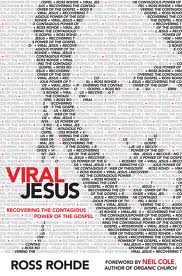 Christianity was designed to spread like a virus, moving from person to person, contact point to contact point, quickly changing people and making them an agent of change. That all came to an end after a sustained period of growth several hundred years after Jesus’ resurrection. The church slowly abandoned it’s commitment to the “epidemic principles” they were founded on and adopted a different method of living. This is the premise of Ross Rhode’s new book, Viral Jesus. According to Rhode, though, these “epidemic principles” can be recaptured and a viral Christianity can again become the norm.
I had been eagerly anticipating the release of Viral Jesus ever since Rhode began blogging at Viral Jesus a few years ago. If you’ve read the blog or enjoy the missional house church/ organic church/ simple church discussion, you will certainly find an enjoyable read in this book. But this is not just another book about doing house church. This is a book about spreading the Lordship of Jesus throughout a society, something that house churches become a vehicle for. This is a radically different approach than most “house church” books take, but it was incredibly helpful.
I want to offer one warning up front before I continue with the review: Do not read this book if you’re looking to transition into a new church fad. This book is fairly unique and it will not give you step by step instructions for getting new converts. This book presents Jesus Christ as Lord, both of the world and of the church, and that means you won’t find strategies that work apart from Him. Rohde takes a lot of necessary time presenting this truth and because of that, someone only wanting change without prayerfully submitting to Jesus would get very frustrated. But if you desire to follow the real Jesus into His harvest field, this book will be both incredibly helpful and challenging, but well worth the read.
Strengths
The first obvious strength of this book is the fact that it presents Jesus as the operating system for life, both inside and outside the church. This is not a how-to book. It forces you to acknowledge the ways in which you’ve been dependent on other things besides Jesus, especially in the church. Rohde significantly develops the idea of “Jesus as Lord” that Hirsch and Frost discuss in books like “The Shaping of Things to Come” and “The Forgotten Ways.” But instead of developing the theology of “Jesus as Lord” Rohde presents very tangible examples from Scripture and experience of “Jesus as Lord” playing out in the life of the church.
One of the things I appreciated in the book was it’s strong endorsement of supernatural phenomenon in the life of Jesus movements. Most of the current books on church planting and organic church argue for returning to most of the principles of the book of Acts, but spend little or no time discussing the place miracles plays. This is confusing because it is one of the most prominent features of the early church. I suspect that because Rohde truly believes that the Lordship of Christ is the issue for viral Christianity to be restored, he has no problem presenting the Holy Spirit as active and involved if we submit to Jesus. I can’t emphasize enough that these two issues need to be stressed over and over in the organic church conversation, and that fact alone makes Rohde’s book an invaluable contribution to the discussion.
Another strength of the book are the multiple stories Rohde tells about the adventures he and his co-workers have in the harvest field. These stories take place in locations where many people think the Gospel is irrelevant, hardened Western Europe and California, and they make the principles Rohde lays out believable. I’ve heard plenty of stories about miracles and conversions happening in America and Europe, but Rohde tells the stories in ways that make everyone believe they are capable of doing the same. He and his friends aren’t the heroes of the stories, Jesus is, and because of that you gain faith you can participate in similar stories yourself.
Finally, Rohde’s chapters on Viral Evangelism and Viral Church Planting are worth the price of the book. Both chapters are a look at how, once submitted to Jesus, a believer is typically led by Him to share the gospel and see churches started. Rohde makes evangelism and church planting a joy, not a burden, and accessible to everyone. I’m actually going to list this book in the evangelism section of my Amazon bookstore because it so easily encourages and trains believers in basic principles for sharing their faith and planting churches.
Weaknesses
The one weakness I found in the book is it’s treatment of the historical Jesus movements of the past. Rohde traces the fall of the early church away from the “epidemic principles” it was originally founded upon. He then looks at times throughout history most Christians would call revivals and dissects how these revivals missed turning into full-fledged Jesus movements that God had intended. I think this is the point where most Christians would have problems. However, I actually agree with Rohde on most of the issues he presents as problems.
Rohde argues that each of these revivals were short-circuited because they didn’t completely abandon the trappings of Christendom that they emerged out of. Because of that, these revivals eventually died down and became trapped in a dead religious state that they had been awakened out of. I don’t even disagree with Rohde on this point. However, what was written seemed to imply that even though God moved powerfully many different times, these Jesus movements continually fell back into the Christendom mindsets they emerged out of. Can a viral Christianity emerge in a country where Christendom is present and operating? I believe it can and I even think Rohde believes it can, but I walked away from the chapter having to truly process these thoughts out.
In the end, I believe that even this was helpful, because these chapters forced me to examine where I’ve compromised with foundational principles of the world in my Christian experience. But my hope is that even though much of Christianity in the West is still steeped in Christendom, that viral Christianity lived out in front of the rest of the church will actually convince the church of the validity of abandoning many of the Christendom principles it has built itself on.
Should You Read Viral Jesus?
Yes, yes, and yes! You will be encouraged, stretched, and challenged in ways you cannot imagine. Rohde is really balanced in a radical, Jesus-following way. Reading this book will push you in the most healthy direction you’ve been pushed in awhile—closer to Jesus. If you’ve never been part of an organic church this a great book to get you started. If you’ve read every book by every guy about church planting movements and house churches, this is still a really helpful and inspiring book. And this is not a book for leaders, it’s a book for everyone, because viral Christianity is for everyone.
Because of all of this, I want to recommend you pick a copy of this book, take a journal and a Bible with you, and go and wrestle with the issues Rohde presents. My hope is that it causes Jesus movements to spring up throughout the West and changes Christianity as we know it.
Viral Jesus Give-Away
I’m incredibly excited to be reading Viral Jesus by Ross Rohde. For those of you who don’t know Ross, he has been blogging for almost two years about initiating Jesus movements similar to what God has done in the New Testament and in China. He’s also an organic church planter who has experience starting multiple house churches in places that are resistant to the gospel. Needless to say, he’s the kind of guy we like here at Pursuing Glory.
So to help get the word out about Ross’ book and promote some more discussion about spawning Jesus movements in the West, I’ve decided to give away a free copy of Viral Jesus here on the blog. Now most blog giveaways I’ve seen require you to subscribe to an email list, follow someone on Twitter, or follow you on your Facebook group. And while you’re welcome to get involved at a deeper level with what we’re doing here, we’re going to do this a bit differently.
In order to win “Viral Jesus” I want you to answer the question that Ross asks with his book: “What will it take to see a rapidly reproducing movement of Jesus followers take root in the West?” Anyone who writes an answer and posts it online for others to see will be entered into our give away. You can post it on your blog, your Facebook Notes, your Tumblr account, or your Google+ account. Really anywhere people can see it will be great. Then email me, tweet me, message me on Facebook, or leave me a comment in comment field about how to find your response. I will read the responses and publish the best response here on the blog on March 5th, 2012, along with the links to the other responses. The winner will receive a free copy of “Viral Jesus.”
Cluster Map

 Pursuing Glory