Church Planting Log: Fragile

We were sitting around in our house church meeting listening to my friend describe his new attempt to start a house church. Our spiritual family had questions, which is natural, and as they asked him questions, he didn’t have all the answers. Not having all the answers can make some people nervous.
And as I sat there, I was reminded of another friend of mine who would never consider himself a church planter but he finds himself working with two guys who have shown interest in starting a church. And every time I sit down and talk with this friend he’s got one word to describe what’s happening: fragile.
What does he mean by fragile? He means it could all fall apart. His two guys are either very early in their faith or they’re not even believers yet. The possibility that absolutely nothing could come of it is high.
So I pipe up in the house church meeting and say “Guys, this thing is fragile.” And I go on to explain what is going on with my friend who has coined the term. And I tell our house church how we’ve tried to start several other house churches with people we believed were people of peace over the last few years. None of those have panned out. But I explain it this way: “We don’t ever want to get out of the place where our church isn’t fragile. It means we aren’t living on the edge of trusting God.”
The problem is most church planting in the West is built on transfer growth. We take established Christians from one church building and go and meet in another. We hope that lost people come but many times other established Christians are the ones who join us. There’s some risk that the church might fail, but for the most part those establish Christians will join another church down the street. That’s not fragile.
The fragile part comes when you preach the gospel to unbelievers. Church only happens when people repent, so we always hope that church lasts. But experience tells us that some people will respond to the Gospel quickly but have no root. They will get mocked or persecuted for following Jesus and they’ll stop. Experience tells us that some others will start strong in following Jesus but have life choked out by enjoying the world too much or pursuing things that make them happy. Only a percentage actually go on to follow Jesus long term and show fruit in their own lives.
So any time we attempt to start a house church with people who are showing interest in Jesus, there’s one word to describe it: fragile. We never know if the people who seem excited one day will stick it out. But the alternative is to never plant churches among the lost. And I’m not willing to settle for that. I hope you’re not either. The harvest is so large that we need everyone we can get.
I’m writing this morning about a couple of different scenarios that are going on in our midst. But I’m writing these stories to encourage you about the context you are in. It’s okay if things are fragile. Get really good at following Jesus into fragile situations and trust Him that as the one who builds His church, He will get it right. Institutions are stable. Graveyards are stable. But you’re not trying to become one of those. If you’re planting a church (and I hope you are) you are planting a living thing. There will always be a chance it could die. But trust Jesus that He knows how to turn tiny seedlings into oaks of righteousness. Some of the seeds you plant will multiply 30, 60, or even 100 times. The payoff is worth it.
How We Embraced Shepherds in Our House Church Network
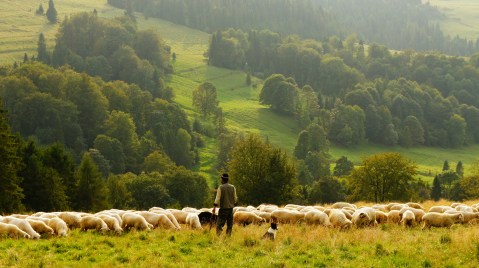
Yesterday I wrote about the reasons we didn’t (and still don’t) have a titled pastor in our house church network. But our attitude toward the pastoral ministry was also hurting our ability to help people who needed pastoral care. So what did we do?
We Appreciated Our Differences
Several years into our time as a house church network, we began to understand that God had made us different to help us, not to frustrate us. We had been reading different parts of Scripture, including Ephesians 4 and it became increasingly clear that while one or two of the gifts listed there were our personal favorites, we needed all of them to produce the kind of mature church Paul describes there. This meant we’d need to embrace pastoral giftings in order to get there.
We Became More Serious About Church Multiplication
This may sound a little counter-intuitive here, but stick with me. We had hit a point as a church where a number of us who had been part of what we were doing from the beginning were wanting to focus more on evangelism and finding “houses of peace.*” The only problem? We were spending most of our time taking care of the needs within our own fellowships. The needs were real. But many of us more gifted towards church planting and evangelism were spending disproportionate amounts of time caring for these needs. Something needed to change.
So We Identified People With Pastoral Giftings…
As we began to look around our network, we noticed there were already people who cared for others and were trying to be examples to the rest of our network. Some of them had skills in inner healing and deliverance. They also happened to be the sort of people who rushed with compassion towards needs like the ones that were popping up. God had given us people who were gifted in the areas where we had need.
…and We Gathered Them…
Once we knew who these folks were, it was time to get them together. I think a lot of them were unsure of themselves. They had an idea of what a pastor was from some previous experiences, so it was a little bit intimidating to be asked to shepherd people. But one thing that helped was to bring them together from our different churches into one room. Because of our previous attitude toward the word “pastor” we didn’t have a ton of these type of people in our midst. So to hear others sharing about a similar gifting was incredibly helpful.
Instead of presuming to know what we needed and how they could meet it, we asked them: Where does our network needing pastoral care? And how can you guys help us with those needs that you see? Pretty quickly these guys were meeting together on their own, talking about how they could encourage each other in their calling and meet needs where they saw them. Two things were important in this: We trusted Christ in them and we didn’t try to impress an agenda.
…and We Asked Them to Count the Cost…
So this is my thing. I ask people to count the cost a lot. But serving the body can be a costly thing. For us it means being a volunteer and working a job in addition to your role in caring for the flock. It means being part of a discipleship group and pouring your life into others. And it means sometimes there’s not a lot to do, but you have to keep your schedule open. Because stuff comes up. Like the inner city mother who suddenly needs new beds for her and her kids or the marriage issue that needs counseling or the demon that needs to be cast out. No one can time these things. Each of shepherds had to ask, in their own way, was the cost worth it?
…and We Changed The Narrative.
As I said earlier, everyone had an idea in their head of what a pastor was: The Authority Figure. A Position. Theological Training. The Guy Who Knows What to Do. The Paid Guy. The Preacher. All of these things freaked people out. We had guys with legitimate shepherding gifts but were afraid to use them because the bar had been set really high by our culture.
So, we changed the name. We call them shepherds. We told them not to walk around calling themselves a pastor so-and-so**. Just love people like the Lord has gifted you to do. Don’t try and dominate a house church meeting that you’re in. Participate. Show the body what it looks like to participate. But don’t become the center of the ministry. Oh, and nobody’s getting paid. So there’s that.
Now, for some of you reading this, you may be wondering why the heck someone would sign up for a position with high responsibility and little physical reward like this. Peter gives us the answer:
Care for the flock that God has entrusted to you. Watch over it willingly, not grudgingly—not for what you will get out of it, but because you are eager to serve God. Don’t lord it over the people assigned to your care, but lead them by your own good example. And when the Great Shepherd appears, you will receive a crown of never-ending glory and honor.
1 Peter 5:2-5
We encouraged our unpaid, non-titled, non-hierarchal shepherds to use their gifting to build up the body because Jesus will reward them for doing so when He returns. And this has helped us to still be a body, still have multiple, equally valuable gifts functioning and yet benefit from the shepherding gift working in our midst.
That’s our story so far. I’m excited for where the Lord is leading us. I think in the end we’ll see a church that is focused on Christ’s mission and growing the disciples that result from that mission. And through all of it, we will grow up into the image of Christ. Jesus promises it’s what will happen when embrace all of the gifts.
*Houses of peace are based on the biblical idea of a man of peace. You can discover more about Jesus’ mission strategy and how it centers around men (or houses) of peace by reading Luke 10.
**Just like we discourage people from walking around calling themselves “Apostle so-and-so” or “Prophet so-and-so.”
Mutuality and Calling One Another Forward

Today I met with a cross section of men from our house church network to talk about and work through issues that are affecting our churches. The discussion was great and one of the things that I loved about it was the mutuality. Quickly it became clear that there was no guru in the group and that everyone could learn from each other. And it was this back and forth, giving and receiving that allowed for hearts to open up, ministry to happen, and for us to be able to rely on each other a little bit more.
I’m continually amazed how much humility and not lifting yourself up above another allows for more ministry to happen, not less. So often the church thinks it needs to be the other way around. Most of the time we are caught up trying to prove we are at least as spiritual, if not more so, than the person next to us. When I try and prove how much better I am than others, not much ministry happens. And yet, when I humble myself and live from the place of being as weak or weaker than everyone else in the room, that’s when people become vulnerable and real service to each other happens.
During my day, I had the opportunity to share with a brother about some limits he was artificially putting on himself. And because we were listening to each other, I was able to hear his heart and he was able to receive when I gently pushed on him to reconsider some of the limits he was placing on himself.
Friends, we desperately need brothers and sisters like this in the body of Christ. We need people who know us, can see us better than we see ourselves, and can help us get out of the ruts that we sometimes find ourselves in. The body grows itself by learning how to speak the truth to each other in love. This is so hard to do but its one of the main ways the Bible describes us growing into the image of Christ.
Beloved, find friends who will tell you the truth in love. Find brothers and sisters in Christ who will call you forward into who God has called you to be. It’s a way forward in an age that wants to deceive us and isolate us. Don’t give in to the shallow relationships that are only about competition and vanity. Don’t settle for relationships with brothers and sisters in Christ that are only an inch deep. There’s transforming relationships out there that are rooted and Christ and they are worth pursuing.
It’s worth it. I don’t promise it, but Jesus does.
Photo Credit: Discussions by Boris Baldinger
Cluster Map

 Pursuing Glory