Redefining Spirituality: Seven Benchmarks for a Discipling Culture
Christianity in the West has settled for something significantly lower than a culture of discipleship. Our “spiritual” members are typically those who have consistently read their Bible and maintained a devotional private life. The most honored among us are those who have brought their spiritual life to bare on one area of their public life, be it their job or their friends. The point is, much of this falls significantly short of what Jesus intended for His church.
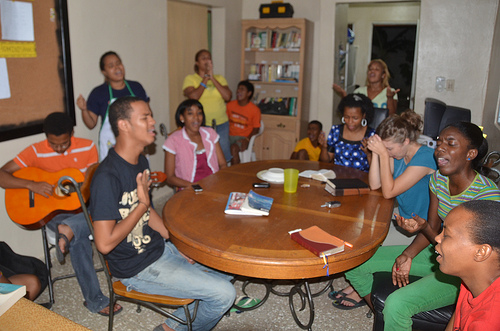 One of the sayings of CMA, an organic church planting fellowship I’ve learned a lot from is “we need to lower the bar on what it means to be a church and raise the bar of what it means to be a disciple.” They believe that if church is simple enough for anyone to participate in it and everyone is a committed disciple, churches will begin to be established quickly and repeatedly. My question then is, how high should we raise the bar? The following is my list of seven benchmarks for discipleship:
- Intimacy with Jesus- Every spiritual reality in the Kingdom of God is born out of a deep and abiding relationship with Jesus. When a person is truly born into the Kingdom, they are immediately grafted in to a real relationship with a resurrected Lord. But we never graduate beyond that relationship. There is no level of spiritual maturity where listening, loving, and abiding becomes something you did when you were young in the Lord. Cultivating this ongoing relationship with Jesus becomes the basis for every other Kingdom activity we do. (Matthew 22:34-40, John 14:15, John 15:1-10)
- Ability to Follow the Holy Spirit- Jesus expected the ministry of His Son to be carried on through those who followed Him. Jesus-style ministry did not stop when He ascended to Heaven. It continued on in the lives of those who had followed Him and in the lives of those who would come to believe in their testimony. The Holy Spirit led the expansion of the church, the direction of its mission, and fueled the internal growth of holiness in His people. It’s not necessary to take a class on following the Holy Spirit, but we all need to grow in understanding how He leads individually and practice obeying His leadership. This will include knowing His voice, following His promptings, and manifesting His gifts. (John 20:21-22, Acts 2:33, Acts 2:38, Acts 9:31, Acts 13:52, Acts 16:6-10)
- Growing Character- We all come to Christ as enemies of God and it’s the work of God to cause us to surrender to Christ. This change from a captive of Satan to a citizen of the Kingdom of God will have ramifications on our lifestyle. As we develop intimacy with Jesus and follow the Holy Spirit there will be continual change of character reflected in our lifestyle. This is fueled not out of religious pressure but the work of God in the soul of man. Jesus called us to be perfect even as our Heavenly Father is perfect, Paul told us he pressed on to the upward call of Christ but had not reached it. Our lifestyles are to grow up into the image of the One who saved us. (Romans 5:8, Colossians 1:13, 1 Corinthians 6:9-11, Galatians 5:22-24, Matthew 5:48, Philippians 3:12-15, Ephesians 4:15-16)
- Retelling the Gospel with Relevancy- Anyone who has been to a third world country and seen effective ministry being carried out by the illiterate and unlearned will understand that it doesn’t take a seminary degree to be a disciple. But the ability to grasp the Gospel is essential in coming to Christ. The ability to retell the Gospel is crucial if we desire to see others come to Christ. So every believer from the newest to the most mature should be able to retell their story of Christ meeting them (their testimony) and the story of how that was accomplished by Jesus (the death, burial, resurrection, and ascension of Jesus, otherwise known as the Gospel). (1 Corinthians 1 :26-31, Romans 10:14-15, 1 Corinthians 15:3-4)
- A Commitment to the Body of Christ- When Jesus saves us, He sets us in spiritual families that corporately represent Christ. We lose our individuality and gain a corporate family more amazing than anything we have ever participated in. This family is at the same time a universal brotherhood and a specific and local group to which we belong. We begin to tangibly demonstrate our love for Jesus and our status as disciples as we demonstrate love for other broken humans redeemed by Jesus. (Psalm 68:5-6, Ephesians 4:4-6, Romans 16:3-5, 1 John 3:14-18, John 13:35, Romans 12:9-21)
- A Commitment to Care for Orphans and Widows- God found us when we were unwanted orphans (spiritually) and adopted us into His family. Truly following Him, then, means we take care of the weakest and most broken parts of society, whether they are believers or not. We demonstrate the reality of our Gospel by caring for widows and orphans. (Romans 8:15, James 1:27, Galatians 6:10)
- A Commitment to Reproduction- The Gospel and and it’s effects were designed to spread from person to person with little difficulty. Our commission from Jesus is to teach whole nations the realities we’ve learned from Him. If we miss this element, we cease to be a discipling culture. Paul wanted Timothy to not just teach other people, but to teach people in a way that they could pass his teaching on to others. It was this commitment to spreading both the Gospel and it’s associated lifestyle that allowed it to reach most of Europe in a short period of time. The same will be true today. (Matthew 28:18-20, 2 Timothy 2:2)
Simply put, we are to be people who know Jesus deeply and follow the Holy Spirit. This will cause us to grow in character, express the Gospel in word and deed, care for fellow believers and take care of widows and orphans wherever we find them. When we commit to reproducing this lifestyle in those that are following Jesus around us, we begin to see a discipling culture take root.
One thing to know is that none of these characteristics require extensive schooling or training. Most of them are just the result of you following Jesus and learning to trust His leadership. All of this can be taught (and more likely caught) in the context of the body of Christ on mission. That has deep implications for our current training systems across the body of Christ, but that’s a topic for another post….
Now the question today is this: What would you add? Let me know in the comment section below.
Photo Credit: Masters Commission DR by AmslerPIX
On Sonship (Part VII)
Recently we’ve been discussing the power of understanding our position as sons and daughters of God. You can find the rest of the series “On Sonship” here.
Receiving True Sonship
I will not leave you as orphans;I will come to you. –John 14:16
 The truth of the matter is it’s easy to write or talk about the orphan spirit. It’s a lot more difficult to instruct people on how to become legitimate sons and daughters. Part of the reason it’s so difficult is that there is no step by step process for receiving love from a father. Love gets communicated from a father (either God, our natural father, or our spiritual parents) in thousands of different ways, depending on who is giving love and who is receiving it.
But there are a few main ways that open the door for the Spirit of the Lord to produce the heart of a true son in us. My hope is to highlight six areas that open the door for sonship to be truly restored within us. If throughout this series you’ve found yourself lacking in the area of being a true son, then take one or two of these areas that strike you, go into your prayer closet and find out how God wants to lead you in this particular area.
If you’ve found yourself possessing an orphan spirit, you will want to do the following:
- Repent- First, you have to repent of your sins and believe in Jesus Christ as the only way to God. The Bible is clear about the fact that when you receive Jesus as your savior from sin, you become His adopted brother and gain the God of the entire universe as your Father.
- Experience- Second, like we already have said, you can be a Christian and live like an orphan. You can even call God your Father, but until you experience God caring for you like a son or daughter, you will live an orphan lifestyle. The next step of the journey will require you to experience God as your Father. This will make the idea of God as a Father a reality in your heart. I would encourage you to continue to ask yourself “How would a good dad treat his son in this situation.” Then begin to pray and ask the Father to show you His fathering love through providing, directing, and counseling you in that situation, just like a good dad would do.
- Repent, again- Some of us became orphans because we had no fathers. Others of us live like orphans because we chose to leave our father’s house. Sometimes the reason we live out of an orphan mentality is because we’ve rejected the love of a natural or spiritual father God sent to us. Paul talks about the necessity of honoring our father and mother because it was the first commandment with a curse. When God first dealt with me on this subject, it was after I had truly received some of the His fathering love. I began to realize that much of my hurt had not come from my natural dad, but from my teenage angst that caused me to interpret his natural, disciplined love as unfairness. Sometimes our attitudes, rebellion, and anger can cause us to miss mature love that comes from both natural and spiritual fathers. This may require us to actually apologize to natural and spiritual fathers and mothers that we have rebelled against in the past. If we repent in these situations, it opens the door for fathering love to touch our spirits.
- Read- Much of our understanding of fathers and sons has been lost because of societal rebellion against previous generations that has occurred since the ’60’s. Because of that, very few individuals will truly understand the dynamics of healthy fathering relationships. One source that I’ve discovered a truly helpful window into the nature of father/son/daughter relationships is the book of Proverbs. The whole book is set in the context of a father imparting wisdom from God to his son, and if read in that context will give great insight into what we can expect to receive from God, from natural parents, and from spiritual fathers and mothers. It will also fill in many “wisdom-gaps” that are left over from living as an orphan.
- Find a spiritual father- One of the most overlooked ways of overcoming an orphan spirit is to find a spiritual father. God has designed the planet so that no Christian should be without a spiritual parent. Look around your life. Most likely there are people around you who are pouring into your walk with the Lord. These are people who are a little further along than you are. They are who you turn to for advise, counsel, and prayer. It’s crucial, though, that you’re looking for a spiritual parent and not a spiritual superstar. The spiritual parents God sends your way may not be in full-time ministry or even well known. None of that is necessary for God to restore you into your identity as a son. Just pray and ask Him to show you or send you those who will father you in the Lord.
- Become a spiritual parent-I remember lamenting throughout much of my twenties about the lack of spiritual parents. But as I began to grow in my walk with Christ, I realized that I was being fathered by the Lord as I took on more of the responsibility of fathering others. You may ask, “How can I be a spiritual parent if I’ve never been fathered by anyone myself?” In the Kingdom, when you give something you get more of it. If you step into the role of a spiritual parent, God will give you more of whatever little you’re able to give away. We begin to understand God’s role in fathering as we partner with Him in that process. If you are thirty years old or older, I would highly consider doing this until the Lord sends someone that is clearly designed to be your spiritual father.
This whole process does not rest only on your shoulders. God will come to you and be a father to you. He is always searching for lost sons who have forgotten their position. Take these steps, use them as a map back home, and I guarantee you that before you can even get any words out of your mouth, a loving Father will embrace you sooner than you can possibly imagine. The journey from being orphan to being a legitimate son begins with a first step. Let that first step begin now.
Other Posts in the “On Sonship” Series:
On Sonship (Part I)
On Sonship (Part II)
On Sonship (Part III)
On Sonship (Part IV)
On Sonship (Part V)
On Sonship (Part VI)
Photo Credit: Father and Son Surf Lesson in Morro Bay, CA 11 of 12 by mikebaird
On Sonship

Christians can be born again and not walk as sons and daughters of God. An orphan spirit undermines much of our walk with the Lord. But an understanding of our positions as sons and daughters of God is an inheritance that we cannot overvalue. The following series of articles express the great need we have to step into our identity as sons of God.
On Sonship (Part I)
On Sonship (Part II)
On Sonship (Part III)
On Sonship (Part IV)
On Sonship (Part V)
On Sonship (Part VI)
On Sonship (Part VII)
Photo Credit (From Left to Right, Top to Bottom): Mareike by eflon, Father and Daughter by apdk, Hug by popofatticus, and Sun, Son, and Dad by lovelypetal.
Cluster Map

 Pursuing Glory