Evangelism in an Upside Down Kingdom

20 years ago a young, awkward, lanky teenager gave his life to Jesus. Without much direction or personal instruction, he consumed whatever material he could afford to buy out of his charismatic church’s bookstore. In the bookstore he found what looked to be a twenty year old copy of a book containing dreams and visions by a prophet named Rick Joyner. The book would affect the lanky teenager in profound ways by imparting a desire to know God and become more like Christ.
That lanky teenager, if you haven’t figured it out yet, was me. The book was actually only written two years previous. (In my defense, two years seemed like a long time back then.) 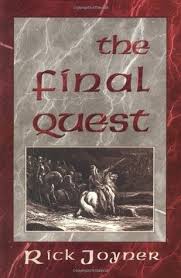 It was called “The Final Quest.” In many ways the theme was very similar to “The Pilgrim’s Progress” in that Rick was expounding on deep truths of the Christian life as he progressed in an allegory portrayed as a physical journey.
The book starts out as a horrible army of demons are attacking Christians and Rick has to climb a mountain (“The Mountain of the Lord”), first for safety, but then as he begins to understand each level of mountain represents a different stage of maturity, out of a desire to know Christ more. As he climbs higher up the mountain he becomes more mature and more effective in the battle against the demonic forces.
Lately, the following section has been on my mind. In this stage of the vision, he is being lead up and down the Mountain of the Lord by the personification of Wisdom, aptly named “Wisdom.”
Wisdom led me down the mountain to the very lowest level, which was named ‘Salvation.’ ‘You think that this is the lowest level,’ declared Wisdom, ‘but this is the foundation of the whole mountain. In any journey, the first step is the most important and it is usually the most difficult. Without ‘Salvation’ there would be no mountain.’
I was appalled by the carnage on this level. Every soldier was very badly wounded, but none of them were dead. Multitudes were barely clinging to the edge. Many seemed ready to fall off, but none did. Angels were everywhere ministering to the soldiers with such great joy that I had to ask, ‘Why are they so happy?’
‘These angels have beheld the courage that it took for these to hold on. They may not have gone any further, but neither did they give up. They will soon be healed, and then they will behold the glory of the rest of the mountain, and they will begin to climb. These will be great warriors for the battle to come.’
‘But wouldn’t they have been better off to climb the mountain with the rest of us?’ I protested, seeing their present condition.
‘It would have been better for them, but not for you. By staying here they made it easier for you to climb by keeping most of your enemies occupied. Very few from the higher levels ever reached out to help others come to the mountain, but these did. Even when these were barely clinging to the mountain themselves, they would reach out to pull others up. In fact, most of the mighty warriors were led to the mountain by these faithful ones. These are no less heroes than those who have made it to the top. They have brought great joy to heaven by leading others to Salvation…
Again I felt shame for my previous attitude toward these great saints. Many of us had scorned them as we had climbed to the higher levels. They had made many mistakes during the battle, but they had also displayed more of the Shepherd’s heart than the rest of us. The Lord would leave the ninety-nine to go after the one who was lost. These had stayed in the place where they could still reach the lost, and they paid a dear price for it….
(The Final Quest*, Rick Joyner, pp. 51-53)
My point in retelling this part of the story is this: In some parts of the church, those who reach out to the lost, the broken, and the hurting are seen as less spiritual. Often they are perceived as a mile wide but an inch deep. In order to relate to the lost and the broken, the evangelists among us chose a different path than the cloistered life that supposedly produces maturity. And while we desperately need people coming to Jesus in this hour, our attitude towards those who can and do lead people to Jesus is often one of disdain for their lack of depth.
But Jesus thinks differently than we do. We live in an upside-down Kingdom. What that means is that things that seem very important to us now (money, popularity, worldly success) mean very little to God and the things that mean much to God (humility, honor, self-sacrificing love) mean very little to men. God’s Kingdom is upside down compared to ours. To be specific to our context, Jesus says, “But many who are the greatest now will be least important then, and those who seem least important now will be the greatest then,” (Mark 10:31).
The church teaches us that the mega-church pastor, the preacher on a book tour, and the ascetic are all important and spiritual. But in this upside-down Kingdom, those that live lives near the broken to bring them to salvation are honored. They bear the price of relating to the brokeness of humanity and remaining close enough to the lost to be able to communicate the Gospel. Because of this, they may never write a book or draw a huge crowd, but they have God’s attention.
I write all this, not just so we appreciate evangelists more. That’s a good start. But I also write it so that we consider, very seriously, the idea that God may value an earthy, more mission minded version of Christianity than many think. Maybe according to the upside-down values of the Kingdom, Jesus assigns honor to those who make it their aim to live among and lead lost souls to the Mountain of the Lord. And if this the case, maybe we should make it more of our aim to be like those guys, and less like the mega church pastor, the writer, or ascetic. Maybe part of our journey into maturity is to become more like your lost co-worker and less like a monk, all for the purpose of reaching him and helping him know Jesus. Maybe instead of avoiding the world, we embrace it with the love of Christ and let that love transform us into more of who He is.
If we live in an upside-down Kingdom, I think it might be more important than we realize.
Photo Credit**: Un nuevo visitante llega al castillo by Oscar Gende Villar
*It probably goes without saying, but I do not consider the revelation contained within the Final Quest to have anywhere near the level of authority of Scripture. I believe Scripture is a far more reliable witness than any personal revelation and I quote this section as springboard for conversation.
** Also note that this photography was altered from its original version: A duck was cropped out and the picture was flipped upside down.
Food For Thought: More Media and Crowdsourcing Edition
 Every week here at Pursuing Glory I try to bring together the best posts I’ve found that will equip the end-times church to operate in her God-ordained destiny. These are the best blogs, articles, books and other resources related to our purpose here at this site. Feel free to visit, comment, and make use of the resources found at each site.
Last week I talked about some of the other media out there that I’ve been thinking about including. I had some good response on some of the content that I added, so I will continue to add more as it becomes available. I also thought it would be a great idea to let you (the reader) suggest other material of similar content out there for us here at the blog to use. If you have suggestions, leave them in the comment section. And now to this week’s links:
Jackie Pullinger: The Sign of the Cross
How does the reality of Jesus’s death on the cross and His call to us to die to ourselves affect our idea of God’s mission on the planet? Kieth @ Subversive1 reposts this transcription of a fantastic message by Jackie.
Vision, Intention, and Means is the topic of this post on how human beings change. While spiritual growth is always a work of the Spirit, it’s amazing how many Christians ignore the human fundamentals of change that allow them to cultivate the working of the Spirit. Len takes snippets from a Dallas Willard article to look at the process.
Barney’s 10 Commandments for Reluctant Evangelists
Barney’s “commandments” are methods of human change applied to the subject of evangelism. If you really haven’t thought about what practical changes you need to make in becoming someone who reaches lost people, check out this post.
What is the Purpose of the Five-Fold Ministry
The five-fold ministry is designed by Jesus to reproduce an aspect of Jesus into His body. Felicity is right on in this article. Many of us cling to only one or two of these giftings which greatly hinders our transformation into a Kingdom people.
Encountering Heaven Part I by Shawn Bolz
This is an audio recording from 2005 where Shawn Bolz discusses the nature of heavenly encounters and their worth in transforming the body of Christ. If you’ve never had a lot of exposure to prophetic encounters, this will be a wild ride for you.
Photo Credit: Design Probes – Food for Thought by centralasian.
Food For Thought: Evangelism and Community Edition
Every week here at Pursuing Glory I try to bring together the best posts I’ve found that will equip the end-times church to operate in her God-ordained destiny. These are the best blogs, articles, books and other resources related to our purpose here at this site. Feel free to visit, comment, and make use of the resources found at each site.From Institution to Communitas
Over the past several months we’ve seen our house church change from a community of Christ following families into something a little more bent on discipling the nations. The implications have been messy but well worth the change. Interestingly enough, a lot of the thought provoking articles from this week are around those very same topics. And now, on with the links.
Love Others Bob at Logan Leadership writes about what it means to be a movement that loves others. Bob’s insights are short and profound, but they can be summed up with one of the mantras I’m always sharing with believers in my life: “History is defined by those who show up.”
Should We Increase Community at the Expense of Being Missional? Felicity at SimplyChurch has been tackling the very real issue of community development vs. mission that so many house churches find themselves in.
From Institution to Communitas Ross at theJesusVirus takes a stab at the community vs. mission question with this post, drawing on insights from the phenomenal book, The Forgotten Ways. This post shows the progression of a church from an institution to a family to an army and is a needed concept among organic churches everywhere.
Confessions of the World’s Worst Evangelist Steve at Movements.net writes about how the Lord has changed him from the world’s worst evangelist to a worker in the harvest.
Photo Credit: Design Probes – Food for Thought by centralasian.
Cluster Map

 Pursuing Glory