The Didache – A Podcast Series by Keith Giles
Long time readers will know that though I talk about house churches, church planting, and revival a lot, the passion of my heart is seeing Jesus raise up apostolic Christianity in the Earth. And while Jesus continually raises up movements that have bits and pieces of apostolic Christianity in them, there are fewer true examples of apostolic Christianity than the first century church.
That’s why I was thrilled when Keith Giles produced a 9 part podcast on the Didache, a first century discipleship handbook created from the teachings of the original apostles. In case you didn’t know, the Didache is widely acknowledged to pre-date all of our New Testament books but wasn’t included in the New Testament. It gives a glimpse into the early lifestyle of the church and how they trained new disciples. While I wouldn’t call the Didache “inspired,” it definitely gives us good context to understand what the apostolic church looked like as it emerged in the first century.
Keith does a great job of walking through the different chapters of the Didache and as a result, he’s produced a valuable resource for the church. If you’re interested at all in what the church returning to her apostolic roots might look like, I would highly encourage you to check out this series. I’ve listed the various episodes below.
Also, several times throughout the podcast, Keith encourages you to go out on the internet and find a copy. Just for ease, you can read the whole Didache here or you can buy a copy here.
Thanks, Keith, for this great resource!
The Didache – Part One: What is It?
The Didache – Part Two: Structure/Teaching
The Didache – Part Three: Chapter 1 wrap-up & Chapter 2
The Didache – Part Four: Chapter 3
The Didache – Part Five: Chapter 4
The Didache – Part Six: “The Way of Death”
The Didache – Part Seven: Chapters 8-10
The Didache – Part Eight: Teacher and Prophet
The Didache – Part Nine: Watch Your Life
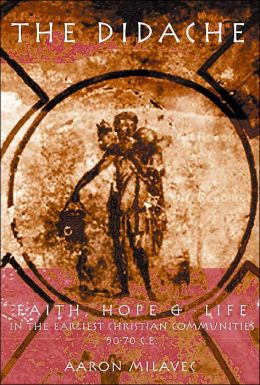
Photo Credit: The Didache: Faith, Hope, and Life of the Earliest Christian Communities by Aaron Milavec
Practical Cessationism

Lately there’s a phrase that is getting thrown around in the world to describe Christians who believe in God but live like He doesn’t exist: Practical Atheism. There are books and blog posts written frequently that warn about the foolishness of practical atheism.
My Response to Hugh Halter’s Five Questions

Recently (okay…about a month ago now) Hugh Halter posted “Five Questions that Only US Church Planters Ask.” I’d encourage you to check out the post. He doesn’t answer any of the questions, but rather spends some time talking about how church without answers to these questions is the beginning of true Kingdom living. For the sake of those of you who didn’t click the link, the five questions are:
1) But what do we do with our kids?
2) But what if my spouse doesn’t like to have people over?
3) What happens when my funding runs out.
4) How can I get Christians from other churches to join my core team?
5) How should I handle church discipline? (always from reformed camps)
So, my goal isn’t to answer any of these questions, either. But I know these questions are on the minds of many church planters, and my question is, why? Why are we consumed with these questions? What’s the motivation behind the questions? You can catch my thought in the order they were asked, below:
1) Kids can simultaneously be our idol and something we consider a distraction. Society pushes us to make our children into the perfect versions of ourselves we always wanted. We want them to have all of our talents but none of our hangups. Yet, in many church environments, the kids aren’t welcomed. They are either trained to sit still and color or shipped off to another environment where they can be as loud and distracting as they want. Our kids become a distraction when we believe they “interrupt what God is doing” instead of being participants in what God is doing. Our response to both of these extremes is repentance. Repentance for believing we can find salvation in our perfect “mini-me’s” and repentance for believing our meetings are more important than our children. Once we repent, the answer to this question is much easier.
2) It’s important to be clear that God values hospitality as a character trait of eldership (1 Timothy 3:2) and that both the husband and his spouse’s character is in question. My hope is those asking these questions are proto-elders, elders in training, or consider themselves elders already. I’m concerned when these sorts of questions come up, though, because it’s clear that one person in the marriage is more committed to the mission (which includes inviting the least of these into our homes) and the other is less committed. A spouse that isn’t given over to hospitality isn’t ready for eldership and a spouse that isn’t ready is a married couple who isn’t ready. Stop. Take the time to get on the same page as your spouse. Don’t let the dream of ministry be the altar you sacrifice your marriage on. Take however long it needs to take for her (or his?) heart to change. Be patient with Jesus and your spouse and let Him bring you both together into mission.
3) My hope when someone asks this is that it’s a sincere question. I’ve seen more churches dissolve because of a lack of funding than I’ve seen dissolve because of a sin issue. In the heart of many Americans, church planting is a route to a job. We must repent of the idea that the church exists to fund us. Period. So if the funding runs out, you need to get a job. Yes, the church will get less of your time. But you’re in this because you wanted to equip God’s people and reach the lost, right? So your funding running out is the perfect time to get a secular job, meet broken people, and equip others to some of the work you’re not able to do. Read BiVo. It will help.
4) At the heart of this question is the idea that church planting means growing a fully functioning church as quickly as possible. This is called transplant growth and it does almost nothing to grow the Kingdom. Why not start with two or three dedicated people and reach out to lost people exclusively? If your answer has something to do with finances, see #3. Turn away people from other churches or better yet help them start doing the same thing you are. They are needed in the harvest as well. And you’re in this to reach the lost, right? [nods head] Good, me too.
5) Ironically, this issue is the one issue Hugh addresses. I think Hugh hits the nail on the head. Many who think this way are afraid of sin in others and want to control it. I just want to add this: Be deeply involved with the people who are part of your church. Don’t just attend a meeting with them. Go to dinner with them. Play a sport with them. Share lives 24/7 with them. You will find all sorts of things wrong with these people. They will do the same with you, most likely. And then when you’ve earned the right to talk about sin with them, tell them about sin and point them toward Jesus with love. Call them higher, like a father. And if you do, 9 times out of 10, you will win your brother (Galatians 6:1-3). Spiritual discipline is so much easier and much more helpful if you do it because you love people and are in the trenches with them.
My point is this: these issues strike at the heart of “the American Gospel Enterprise,” a phenomenon where the church is treated like a business and we try to live off the benefits. Our current system encourages us to create a distraction free bubble where the meetings are entertainment-based and not an invitation into life together. Because people want this, crowds gather for this type of meeting and bring money that can support the people who lead it. But this is not the church as Jesus intended. Where these issues touch your heart (and hurt), repent. Begin to live like Jesus and the apostles and less like the latest church planting book you’ve read. Once you do, these issues will be much, much clearer.
So, there’s my responses to Hugh’s Five Questions. No one asked me. This is in no way endorsed by Hugh nor do I expect a response from him. I would take feedback, however, so if you’re reading this, please leave a comment and let me know if I missed something.
Photo Credit: Question Box by Raymond Branson
Cluster Map

 Pursuing Glory