Existing House Churches Should Be Fragile, Too…

Every church plant is fragile. But truth be told, every house church I’ve ever been a part of was fragile, regardless of whether it was brand new or not. And it was good that it was fragile.
This flies in the face of our Western pragmatism. We feel like we should be able to start something of significance and twenty, thirty, or fifty years later come back and find something that looks very familiar to what we started.
But everything that is truly alive is fragile: From the smallest seedling to the newborn baby to a mature elephant. Massive as they are, an unseen virus or hidden cancer can end the life of each of these living things. There is a fragility baked into life that makes it both alive and risky.
Because the church is a living thing, the same thing is true of her. If she ever grows to the place where she cannot die, we do not have a living breathing bride of Christ, but some kind of zombie bride that’s not fit for Jesus. Again, there’s a risk in life, but it’s worth the cost.
I can’t take you back to the first house church I ever started. It doesn’t exist. It didn’t fall apart because of moral failure or lack of money. It grew into several churches that are alive and growing. The people that made it up are still walking with Christ, but they are starting churches and making disciples in different contexts.
In order for new life to emerge, often things must die. So as a follower of Jesus, I have to embrace the idea that not just the churches we start among the lost, but the house churches we are part of right now are fragile. Eventually, what is living will die and give way to the seed of something new that God will plant and cause to flourish somewhere else.
I tell you the truth, unless a kernel of wheat is planted in the soil and dies, it remains alone. But its death will produce many new kernels—a plentiful harvest of new lives.
-Jesus, John 12:24
Church Planting Log: Fragile

We were sitting around in our house church meeting listening to my friend describe his new attempt to start a house church. Our spiritual family had questions, which is natural, and as they asked him questions, he didn’t have all the answers. Not having all the answers can make some people nervous.
And as I sat there, I was reminded of another friend of mine who would never consider himself a church planter but he finds himself working with two guys who have shown interest in starting a church. And every time I sit down and talk with this friend he’s got one word to describe what’s happening: fragile.
What does he mean by fragile? He means it could all fall apart. His two guys are either very early in their faith or they’re not even believers yet. The possibility that absolutely nothing could come of it is high.
So I pipe up in the house church meeting and say “Guys, this thing is fragile.” And I go on to explain what is going on with my friend who has coined the term. And I tell our house church how we’ve tried to start several other house churches with people we believed were people of peace over the last few years. None of those have panned out. But I explain it this way: “We don’t ever want to get out of the place where our church isn’t fragile. It means we aren’t living on the edge of trusting God.”
The problem is most church planting in the West is built on transfer growth. We take established Christians from one church building and go and meet in another. We hope that lost people come but many times other established Christians are the ones who join us. There’s some risk that the church might fail, but for the most part those establish Christians will join another church down the street. That’s not fragile.
The fragile part comes when you preach the gospel to unbelievers. Church only happens when people repent, so we always hope that church lasts. But experience tells us that some people will respond to the Gospel quickly but have no root. They will get mocked or persecuted for following Jesus and they’ll stop. Experience tells us that some others will start strong in following Jesus but have life choked out by enjoying the world too much or pursuing things that make them happy. Only a percentage actually go on to follow Jesus long term and show fruit in their own lives.
So any time we attempt to start a house church with people who are showing interest in Jesus, there’s one word to describe it: fragile. We never know if the people who seem excited one day will stick it out. But the alternative is to never plant churches among the lost. And I’m not willing to settle for that. I hope you’re not either. The harvest is so large that we need everyone we can get.
I’m writing this morning about a couple of different scenarios that are going on in our midst. But I’m writing these stories to encourage you about the context you are in. It’s okay if things are fragile. Get really good at following Jesus into fragile situations and trust Him that as the one who builds His church, He will get it right. Institutions are stable. Graveyards are stable. But you’re not trying to become one of those. If you’re planting a church (and I hope you are) you are planting a living thing. There will always be a chance it could die. But trust Jesus that He knows how to turn tiny seedlings into oaks of righteousness. Some of the seeds you plant will multiply 30, 60, or even 100 times. The payoff is worth it.
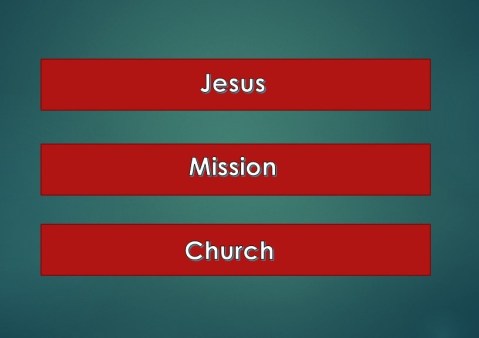
Jesus. Mission. Church.
We all know these are the priorities. What we don’t understand is this isn’t just a random list of priorities. It’s our priorities in their order of importance.
Jesus- Jesus is Lord. He is God’s final word to mankind about what He is like. He holds everything together by the word of His power. And while the worship of Jesus is central to Christianity, He often can quickly become a lesser priority. The goal is to keep encountering and obeying Him, day after day until days turn to weeks turn to months turn to years. He is the priority.
Mission- The mission described here is the one that Jesus Himself came with–to bring the whole world under His leadership and repair the broken relationship between God and man. Jesus was a man on the move. He constantly was moving from one place to another, declaring the Kingdom of God, casting out demons, healing the sick, and performing signs that invited lost humanity into the newly near Kingdom. But He didn’t turn the crowds into mega-churches. He kept moving. And after the resurrection, His command was still to go and declare the same Gospel He had preached. Acts and the New Testament are the echos of Jesus’ command to continue on in His mission.
Church- Church is the gathering of believers under the leadership of Jesus and in relationship to each other. Jesus said He would build His church and that even the gates of hell would not be able to prevail against it. Nothing could stop it. And so each church that is built by Jesus becomes another weapon in His war against the darkness oppressing humanity.
But great damage happens when we confuse these three priorities:
A church where Jesus isn’t first is quickly in danger of losing it’s place of ministry (Revelation 2:4-5). No one says that Jesus is less important than mission or church. We just continue to show more concern for mission or church than we do for connecting with Christ. The result is usually burnout that ends in moral failure.
Mission comes before church. That’s a controversial statement, but it’s true. Church is the fruit of mission. Emil Brunner said “The church exists by mission as a fire exists by burning.” When Jesus ascended into Heaven, He did not leave a church. He left a mission and that mission was accomplished through the establishment of churches. Every time the church began to get comfortable, Jesus would scatter the church so mission could continue (see Acts 8:4, for example). Mission was the next priority.
And church. Church is incredibly important. Necessary. But when it becomes the object of our affection it becomes an idol. So many of us are quick to put church before mission and because of that mission never gets accomplished. Church must happen. But it happens best as a form of communitas that is forged in response to the mission of Jesus.
The story of Jesus teaches us the same thing. Jesus first was manifested in the flesh. He came to Earth and encountered humanity. His mission motivated Him to move about announcing and demonstrating the Kingdom while he set captives free. And after (and only after) the mission was finished with His death and resurrection, did He form a church that supported the mission.
Over and over again we see it: Jesus, Mission, Church. But often our lives and what makes us comfortable cause us to live differently than what we see. My challenge to you today is to make sure these aren’t just your priorities, but to make sure they are lived outin the right order.
Jesus.
Mission.
Church.
Cluster Map

 Pursuing Glory