What Only God Can Do
Often in pursuit of a more missional, incarnational lifestyle we spend a lot of time serving people. We feed the poor, help where help is needed, and act as family for people who are not yet part of God’s family. Our hope is that in doing these things, people see the love of Jesus, hear the Gospel, and turn to Christ. This is good and part of God’s plan to draw people to Himself.
Let’s not forget, though, that Buddhists and atheists feed the poor, help where help is needed, and even act as family to those who aren’t part of God’s family. While these are all things God’s word instructs us to do, they are also things humans can do.
Without stopping doing these things, we should also begin to seek to do the things only God can do. We can listen to the Holy Spirit while we are serving people and see what He is saying. Then say it. One word from the Holy Spirit will unlock someone’s heart. If we’re serving someone and find out they are hurting or sick, we should pray for them, right then and there. God can and does heal and healing is a sign that the Kingdom of God has drawn close to people who are far away from God.
So don’t stop being servants or feeding the poor, but in all your doing, make room for God to do the things only God can do. Let’s introduce people to a God who can do more than just what nice humans can do. Let’s show them Christ who can do what only God can do.
Photo Credit: Miracle Growth by ⋯ L I Z ⋯
Inspiration Avenue 2017 06 11

Welcome to Inspiration Avenue!
My conviction is that our generation is over-taught and under-inspired, so every week I cultivate some of the most inspiring content I can find on the internet and bring it to you. I hope you are inspired to live fully submitted to Christ and pursuing everything He purchased for you on the Cross.
Maybe this goes without saying, but I don’t expect you to agree with me about everything I post here. In fact, I expect some of the things I post will rattle your theological cages. My suggestion? Be inspired by people who aren’t perfect. Realize you won’t agree with everything I share here. Eat the chicken, spit out the bones.
So, without further ado, here are three sources of inspiration for the week:
 Methods and Tools vs. Prayer and Obedience: Roger Thorman writes about his journey into simple, organic house churches on his blog, SimpleChurchJournal. This post hammers at the thought that all of our disciple making methods and strategies are useless outside of a close walk with the Lord. This is so crucial, because often we get so caught up in the methods that a relationship with Christ can get left behind.
 The Phenomenonal Growth of the Salvation Army: Lex Loizides is a church historian of the revivalist variety. He spends his time at his blog Church History Review telling the stories of revivals of the past. Currently Lex is telling the story of the Salvation Army. While the whole story is powerful, I was particularly touched by the picture here of William Booth as an old man, completely eclipsed by the men and women he had raised up into ministry from the ranks of the poor and disenfranchised. May God help us all to raise up disciples that touch the nations of the Earth like He did with William and Catherine Booth.
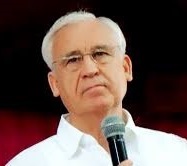 David Ravenhill: David Ravenhill is the son of famed preacher and revivalist Leonard Ravenhill. Leonard Ravenhill was known throughout the 70’s and 80’s for calling the church away from being like the world. I recently came across a quote of David, echoing his father in many ways: “this tidal wave of deception [. . .] seeks to make self the ultimate object of our worship while reducing God to being our ultimate personal trainer. In recent years, the words “your destiny” have been preached, prophesied, and promoted throughout the Body of Christ, to the point where self has become the center and focal point of life rather than Christ and His Kingdom.” Let’s all purpose to serve Jesus and not continue to ask Jesus to serve us.
My Relationship with the Traditional Church

Ten years ago, my family and I, along with several other families, launched out in an adventure to start a house church. Ten years later, we have four house churches spread across our city and I write quite a bit about the phenomenon, actively encouraging other Christians to start house churches. You’d be forgiven if you called me an advocate.
In all of my talking about house churches, there is usually this unspoken elephant in the room when I reference the traditional, legacy church. When I use those phrases, I’m referencing everything from your traditional Lutheran church that meets in a cathedral to your rock out charismatic church that meets in a warehouse and everything in-between. How do I feel about those churches? What kind of relationship can someone who believes the things that I do have with people “haven’t left the building?”
I think it’s important to start here: The universal Church is made up of people who have repented of their sins and decided to follow Christ. Church is the name of a person, not a building or a meeting. Church is the name Jesus gives to His bride. And because of this, wherever believing people gather, the church is there in some form.
This is important, because we tend to forget that what makes us church isn’t our doctrine or how meet or our practices. What makes us church is the fact that we have a relationship with Christ. This Jesus-centered approach will keep us from all sorts of pride and hypocrisy.
Because I believe that Jesus inside of people is what makes us church, I actually have relationships with believers that meet as traditional churches. I pray with them. I stand with them in times of trouble. I counsel them. I challenge my pastor friends not to let their ministry be about a paycheck or a building. They challenge me to be a better father, employee, and spokesman for the Gospel. There is a healthy give-and-take without me having to compromise who I am and this healthy give-and-take is shaping all of us into something better. We all tell the story of a God who loved us enough to become human and take nails for our sins and sometimes we tell it together.
I can do all of this without compromising who I am and what the Lord has shown me through this journey into organic church. Frankly, the more I believe in radically pursuing Jesus as a spiritual family, participatory meetings, servanthood over hierarchy, simplicity of meeting together, relational discipleship, and incarnational ministry, the better I am for our house churches AND the more useful I become in encouraging my friends in the traditional church.
All of this is to say you can be a part of an organic house church and not have to hate the traditional church that you came from. Continue making disciples. The Lord will build His church. Stop having the argument. Plant Kingdom gardens and let the fruit speak for itself.
Cluster Map

 Pursuing Glory