A Quick and Dirty Review of “Rising Tides” by Neil Cole

What It’s About:
Rising Tides is Neil Cole’s most recent published book that looks at four “rising tides” or trends in the Earth that are changing society and are changing the narrative for how and why we “do” church. Those four trends are rapid population growth, extreme technological innovation, growing economic disparity, and increasing political polarization. After discussing these four trends he spends the rest of the book talking about changes the church as a people must make to remain relevant in a society that is increasingly different than the one the church was so successful in reaching a generation or two ago.
What I Liked:
I’m a fan of Cole’s thought process and writing. Cole was one of my early influences in my process of starting house churches. Many of the societal factors Cole describes in his book and their impact on the church are reasons why I have chosen to meet and help give birth to house churches, so I found myself nodding, agreeing, and being encouraged about how he connected daily new stories and trends in the earth to the need for a church to be simple, reproducible, and real. Towards the end of the book, the themes come together in a very prophetic way that will present a picture of how the church must change.
Of all the books of Cole’s that I have read, this book is the most “end-time-like.” While Cole dances around the idea of end-times a bit, it’s clear he sees some of these factors pointing to a definitive point in humanity’s future. While he doesn’t exactly say we are living in the last days, he makes a solid case that history is heading towards a climax of some kind and we need to make an adjustment to endure the days ahead.
In many ways this book was much like a tract for those who might not be convinced by biblical reasoning to start an organic church but may be convinced by the need and the shifting atmosphere to adjust how the church is oriented. I love books that are more like tracts and as a “convert” it was a fun read.
What I Didn’t Like:
For those of us who have read “Organic Church,” “Organic Leadership,” “Church 3.0,” and some of Neil’s other books, there’s not as many new ideas here. If you’re like me, you’ve enjoyed all these reads and came for something maybe a little fresher. There is some of that, but most of the fresh material relates to the trends affecting us currently. It’s not that these sections were bad, but they weren’t really a surprise. There was maybe a new idea every chapter or two, but much of what was found here was repackaged from some of Cole’s other works. This isn’t a problem if you’re new to Cole’s work, but for someone familiar it served mostly as a good refresher.
The other thing I struggled with was the book seemed to raise the four “rising tides” as shifts the church needed to address, but the solutions seemed to still be forming in Cole’s mind. It wasn’t that they were bad ideas–most of the problems presented by the rising tides Cole addressed with the answer of a more organic, reproducing church. Again, here I agree, but in some ways these ideas didn’t seem robust or well connected to the problems. The one Cole most thoroughly covered was how a multiplying church could keep up with population growth, but with the tides of technological innovation or economic disparity the connections to his solution were less clear. Cole himself admitted this book was written quickly in order to not become out of date and it may be that some of the ideas needed a little more time to develop.
Should You Get It:
If you’ve never read a book by Cole, I would strongly suggest it. Cole loves the church and he writes a love letter to the church begging her to recognize the times she’s living in. Once you’ve read this book, I would strongly suggest you pick up a copy of Church 3.0 or Organic Church to further explore the ideas he suggests within this book.
If you love Neil, have heard him speak a lot, or kept up with his other books, I would be a little more wary. Unless you have a need to read every book of his or haven’t thought much about how house churches keep up with an ever-changing society, this might be a redundant book.
Rating:

Photo by Sharon McCutcheon on Unsplash
2018 In Books

Happy New Year to you all!
Long time followers know that for the last several years I’ve been trying to read more books. I love reading and in the thick of raising a family and starting churches I largely gave up my reading habits for a season. The last few years I’ve been trying to correct that problem. This year I was able to successfully complete 20 books, which is a recent record!
Now, while I’ll never be this guy who read 308 books this year, I thought it might be helpful to some of you to give a quick run down of the top ten books I’ve read this year in the hopes that you might find something worth while to feed your spirit, soul, and mind. Don’t just read the list: find one or two that might challenge you in the new year and dive in! Or, instead, suggest a book I need to read in 2019 that you found helpful. We all grow as a result.
That said, in order of impact, my top 10 books I read last year are:
This book was by far the most motivating and challenging book that I read this year. It’s written by well known speaker Francis Chan who famously left his mega-church to start a house church in San Francisco. The book is not a treatise of why you should be a part of a house church. Instead, it’s a look at everything that is troublesome about the modern American church and how we can become the church God wants. Chan masterly identifies problems with the American church, problems he himself helped create in his own church that are both found in each human heart and among the people of God corporately. Both the house church movement and the traditional church will find much to repent of in these pages. Throughout the whole book, however, those of us who have been part of house churches will see the answers to the questions Chan raises in the model we’ve been pioneering. Chan spends the last chapter offering the answers they’ve discovered as their network has asked these questions, but the answers will not surprise those of us who have been part of a house church. I cannot recommend this book highly enough. It will challenge you, cause you to look at your heart, and possibly even push you to rethink how you relate to the church in the future.
I will write a more thorough review of the book in the near future.
If Letters to the Church hadn’t appeared on the shelves this year, “The Vanishing American Adult” would have easily been my top book this year. Written by Nebraska Senator Ben Sasse, this book is a look at the increasing stalled maturity that seems to be plaguing American youth. Sasse could use the problem to rant against generational stereotypes or lay the blame on his opposing political party. Instead he traces trends in our society that have lead to us allowing teenagers to remain immature into their 30’s and beyond. Part of the beauty of this book is the author could have used the problem he profiles in depth to suggest a political solution. That’s what politicians do. Instead, Sasse details out five ways that parents can work against the tide of society to raise real adults in the face of increasing cultural imaturity: Expose kids to other generations, expose kids to hard work, teach them be frugal, expose them to rigorous travel, and expose them to great books. As a parent whose children are quickly approaching the teen years, I devoured this book. Sasse isn’t writing as a distant theorist. He writes as a parent who is trying raise responsible, tough adults and who knows the peril that will come if we don’t do it right. My one criticism, if I had one, is that at times it swerves a bit much into concern for our nation. This doesn’t drown out the true message of the book, but it does at times remind you that Sasse is both writing as a Christian and a leader in our nation for the benefit of both.
I will write about this book in the future as well. However, one of the things this book did was convince me that I need to read more deeply and more thoughtfully. Sasse’s chapter “Build a Bookshelf” is worth the cost of the book alone and it lead to the formation of a “Man Book Club,” where me and other guys can gather and grow as deeper readers. If you see better books on my list in the future, this book is why.
As I started to read more books this year, this book became one I increasingly wanted to spend time in. I’ve known for years that it is a Christian classic that details the life of a disciple. What I hadn’t known is that it is regarded as the first English novel. Written by John Bunyon while in prison for his faith, the book details the journey of a man named Christian and then his wife as they set out from their home to find the Heavenly Country they hear about in the Gospel that is preached to them. It’s an allegorical story that teaches believers about the path of true discipleship. One of the things that reading old books does for us is liberate us from tyranny of our age that comes through in our social media and modern writing. As I read The Pilgrim’s Progress, I realized just how much of my approach to following Jesus is birthed out of my generation’s approach to Scripture and not Scripture itself. I read this as an audiobook, but a more modern rendering of this book would be a great discipleship manual to hand to a new believer. If you’re wearied by books that are full of three steps to a better life and authors that aren’t awed by the majesty of God, this book will be a refreshing change of pace for you.
Narrative of the Life of Frederick Douglas, An American Slave
This was the first book our “Man Book Club” tackled and it’s hard to under-estimate it’s impact. It’s an autobiographical look at slavery that will challenge your understanding of what slavery was truly like. I knew slavery was horrible, I didn’t understand the different dimensions of slavery and how terrible they were. I’ve never had a desire to read this book until Ben Sasse mentioned it as a book to read as part of his cannon of books he’s hoping to pass onto his children. This book made the list as a book to help Americans from every stripe understand the plight of Americans who were denied rights under a constitution that promises rights to all. As a believer in Jesus, this book also helped me understand the kind of bad religion that empowers oppression instead of liberating those subjected to it. I also gained a greater appreciation for the situation of African Americans in this country in a way I wouldn’t have without this book. Regardless of your race, class, or political persuasion, you should read this book.
Confessions by Saint Augustine
This was another of those books that I loved because it was born out of another age. Written by Augustine of Hippo in the later part of his life, this book details life from being a seeker of truth but in many ways an atheist to his conversion and discipleship. I expected this book to have many deep theological truths about God but instead this book spoke to me about the power of desire in the human heart. In many ways, Augustine’s confession highlights the wickedness and pride of the human heart and the mercy of God that causes Him to meet with us in spite of them. These were truths that were good for my heart to hear because there are very few writers who speak of the dangers of wickedness and pride. This isn’t an easy read, but it’s worth it for those who persevere through it.
I first heard about this book ten years ago. It was written by twin brothers Alex and Brett Harris who founded a website called The Rebelution. The Rebelution is devoted to asking teens to rebel against low expecations that society puts on teenagers. The website was founded in 2006 and quickly became an internet phenomenon where teens banded together to encourage each other to follow Christ and push the envelope for what could be expected by teens. The book is part biography, part manifesto, and part how-to. It’s written by teens and for teens, but I read it in hopes of giving it to my daughter who is quickly approaching her teen years. In many ways, this book mirrors The Vanishing American Adult, but in a way that speaks to teens. I’d recommend it for the teens reading this blog.
I almost didn’t recommend this book. Several days ago, Michael Frost asked his followers what book stuck with you this year. This is that book for me. It’s written by Shusaku Endo and was originally published in Japanese. Endo is a Japanese Catholic who has written several books on Christianity and I found his approach fascinating. This fiction work follows the story of two Catholic missionaries who travel to 17th century Japan to find a former hero of their missionary order who is said to have left the faith. Along the way they share the Gospel, meet other believers in Japan, are captured, and are forced to watch as both they and the believers they came to serve are tortured. The whole novel ponders the idea of apostacy and the grace of God. This book was interesting for me on two levels. On one level it forced me to examine again my willingness to suffer for Christ and what level of suffering I would embrace for Him. On a completely different level, I’m left with a weird taste in my mouth, not sure I agree with the author’s message that is quickly and succinctly delivered at the end of the book. Whether the message is true or not, the ideas have turned over and over in my head and because of that it’s earned it’s place here.
This book was not on my radar at all, but when Greg Laurie released this book in October I couldn’t pass up a chance to collect another set of stories from the Jesus People movement. For those not in the know, the Jesus People movement was a genuine, grass-roots revival that spread among America’s youth during the hippie movement of the late ’60’s and early ’70’s. Laurie writes this book to both look at the origins of the movement and it’s continuing impact on Southern California and the world. Laurie brings first hand experience to the story: He was a flower child of that era and came to Christ through the evangelistic work of notable Jesus People leader Lonnie Frisbee. Through Frisbee, Laurie joined the Calvary Chapel started by Chuck Smith that would go on to launch numerous ministries in the midst of the Jesus People movement. Through Laurie’s involvement with both Frisbee and Smith, he would go on to become an evangelist, pastor, and mega-church leader in his own right. I thoroughly enjoyed this book because of my love for the Jesus People movement but I also profited from some of Laurie’s brief thoughts on the nature of the church’s need for continual revolution on the inside to power the expanding nature of the church. There are broader, better treatments of the Jesus People movement but Laurie’s is authentic and his lessons are worth considering.
I try to read at least one book every year related to my full-time work. This book had been recommended by Russell Moore at the end of last year and it seemed like a worth-while read. Cal Newport makes a strong case that focus is the asset of the future and after building the argument goes on to detail how the reader can build a lifestyle of focus, regardless of their career. The advice ranges from broad to very specific, but in general will be helpful to the vast majority of people. Much more needs to be written about this subject, but this book is a great start. It will definitely benefit you in your work life, in your personal life, and even in your spiritual growth.
I picked up this book at the suggestion of Jeff Vanderstelt, who recommended the book as a paradigm for the changes the church is going through in this generation. The book is written by Tod Bolsinger, a former pastor of a growing and thriving church that recognized his church was on the verge of plateauing. He caught a vision for a more missional church and now brings that vision to bear not just in the local church but as the leader of a seminary. Bolsinger uses the story of the Lewis and Clark expedition of the Lousisana purchase as a sort of parable for the place the church finds itself in this hour. While it may seem odd for this organic house church guy to recommend a book by a seminary president, there were a few gems here that were universally applicable…specifically Tod’s commitment to mission as the organizing reality of church and the truth that in times of being stuck, humans tend to double down on the thing they are best at, hoping that fixes the problem. Both of these ideas have not only been helpful to me this year…they’ve actually spoken into circumstances that I or others have been in over this past year. I’m grateful when I can learn from my traditional church brothers to strengthen the church, wherever I find it.
Other Books I Read
These were the top 10 books I read this year. I hope to read more next year. In case anyone is still reading, here’s the other ten books I read this year, in no particular order:
The Reason for God by Tim Keller
There’s a Sheep In My Bathtub by Brian Hogan
Increase Your Faith by Steve Bremner
Revolution by George Barna
On the Verge by Alan Hirsch and Dave Ferguson
Signs and Wonders of the New Churches by Wolfgang Simson
42 Seconds by Carl Mederis
Leaders Who Last by Dave Kraft
So Long and Thanks for All the Fish by Douglas Adams
Julius Ceaser by William Shakespeare
So, did you see anything on the list that you’re going to add? And what did you read this last year that might benefit the rest of us? Let us know in the comments.
Photo Credit: Photo by Florencia Viadana on Unsplash
When You Can’t Afford to Travel but Want to Learn from the Church

Over the last ten years, God has had me on a journey learning from the Church in the global South and East. Many of these lessons I’ve been able to learn directly from those from other parts of the world. But while I have had the privilege of spending time in other countries with believers I would never meet here, not everyone will have that opportunity. Thankfully, in order to learn from the church in other parts of the world, you don’t need ot be able to afford a plane ticket, you just need to be able to read.
Even earlier than my trips overseas, God was beginning to teach me about His Kingdom through books that were written by saints from other nations. For those of you who haven’t experienced or read much beyond your own borders, the following books can be helpful:
 For those of you who remember that my story started in the midst of revival, it shouldn’t be a surprise to you that the topic of revival was near and dear to my heart. Early on I started reading books on revivals in the West, but I quickly discovered there were books that talked about revivals going on in other nations of the Earth. This book documents the story of the revival that took place in Argentina over the 80’s and the early 90’s. This revival had ties to what was currently happening in the United States in the mid-90’s and talks about how Argentina was affected by this move of the Spirit. C Peter Wagner’s book not only talked about revival, but it sowed a vision for apostolic church planting in the midst of a move of the Spirit that I had never conisdered before.
 I picked up this copy shortly after I read “The Rising Revival.” Carlos Annacondia was featured in that book in a short way. This book is his story of becoming the Pentecostal Billy Graham of Argentina. I think the draw of this book is Annacondia’s reliance on the Holy Spirit to direct him and draw in a harvest, not just hold revival meetings. His meetings were marked by demons being cast out, the sick being healed, and the Holy Spirit filling new converts. I loved seeing how the movement of the Spirit was playing out in a fairly modern nation like Argentina. I should note, while many of the things mentioned in “The Rising Revival” and “Listen to Me, Satan” were pivotal to my spiritual growth, I probably no longer hold to some of their views on how the church is structured like I did back then.
 Technically this breaks with my theme of learning from the church of the global South and East, since this book was written by a German. However, much of the insight that Wolfgang shares comes from studying house church planting movements all over the Earth. Most notably, Wolf spent a number of years in India trying to understand what the Lord was doing through the house church movement there with a goal of applying the lessons learned to the church in the West. This book changed my understanding of the nature of the church and I would recommend it to anyone who wanted a good book on house churches.
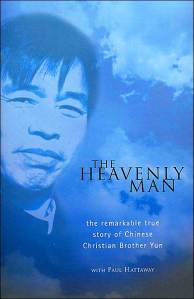 I read this book a year after I read “Houses That Change the World” and these two books helped change the direction of my life. While Houses was more of a “how to” manual for meeting as a church like in the New Testament, the Heavenly Man read like the book of Acts. This book tells the story of one of the leaders of the underground house church movement in China. Through persecution, Brother Yun spreads the gospel, raises up leaders, and mobilizes the Chinese church to take the gospel back to Jerusalem, the very place that it came from. You will not walk away from this book without being personally inspired and challenged. And, as a bonus, for the first time in reading, I saw a house church movement and the power of the Holy Spirit tied together in a way I hadn’t read about outside of Acts. In many ways it’s why I’m still able to contend for the fullness of the Holy Spirit in the midst of a church planting movement. Many of us hear about how God is moving powerfully in the Chinese Church. This book give you a front row seat.
 This may be cheating to have two books by the same author. This follow up is not really a sequel, as much as it is Brother Yun’s attempt to teach after having told his story. If you finished reading “The Heavenly Man” and were left wondering “How, then, should we live?” Living Water is the answer. It’s full of solid teaching on the Kingdom of God in the life of a Christian, from a Chinese perspective. Reading this book is like asking Brother Yun to disciple you a little bit each day for a month. It’s well worth your time.
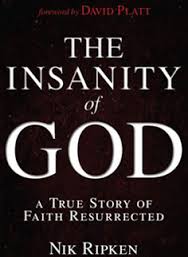 It’s hard to put into words how refreshing this book was. I picked this up last year at the recommendation of some friends. It follows missionary Nik Ripken as he tries to grapple with horrible darkness and incredible fruitlessness that he encounters in Somalia. When he leaves the mission field for a season, he and his wife use the time to meet and research how the church survives and thrives under persecution. The stories he encounters and the people that he writes about are some of the most inspiring stories I’ve heard recently. They pages are also filled with a challenge to endure for Jesus under long-term sustained pressure. This is truly a global book, starting in Africa, moving to Russia, China, and the Middle East. Reading this book will convince you that God can work on your behalf anywhere you go. Because of all of this, this book was my number one book recommendation for last year.
Misreading Scripture Through Western Eyes
 This one deserves a mention though its a book I’m currently working through right now. The book is written by a church historian and a missionary to Thailand. Both of them use their background and education to reveal how we in the West read the Bible through lenses that the original audiences of the Bible never wore. When we do this, according to the authors, we come up with a different message than the one the Bible was intending us to hear. This book has been a fascinating look at concepts like honor/shame and individual/corporate interpretations that I think most Western believers never get exposed to. There is a lot of eye-opening thoughts here. Reading it with an open mind will change (for the good) how you interpret Scripture.
Well, that’s enough for today. I could go on. But my point in listing these books was that you see you can learn from the church around the world without buying a plane ticket.
Many of you have already written me some of the books you’ve read about similar things. If you’ve read a book from an author from a dramatically different part of the world that has strengthened your walk with Christ, leave a comment for us and tell us the name of the book and how it impacted you.
Cluster Map

 Pursuing Glory