A Missional Bible Study Tip

A year or so ago I had a minor revelation that changed how I understood much of the New Testament. It’s a small thing that dramatically shifts how we understand the priorities of Jesus and the apostles. Are you ready?
Somewhere along the way I began to replace every occurrence of the phrase “the word” with “the message.”
You see, every time I read the phrase “the word,” my mind always pictured the Bible. So when I read that Jesus was “the Word” (John 1:1) I would always think Jesus is the Bible. This was really confusing and I’ve seen it cause some folks to deify the Scriptures.
But if I replace “the word” with “the message” I get something entirely different. Now when I read that Jesus is the word I understand He is God’s Message. He is what God would say in any circumstance. And this message became flesh and lived among us (John 1:14).
So when Luke writes in Acts 13:49 that “the word of the Lord was spreading throughout the whole region,” I know that Luke is talking about the spread of the Gospel and not the knowledge of Bible verses. In the same way, when Paul encourages the Thessalonians to pray that “the word of the Lord may speed ahead and be honored, as happened among you,” (2 Thessalonians 3:1), he’s asking them to pray that the message of the Gospel would be received powerfully.
All of this should shift the focus from accumulating Bible knowledge to actually being a part of knowing, embodying, and declaring God’s message that’s found so clearly in Jesus and the Gospel. This is why I’ve argued elsewhere that one of the minimum standards of discipleship is a functional knowledge of the Gospel.
What do you think? Would reading the Bible this way change how you understand what’s happening in the New Testament? And, is this approach dangerous in any way?
Photo Credit: Into the Promised Land, Joshua 18, Abandoned Bible, White Oak Bayou, Houston, Texas 0420091320BW by Patrick Feller
Basic Introductions: The Song of Solomon
[In an ongoing effort to provide a jumping-on point for new readers, over the next few weeks on Fridays I’m going to write a series of posts entitled “Basic Introductions.” Each post will focus on a seldom explored realm of Christianity that we will focus on regularly here at Pursuing Glory.]
This post also builds off a previous “Basic Introductions” post called “Basic Introductions: The Bridal Paradigm.” I would encourage new readers who are unfamiliar with the Bridal Paradigm to read that post, and then return to this post.
In my experience, the Song of Solomon is probably one of the most neglected books in the entire Bible. The reason why is different for different groups of people. For some the book is overflowing with symbolism, which makes interpretation and application difficult. For others who can see through the symbolism, the book seems so erotic that the idea that God could have ever inspired it is difficult. Between these two reasons are a host of smaller reasons but the bottom line is that the Song of Solomon is a neglected book.
This is tragic because as Paul wrote, “all scripture is breathed out by God and profitable for teaching” the church (2 Timothy 3:16). That includes this poetic, romantic, passionate book. The question that we have to deal with is how does God use the truths in this book to build up other believers. I would like to suggest two ways that this book has been used historically and argue that both of them are appropriate as long as we don’t ignore the other.
First, this book is a love song that describes a literal, holy relationship between Solomon and the Shulamite (see Song of Solomon 6:13). Though the book is filled with symbols that are difficult to interpret, it’s easy to see a very passionate but holy romance blossom between Solomon and the object of his affection. Because this book is part of the Bible we can use it as an endorsement for pure romance that occurs in the confines of courtship and marriage. God is not an enemy of either and He demonstrates that by giving us this Song. This view of the Song is called the natural interpretation. Insight from reading the song this way has helped many pursue romance in purity and has helped cultivate deeper intimacy in marriage.
The second view of the book, called the spiritual interpretation, looks at the book from the perspective of the Bridal Paradigm. More people have held this view through church history than any other view. In this approach, the Song is an allegory of Christ’s pursuit of the Church. This approach makes sense when you understand that Paul would look back at the relationship of Adam and Eve and see Christ and His Church (Ephesians 5:28-32). The benefit of this approach is we gain an understanding of God’s deep heart of love for us. If we believe the truths that can be mined here, we begin to see God and ourselves in a totally different light. We are changed when we see how much God loves us and begin to love Him back in a new way.
It’s only as we read this book both ways that we gain insight into what God intended the book for. He intended it as a natural love story. And God uses natural love stories to speak volumes about the nature of Christ’s love for His Church. To only read it one way or the other weakens the whole book. Now, the book is in your court. What will you do with this book of the Bible God has given you for the building up of the church?
Help Other Readers Out (Leave a comment about the following questions below):
- How do you read the Song of Solomon?
- How does reading the Song of Solomon promote holy romance couples?
- Has reading the Song of Solomon ever changed your view of intimacy with God? Describe it.
Some Helpful Books on the Topic

The Song of Songs-Watchman Nee provides an excellent resource that examines the Song of Solomon verse by verse. I don’t always agree with everything Nee sees in the book as symbolic, but he goes into more depth than just about anyone else. If you’re looking for a deep resource on understanding the book as a revelation of Christ’s love for His Bride, this is a good start.
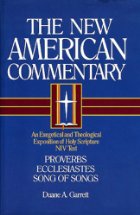 The NAC: Proverbs, Ecclesiastes, and Song of Songs-This commentary provides an excellent look at the Song of Solomon from the perspective of a love song. It’s written by one of themore outstanding Old Testament Scholars of our day. If you want to develop some depth in understanding the natural interpretation of the Song, this is a good place to start.
 The Song of Solomon-While this isn’t a book, this CD/MP3 series is well worth any time or money spent on it. Mike is the foremost expert on the Song of Solomon as an allegory for Christ’s love in our generation. I’ve been incredibly helped by Mike in many areas, but this is the place where he really shines. His 24 session teaching on the book can be found here.
Other Posts In the “Basic Introduction” Series:
Widows and the Church
This blog is part of my continuing series “Notes From The Margins.” This series has a set of guidelines that you can read about here.
“Honor widows who are truly widows. But if a widow has children or grandchildren, let them first learn to show godliness to their own household and to make some return to their parents, for this is pleasing in the sight of God. She who is truly a widow, left all alone, has set her hope on God and continues in supplications and prayers night and day, but she who is self-indulgent is dead even while she lives. Command these things as well, so that they may be without reproach. But if anyone does not provide for his relatives, and especially for members of his household, he has denied the faith and is worse than an unbeliever.
Let a widow be enrolled if she is not less than sixty years of age, having been the wife of one husband,and having a reputation for good works: if she has brought up children, has shown hospitality, has washed the feet of the saints, has cared for the afflicted, and has devoted herself to every good work. But refuse to enroll younger widows, for when their passions draw them away from Christ, they desire to marry and so incur condemnation for having abandoned their former faith. Besides that, they learn to be idlers, going about from house to house, and not only idlers, but also gossips and busybodies, saying what they should not. So I would have younger widows marry, bear children, manage their households, and give the adversary no occasion for slander. For some have already strayed after Satan. If any believing woman has relatives who are widows, let her care for them. Let the church not be burdened, so that it may care for those who are truly widows,” (1 Timothy 5:3-15).
Paul in this passage is addressing a situation in the church at Ephesus. Timothy was left to set the church there in order and part of that process in Paul’s mind was straightening out the church’s support of widows. Now I’ve read these verses twenty times or so in the last few months and I’ve come to appreciate the wisdom Paul gives Timothy to lead those at Ephesus. But here’s what struck me the other day: the Church of the New Testament took caring for widows as a serious responsibility.
That sound’s like a “duh” statement, but think about it for a minute. Paul gives these instructions “so that [the church] may care for those who are truly widows.” At the heart of Paul’s instructions is this burning desire to make sure the church can care for those who are really widows. Paul didn’t write these words to show us who wasn’t worthy of care and he didn’t write this in response to an isolated first-century situation (cf. Acts 6:1, James 1:27).
But we have missed the forest for the trees. We talk about who should be on the list but we don’t support any widows. We don’t take care of women who cannot take care of themselves. We affirm the truth of what Paul writes but regularly ignore what Paul was actually doing. All of this is to say that the church needs to be about the things that are on the heart of the Lord. For Paul, this wasn’t just a mercy ministry, it was essential to the Gospel. He wrote these instructions so that we could care for widows well and teach those in our midst how to care for their family. This is part of the church being “a pillar and support of the the truth,” (1 Timothy 3:15). This is something we need to return to.
So…how are you caring for widows? Have you seen a church do this well in the past? In an age of social security and looking to the government to care for us, is this even possible? How would the way churches spend money have to change if this became a reality? Also, please remember Guideline #5.
Cluster Map

 Pursuing Glory