The Top Ten Books I’ve Read This Year

I really like reading. But over the last few years as my kids have gotten older and needed more attention, I’ve spent considerably less time reading than I’d like. This year, that changed, mainly because I invested in an Audible account through Amazon. At this point in the year I’ve completed 16 books. This is significant, because I probably haven’t read that many books since the first year of my marriage.
So because no one asked me but I have a sneaking suspicion some of you may be interested, here are the ten best books I read this year. None of them are brand new, they just end up being what I was interested in this year. I also tried to branch out some this year, so you’ll find a mix of Christian non-fiction, fiction, productivity, and business. The list is presented in order of highest impact to my life. I hope you’ll enjoy.
The Insanity of God by Nik Ripken
I loved this book. There were some things about it that were very difficult for me. The first half of the book told the story of “Nik,” a missionary that paid a high price during an unfruitful time of ministry in Somolia. After a terrible tragedy causes Nik and his family to return to America, he and his wife begin a journey around the world to find out how believers in persecution thrive under the threat of death. First in Russia, then China, and finally in Islamic countries, Nik encounters stories that stun us about the power of God and His ability to sustain those who are being persecuted.
If I were to recommend one book off of this list to believers, this would be the one. This book is full of stories that reverberate with overtones of apostolic Christianity. It’s full of lessons that Nik and his wife have learned as they’ve sat at the feet of believers who have stood strong when the stakes were the highest. I warn you though: this book will challenge an easy-believing, Americanized Christianity. Read it at your own risk.
Essentialism by Greg McKeown
I read this book three times this year. Three times! This book is about focusing in on the things that allow you to achieve your greatest level of contribution in life. It takes the phrase “Less, but better” and applies it to every area of your life, challenging you to become more focused in the area you are called to have greatest impact. If there is one book I wanted to buy multiple copies of and hand out around my office, this book was it. It’s a short read, but it will challenge you.
Living a Life of Fire by Reinhardt Bonkke
This book was the autobiography of German evangelist, Reinhardt Bonkke. For those of you who aren’t familiar with Bonkke, he is an itinerant evangelist in Africa who at one time had the largest open-air tent in the world. He has led a million people to Christ in one crusade in Nigeria and his ministry is known to be accompanied by dramatic healings.
This book traces his life from his time as a young boy inside a post-World War II prison camp for Germans to his current life. It was really interesting for me to see the early days of Bonkke’s ministry since most of us know him as an evangelist that is larger than life. Bonkke’s passion for the Gospel going forth and his continuing reliance on the power of God are infectious. It was hard for me to read this and not want to share the Gospel or pray for the sick and I need more influences like this in my life.
The Shack by William P. Young
I hardly ever read Christian fiction. I can barely stand it most of the time. But two things motivated me to pick this book up: 1) A friend who is an evangelist told me about how his secular progressive uncle became a believer after reading it and 2) It’s slated to be a motion picture next year in March. When this book first came out there was some controversy over it, so I thought I’d check the book out and see what it was all about.
You can firmly count me among those who love this book. The whole book is based around the murder of a father’s youngest daughter and the father’s journey to come to peace with God after this event. That makes it sound like this book is your standard piece of fiction. In fact, most of this book starts when God sends the father an invitation to meet Him in the shack where the dress of his daughter was found several years earlier.
IMHO, the controversy over this book is hugely overdone. This book was written to engage the heart, not to teach theology, much in the same way that Jesus’ parables were told. I heartily recommend the book and if you can read it with an open heart, I think you’ll find yourself closer to God by the end of the story. I know I did.
The Icarus Deception by Seth Godin
This book was an inspiration. Seth basically spends an entire book encouraging the artist (that’s you and I) to dream big, push boundaries, and be daring. This book is a manifesto of sorts that is bent on provoking us to do the art that only we can do and pursue greatness at it. Based on the story from Greek mythology of Icarus, Godin encourages not only to not fly too high, but more importantly to not fly too low, to really let our light shine where it should.
Do not read this book if you are against becoming an artist.
Saturate by Jeff Vanderstelt
For those of you who haven’t had the privilege of hearing Jeff preach, you’re missing out. Jeff gives leadership to a network of churches that are focused on missional communities, so there’s always been a lot of synergy between what he does and what we do as a house church network. The message of this book is the gospel has power to touch every human being through our ordinary lives.
What I particularly love about this book and Jeff’s approach in general is his commitment to practices that are rooted in the theology of the gospel. These methods also happen to be incredibly effective. Jeff leads people to Jesus, but he does it in a process that is birthed out of his understanding of the gospel. The critical piece of this book that was helpful to me was the section on acquiring a missional identity that comes from the different roles of the persons of the Trinity. Those four chapters are worth the cost of the book alone.
So Beautiful by Leonard Sweet
It seems cliche to say it, but this book was beautiful. It is a poet’s look into the missional DNA of God’s church. If you’re looking for 3 practical how-to steps to become more missional, I would direct you other places. But if you’re looking for your heart to be awed by the way that God builds His church to reach the world, Sweet’s book is for you.
The Hitchhiker’s Guide to the GalaxyThe Hitchhiker’s Guide to the Galaxy by Douglas Adams
Yes, I read atheist Sci-Fi. And if you can read it and not get caught up in the backhanded attempt to poke fun at theists, this is an enjoyable book. This is a space opera with a huge comedic twist. It follows the adventures of Arthur Dent and his (unbeknownst to him) alien friend Ford Prefect as they escape Earth just before it is destroyed to make way for an interplanetary bypass. The rest of the book follows them as they get swept up into a drama bigger than they could ever imagine. I don’t know that I’ve laughed out loud so many times reading any other book. Of the three books that I’ve read in this series so far, this one is clearly the best.
The Starfish and the Spider by Ori Brafman and Rod Beckstrom
The Starfish and the Spider should be required reading for any and every person interested in house churches and discipleship movements. It is a book written to look at the advantages of organizations that have no leaders. It examines history and business culture to find examples of movements and organizations that thrive with no centralized form of leadership. The parallels between these organizations and house churches are many and we would do well to learn from the authors’ research. One day I hope to do a series of blogs on what this book can tell us about how the Lord leads His church.
The Normal Christian Life by Watchman Nee
This is Watchman Nee’s seminal book. I’ve yet to meet anyone who knows Nee who hasn’t read this book and most who read it rave over its content. This books is the compilation of Nee’s thoughts on Romans 6-8. There was much to challenge me and grow here and anyone who needs to understand the position in Christ they have by virtue of their repentance and belief in Jesus can benefit from reading this book.
Honorable Mentions: The Insanity of Obedience, AntiFragile, The Confessions of St. Patrick, Jesus: A Theography, Endurance: Shakelton’s Incredible Voyage, The Restaurant at the End of the Universe, and Life, The Universe, and Everything.
Note: Most of the links to the books described in this post are part of Amazon’s referral program and I do get paid a slim referral fee if you purchase a book based on my recommendation. However, it should be noted, I never recommend a book to buy unless its great. Also, feel free to buy the book or not based on your own sampling of the book.
Mutuality and Calling One Another Forward
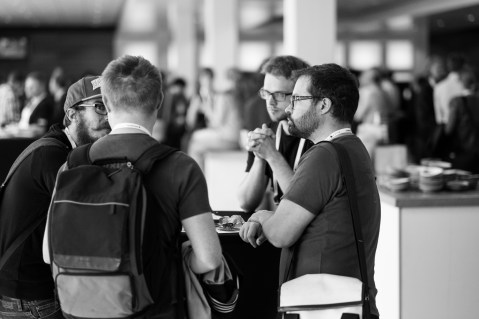
Today I met with a cross section of men from our house church network to talk about and work through issues that are affecting our churches. The discussion was great and one of the things that I loved about it was the mutuality. Quickly it became clear that there was no guru in the group and that everyone could learn from each other. And it was this back and forth, giving and receiving that allowed for hearts to open up, ministry to happen, and for us to be able to rely on each other a little bit more.
I’m continually amazed how much humility and not lifting yourself up above another allows for more ministry to happen, not less. So often the church thinks it needs to be the other way around. Most of the time we are caught up trying to prove we are at least as spiritual, if not more so, than the person next to us. When I try and prove how much better I am than others, not much ministry happens. And yet, when I humble myself and live from the place of being as weak or weaker than everyone else in the room, that’s when people become vulnerable and real service to each other happens.
During my day, I had the opportunity to share with a brother about some limits he was artificially putting on himself. And because we were listening to each other, I was able to hear his heart and he was able to receive when I gently pushed on him to reconsider some of the limits he was placing on himself.
Friends, we desperately need brothers and sisters like this in the body of Christ. We need people who know us, can see us better than we see ourselves, and can help us get out of the ruts that we sometimes find ourselves in. The body grows itself by learning how to speak the truth to each other in love. This is so hard to do but its one of the main ways the Bible describes us growing into the image of Christ.
Beloved, find friends who will tell you the truth in love. Find brothers and sisters in Christ who will call you forward into who God has called you to be. It’s a way forward in an age that wants to deceive us and isolate us. Don’t give in to the shallow relationships that are only about competition and vanity. Don’t settle for relationships with brothers and sisters in Christ that are only an inch deep. There’s transforming relationships out there that are rooted and Christ and they are worth pursuing.
It’s worth it. I don’t promise it, but Jesus does.
Photo Credit: Discussions by Boris Baldinger
The Kingdom of God is 24/7/365

When I was in college, it was normal to stay up late. People stayed up late partying, studying, playing practical jokes, and all sorts of other things. So it was natural for me as I was following Jesus and reaching out to college kids for my nights to be late. Ministry happened at weird hours.
Then I moved to Kansas City. Remember that I moved to Kansas City to go to a Bible college that was part of a 24-hour, 7-day-a-week house of prayer that has been going non-stop since 1999. That means you could (and still can) walk in at 3 A.M. Christmas morning and there would be people there singing their hearts out or praying over the city.
The culture of a place like that changes you. You loose a little of your American preoccupation with holidays as you watch people you know faithfully interceeding for the end of abortion on Labor Day. When you commit to one thing being important above all else, even your American break in the calendar, you begin to see how much time you’ve truly built in for yourself in your calendar.
While we were in Kansas City we joined a house church network where the leader continually emphasized that the Kingdom of God is 24/7/365. And we tried our best to live that out. We led early morning prayer meetings for the house churches that forced us to get out of bed, trek to the agreed upon spot, and then pray for an hour or better. We connected relationaly all the time and any time. We agreed that if there were sacred times and spaces it was because every time was a sacred time and everywhere was sacred space. The type of community we were aiming for didn’t allow for closed off spaces in our calendar.
The same has been true for our house church network in Iowa. We certainly have borrowed from certain elements of these communities. Our house church has a prayer meeting that starts way before sane human beings should be up. I just finished with a meeting of some folks from each of the house churches and it ended at 11:30 P.M.
But I don’t say this to brag. I tell you all of this to say God’s Kingdom touches every area of our lives. Sometimes we like to think when God becomes King of our lives, He leaves alone certain areas of our lives like the schedule or the budget. But when God comes as King He wants everything. And because we are incredibly busy Americans, many times that will mean we need to make adjustments to our calendars so we can do the things He’s calling us to do.
There are verses that talk about using your time wisely. But instead of quoting those, I’ll leave you with this:
If you try to hang on to your life, you will lose it. But if you give up your life for my sake, you will save it.
-Matthew 16:25
How we use our time is a reflection of whether our life is surrendered to the Lord or not. How we spend our minutes, hours, and days determines how we spend our years. We can use them for ourselves—”me time,” excessive entertainment, etc.—or we can lose our life by giving of our time for the things that are truly most important. This will include time for prayer and reading the word, but also meeting with others, discipling them, and serving them.
How are you using your time for the Lord?
“…making the best use of the time, because the days are evil.”
-Ephesians 5:16
Cluster Map

 Pursuing Glory