Basic Introductions: The End Times
[In an ongoing effort to provide a jumping-on point for new readers, over the next few weeks on Fridays I’m going to write a series of posts entitled “Basic Introductions.” Each post will focus on a seldom explored realm of Christianity that we will focus on regularly here at Pursuing Glory.]
One of the fundamental errors I see consistently across the body of Christ is a nervous unwillingness to talk about matters related to the return of Christ and the end of the age. The reasons people give vary, usually falling somewhere between not wanting to be divisive or thinking there are more important matters for us to focus on than events related to the End Times. These arguments come from well-meaning people but they fall horribly short of the standard God has called us to. The end times were meant to be clearly understood by God’s people in a way the produce hope and change.
Part of the problem with not teaching eschatology (theology related to the end-times) is that we’ve shied away from it so long in our churches and seminaries, that most of us don’t know what we believe about the end times or why we believe what we do believe. Instead of promoting unity by avoiding “controversial” doctrines we’ve promoted ignorance of Scripture that relates to our common salvation. (BTW, I don’t believe that unity is ever achieved by agreeing with someone totally in regards to what they think about God. Have you ever met anyone who has thought the exact same things about God as you? And even if you have, only being in unity with them is not scripturally endorsed unity.)
Here’s a reality that’s helpful to understand: we all have an end-time theology. Most of us just haven’t thought about it or researched it in the Bible. We either believe that the future will get really good and the church will succeed or we believe that the future is dark and will get really bad for the church. If you believe either of these statements, technically you have an end-time theology.
These views of the end times flow out of our understanding of Jesus. Will He really rescue humanity? Will He really judge the whole world? Will we really get glorified bodies? Do these “spiritual” truths ever manifest in physical reality? If these things really happen, and they will, what we believe about them affects our lives here and now and will continue to affect us until these events occur.
Many argue that studying the end times is too difficult to understand. But God has not left us as orphans to understand His word by ourselves. He has placed us in a family, called the church, that can help us to understand seemingly difficult concepts. He has also promised to guide us into all truth by His Holy Spirit. The same Holy Spirit that reveals Jesus to us will give us understanding about the end of the age.
We’ll spend a number of posts describing end-time events and their relationship to the church. For now I think it would be helpful to give a few broad categories to help everyone understand the end-times from the perspective we will deal with them here. The following are brief descriptions of major events and concepts related to the end of the age:
Jesus
He is the Lord. During the last days there will be no question who is on His side and who is not. Every eye will see Him openly and plainly. He will open the seven seals that release judgment on Earth (Revelation 6:1-8). He will be revealed as the desire of all the nations when He gathers those who love Him to His side (Haggai 2:7, Matthew 24:29-31) He will wage war against the most openly satanic government and society in the history of the planet (Revelation 19:11-21). This is our great hope. Everything that has resisted the Kingdom’s coming into the Earth up until this point will cease resisting and He will wipe away every tear from every eye (Revelation 7:17, Revelation 21:4). He will be the Hero of the entire story.
The Church
Will exist. We will not be pulled up to Heaven in some cosmic escape plan. I don’t have a primary proof text to support this idea; I have a Bible. John only speaks of the church in chapters 1-3 of Revelation. But he speaks of the saints throughout the entire book of Revelation (Revelation 13:7, Revelation 14:12, Revelation 17:6). To express this mathematically, saints=church. And why not? This will be our finest hour. To take us out at the end of the age would be like a football coach that drove the team hard at practice, played all the games, and skipped the final tournament. And here’s the part where this needs to connect: If the church will be here during the end times, she must begin to prepare for that day even before it arrives. Remember, the book of Revelation was written to the Church, not to the world.
The Anti-Christ
Satan, in his desire to snuff out the plan of God and rule the Earth, will mount a massive war against Christ and His people. In order to marshal the Earth to His side, He inhabits a man of extreme political prowess. This man will not just be a political figure, he will be a false messiah on a global scale, the ultimate combination of secular and religious charisma that will draw most of unredeemed mankind to his side. He will attempt to destroy the church and wipe out all of the Jews on the planet in a final bid to stop the plan of God (Revelation 13:1-10). There will be great military and economic tribulation against God’s people and they will have to fully choose Jesus above everything else. Even those who die, however, will not loose, but be the greatest victors in that day. If this man is real, and he is, we must be prepared to respond when he arrives on the world scene.
Judgment
The reality of the end of the age is that the reason most people don’t want to talk about it (and don’t want to be here) is because it’s filled with difficult and terrifying judgments that are poured out seemingly on all humanity. To make things more difficult these judgments are sent by Jesus-the merciful Lord that we’ve come to know and love. And while I believe God intends to at least partially shield His people during this time (see Revelation 7:1-12 and Revelation 9:4) we will also have the responsibility of declaring the love of Christ while simultaneously declaring Him as the source of the judgments falling all around us. This will not be an easy task.
Harvest
All of these factors working together will result in the greatest world-wide harvest that the church has ever seen. Joel 2 describes the last days as a time when the Holy Spirit would literally be poured out on everyone and the result, even in the midst of judgments on the Sun and the Moon, would be an opportunity for many to be saved (see Joel 2:28-30). Jesus said this would be a time when the Gospel of the Kingdom would be proclaimed to every nation (Matthew 24:14). The implications of this great harvest should give us hope. It should also cause us to prepare for the harvest in a way that is different than we have before.
Summary
A day like no other is coming on the face of the planet. Jesus will be revealed in a way that will leave every human without excuse. They will either love Him or hate Him, there will be no middle ground. The church will be a fully alive people that will endure persecution and declare both the mercy and power of the Lord. The Anti-Christ will arise and lead the world in final satanic resistance against the Lord and His people. This will happen in conjunction with great judgments that will be poured out and a great increase of salvation that will take place before the last day. We will be able to say with Joel, “the day of the Lord is great and very terrible, (Joel 2:11).
Help Other Readers Out (Leave a comment about the following questions below):
- Is an understanding of the end-times important?
- How does your view of the end-times affect what you’re doing now?
- If these things are true are there things that should change with how we look at the church?
Some Helpful Books on the Topic
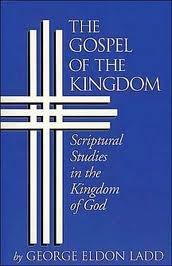
“The Gospel of the Kingdom” by George Eldon Ladd- This is probably the best book that connects our salvation with the idea of the end times. It’s pretty technical but if you want to understand how the end times ties into what Jesus did on the cross and the in-breaking of the Kingdom of God, this is a must read.

“A Commentary on the Revelation of John” by George Eldon Ladd- I usually don’t recommend two books by the same author, but this book is absolutely amazing. This book has probably shaped my understanding of the end times more than any other single book. It is a straight-forward, verse-by-verse commentary on the book of Revelation that will cause you to wrestle with the implications of end time events.
 “The Church and The Tribulation” by Robert Gundry- This book tears apart the idea that we will escape the end of the age through the rapture. If you’ve been taught that the Church will be raptured before any difficult events occur, pick up this book with an open mind. You will be greatly helped by it.
Other Posts In the “Basic Introduction” Series:
Why Are Multiplying Churches Necessary?
 If you look around, you can see multiple reasons in the earth to be discouraged. It seems no matter how many good stories happen in the news, there is a larger number of bad ones. This is especially true when you look at the church. It’s easier and grabs more headlines to believe that the best days of the church are behind us.
However, if you study Scripture or have your ears tuned to what the Spirit is saying to the churches, then you have a great cause for hope. The Word and the Spirit tell us that we are on the verge of one of the greatest harvests of lost souls in human history. Events (and the God behind them) are conspiring together to bring forth this harvest in a short period of time.
It’s with this context in mind that I want to present to you the need for multiplying churches. When we talk about multiplying churches, usually I sense a collective yawn in the room from people who haven’t really considered the implications of the world we live in. But we live in a unique time of history where the need for mutliplying churches is greater than ever before.
At this point it would be good for me to define what is a multiplying church. A church that I would consider a multiplying church has taken seriously Paul’s admonition to Timothy in 2 Timothy 2:2 and applied it at every level. Paul says, “what you have heard from me in the presence of many witnesses entrust to faithful men who will be able to teach others also.” Paul was concerned about what Christ has done in him being reproduced in another three generations of believers. This wasn’t just a selfish concern, it was a concern for the dynamic elements that made him apostolic be reproduced in everyone that was touched by Timothy and those he mentored.
This plays out in a number of different ways, but one of the most concrete ways we see this play out is in church planting. If every member of the body is reproducing itself, the inevitable result is more churches come into existence. When we plant churches, that’s good. When those churches that we’ve planted plant churches that’s better. It’s even exciting when those second generation churches plant more churches. But we’re dealing with multiplying churches when the third generation of churches start planting churches themselves. If you’re lost, it may be because by this time, like a virus, its hard to know which church was the first church at all.
This is what we need for this hour: a church that carries the Gospel and spreads like a virus across the face of the planet. Over the next few weeks, I’ll look at the “Why’s” of multiplying churches, because before we can make them happen, we need to understand why we need them. I’ll leave the “How’s” of multiplying churches to those who are actually seeing this accomplished. Before I close, I want to quote Wolfgang Simson’s Starfish Vision. He shares an equation that I believe is important for us to understand because it stresses the importance of multiplying churches. The equation is this: J=MC2.
“Jesus lives on in an apostolic Mission that advances by Church multiplication.”
Photo Credit: Studying Till The Sun Goes Down by Jakert Gwapo
Basic Introductions: The Bridal Paradigm
 [In an ongoing effort to provide a jumping-on point for new readers, over the next few weeks on Fridays I’m going to write a series of posts entitled “Basic Introductions.” Each post will focus on a seldom explored realm of Christianity that we will focus on regularly here at Pursuing Glory.]
Probably one of the hardest truths to understand about life is that God really loves us. To borrow a phrase from my kids’ picture Bible, He loves us with “a never stopping, never giving up, unbreakable, always and forever love.” The fact that it’s hard for us to get our minds around God loving us this much doesn’t take away from its reality. In fact, God’s love is more real than we can possibly imagine.
God’s love has driven Him to do some pretty astounding things. For one He became a man. This love not only caused Him to taste humanity but to taste the most difficult humanity, to be perfect yet hated, to bless and be cursed in return, to be from the very richest of places and yet to live in utter humility, to serve and never to be honored. And to top it all off, He died for us. He tasted His own curse so that we might never taste it again. This is not the kind of grandfatherly love that we have come to think of when think of God’s heart. This is a love full of passion, deep emotion, and a commitment that goes all the way to death.
When we talk about a love this deep and profound we’ve finally begun to touch what has come to be known as the Bridal Paradigm. Don’t let those two words scare you. They’re big words that describe the deep emotions God feels toward us. Webster’s Dictionary defines ‘paradigm’ as “a philosophical or theoretical framework of any kind.” Paradigms are the lenses which we see the world and reality through. The Bridal Paradigm, then, is the way we view our relationship with God where we see the love He has for us as the same kind of intense, jealous, life-giving love that a husband has for a wife.
Where is this found in the Bible? All over! In fact, the thing about paradigms is that you don’t realize them until something changes the way you think and you begin to see everything a little differently. Let’s start with the great apostle Paul. Paul was the missionary of missionaries that God used to turn Christianity into a movement that spanned nations and people groups. But Paul was the instrument God used to fully declare the Bridal Paradigm. Listen to his words from Ephesians 5:
“In the same way, a husband should love his wife as much as he loves himself. A husband who loves his wife shows that he loves himself. None of us hate our own bodies. We provide for them and take good care of them, just as Christ does for the church, because we are each part of his body. As the Scriptures say, ‘A man leaves his father and mother to get married, and he becomes like one person with his wife.’ This is a great mystery, but I understand it to mean Christ and his church,” (Ephesians 5:28-32).
This should blow our minds! What this passage says is that the whole way through the Bible, when God spoke about Adam and Eve, about a man and woman being joined together, about the bond of marriage, He was actually the whole time describing the kind of love that Christ has for His Church. Now here’s the real mind-bending part: God didn’t send Christ and then scramble to find an appropriate metaphor for Christ’s love, only to settle on marriage. No! He looked at His Son and saw the relationship that He would share with His Church and He created marriage as a physical picture that would help explain to people Christ and His love. Christ and His Church are the original and marriage is patterned after that!
Paul was actually so convinced that God related to the Church this way that when the Corinthians began to loose their way, he would rebuke them using the terms of engagement: “For I feel a divine jealousy for you, since I betrothed you to one husband, to present you as a pure virgin to Christ. But I am afraid that as the serpent deceived Eve by his cunning, your thoughts will be led astray from a sincere and pure devotion to Christ,” (2 Corinthians 11:2-3). Paul saw his evangelistic work as an introduction to Jesus unto engagement, which culminates in marriage!
This picture of Christ loving the Church is more than just a good picture. In Ephesians 5 Paul calls it “a great mystery.” When Paul calls something a great mystery, he means there is more truth to be gained by contemplating that idea. We are edified by understanding Jesus’ Bridal love for us. He actually feels more deeply and passionately about us than any husband has ever felt for His wife. Even now where you are, no matter what sin you are in, Christ loves you with a jealous love beyond anything you have ever experienced. He alone wants to be your only love and He will fight to win you heart. The only thing to compare this to is the jealous love of the most righteous Husband.
Now there are going to be some guys who read this who will have a hard time relating to Jesus as a husband. Let me give you a few pointers. Don’t get so caught up in the marriage metaphor that you cannot relate to Jesus. This about Jesus touching your heart and causing you to love God, not anything weird. Don’t picture yourself in a wedding gown or Jesus giving you flowers. You can still be a man and love Jesus. In fact, beloved, you were designed to do just that. John, the son of thunder, laid on Jesus’ breast and was called the one who the Lord loved. You don’t have to give up your manliness to pursue intimacy with God.
So Christ relates to the Church the way a husband relates to his wife. He loves her. He cherishes her. He gives Himself up for her. And we have to begin to see Christ as more than just a thoughtfully kind person who out of responsibility died for us, but a jealous husband who loves us. This has to become personal for each of us. He doesn’t just love the universal Church. He loves you!
And His love will purify us from our sin. If we actually touch it, it will cause us to live differently from the inside out. We will be able to “love the Lord [our] God with all [our] heart and with all [our] soul and with all [our] mind and with all [our] strength, (Mark 12:30)” because we’ve experienced the love that He has for us. And as John found out, “we love because He first loved us,” (John 4:19). When we come to understand this love that He has for us and truly “get it” in our hearts, we will be forever changed.
Help Other Readers Out: In The Comment Section Below do the following-
- Describe a time when you encountered the love of God and it changed you.
- Describe one way seeing Christ as a Husband to the Church has changed your perception of God
- Describe a way that you’ve been able to better understand Christ’s love for you personally.
Photo Credit: Anéis | Rings by Jeff Belmonte
Cluster Map

 Pursuing Glory